

Office washrooms often look tired long before they stop functioning properly.
The layout may still work. The sanitaryware may still be fine. But the cubicles feel dated, the IPS panels drag the whole room down, the vanity units look worn, and suddenly the washroom feels completely out of step with the rest of the office.
At that point, a lot of people assume everything has to be ripped out and replaced.
In reality, that is not always necessary.
A lot of office washroom refurbishment options come down to one simple question: what is actually failing, and what just looks old? If the visible elements are tired but still fundamentally sound, refurbishment can often make far more sense than full replacement.
That is one of the reasons this approach works so well in office environments. The decision is not only about budget. It is also about downtime, disruption, waste and how quickly the space can be brought up to standard again.
In this guide, we are looking at what can usually be refurbished in an office washroom, what can often be wrapped instead of replaced, and when replacement is still the better route.
In This Guide
Quick answer
In most office washrooms, the parts most commonly suitable for refurbishment are:
- cubicles
- IPS panels
- vanity units
- wall surfaces
- doors
- signage
- mirror frames
- existing mirrors using specialist mirror film
If those elements are still structurally sound, refurbishing them can be a practical alternative to replacement. The key is that refurbishment works best when the issue is mainly visual rather than structural.
What Can You Refurbish in an Office Washroom?
In most cases, more can be refurbished than people expect.
A typical office washroom refurbishment can often include the parts that make the biggest visual difference: cubicles, IPS panels, vanity units, wall surfaces, doors and smaller finishing details. Those are usually the elements that date the room fastest, even when the washroom is still perfectly usable.
What we are not talking about here is ceilings, floors or sanitaryware. This is really about the visible surfaces and fixtures that affect how the space looks and feels day to day.
That distinction matters because a tired washroom does not automatically need a full rebuild. Quite often, the bigger issue is that the finish no longer matches the quality of the surrounding office.
What Parts of an Office Washroom Can Be Wrapped?
A lot of the time, when people talk about refurbishing a washroom, what they actually mean is wrapping the existing surfaces.
That might be cubicles, IPS panels, vanity units, doors or other fixed elements that still have life left in them but no longer look right. So while the broader question is what can be refurbished, the practical site question is often what can be wrapped.
That is an important difference.
Refurbishment is the result. Wrapping is often the method.
If the surface is still sound, wrapping can be a very effective way to update the finish without replacing the item itself. That is why so many office washroom refurbishment options come back to the same principle: keep what still works, and upgrade what is letting the room down visually.
Can Office Washroom Cubicles Be Refurbished?
Yes, they often can.
Cubicles are one of the first things to assess because they take up so much visual space. If they look dated, the whole washroom usually feels dated with them. But if the cubicle system is still solid, there is often no good reason to replace it purely for cosmetic reasons.
That is where refurbishment can work really well. Instead of removing the full set, the visible surfaces can be upgraded so the washroom feels more current, more premium and more in keeping with the rest of the office.
This is one of the clearest examples of where people assume replacement is the only answer when it often is not.
It is also one of the areas where the commercial logic is strongest. Cubicles are repeated throughout the space, so replacing them can push cost up quickly. If they are still structurally sound, refurbishing the finish instead can be a much more sensible decision.
Can IPS Panels Be Refurbished?
Yes, provided the condition is right.
IPS panels have a huge effect on how clean and modern a washroom feels because they cover such a large area behind the sanitaryware. When they are still sound, refurbishing them can make a major difference without turning the job into a more invasive replacement project.
This is also one of the areas where honesty matters most.
Minor filling, sanding and preparation are one thing. Swollen boards, rot, failed substrates or water damage beyond repair are something else entirely.
So yes, IPS panels can often be part of an office washroom refurbishment, but only when the substrate underneath is still worth saving.
That is the real dividing line throughout this whole topic. Refurbishment works when the surface is tired. It does not work when the substrate has failed.
Can Vanity Units Be Refurbished Instead of Replaced?
Very often, yes.
Vanity units are one of the most visible elements in a washroom. They sit at eye level, they get used constantly, and once they start to look worn they can make the whole room feel neglected.
If the vanity unit carcass is still sound, refurbishing it can be a very practical alternative to replacement. It gives you the chance to improve the look of the washroom without replacing the full unit.
This is also where practical questions usually come up.
People want to know whether the finish will cope in a washroom, whether edges need sealing, and whether sinks need to be removed. Those are sensible questions, because the detailing matters. Around sinks and vulnerable edges, proper sealing is part of getting the finish right. Sinks do not always have to come out, but if they can be removed, installation is often easier and the finish can sometimes be better depending on the sink type.
Can Washroom Doors, Wall Surfaces and Signage Be Upgraded?
Yes, and these details often make more difference than people expect.
Sometimes the washroom does not need a dramatic transformation. It just needs the visible elements to stop letting the space down. Doors, wall surfaces, signage, mirror surrounds and smaller details can all help bring the room back into line with the rest of the office.
That is often the real value of refurbishment in office washrooms. It is not always about one big feature. Sometimes it is about dealing with all the surfaces that make the room feel old, inconsistent or out of date.
When those elements are handled properly, the washroom usually feels far more considered, even if the basic layout has stayed exactly the same.
What Usually Depends on Condition?
Substrate condition is what usually decides whether refurbishment is the right option.
Not everything should be refurbished just because refurbishment is possible elsewhere in the room. If the board underneath has failed, if water damage has gone too far, or if the substrate is rotting or broken beyond repair, wrapping or surface refurbishment will not solve the real problem.
That is why condition assessment matters.
Filling and sanding can be standard preparation work. Minor imperfections can often be dealt with during prep. But if the base material is no longer sound, replacement is usually the smarter and more durable decision.
This is where a lot of people get washroom refurbishment wrong. It is not about covering up failure and hoping for the best. It is about upgrading existing elements that are still fundamentally serviceable.
When is Refurbishment a Better Choice Than Replacement?
Office washroom refurbishment is usually the better choice when the layout still works, the main components are structurally sound, and the problem is mostly visual rather than structural.
That is often the case in offices where the washrooms feel tired, dated or disconnected from the rest of the building, but do not actually need a redesign. In those situations, refurbishment can make sense because it avoids the cost, waste, downtime and disruption of taking everything out unnecessarily.
That is also why focusing only on price can be misleading.
In office environments, downtime often matters just as much as the material cost. If a refurbishment route keeps closures shorter, reduces waste, avoids service alterations and allows the building to stay more operational, the overall value can be much stronger than a basic replace-versus-refurbish comparison.
When is Replacement the Better Option?
Replacement is the better option when the problem goes beyond finish.
If substrates are broken beyond repair, if water damage has compromised the structure, or if the washroom no longer works in practical terms, then replacement may be the more sensible long-term decision. The same applies where sanitaryware, layouts or underlying construction issues need to change significantly.
That does not weaken the case for refurbishment. It actually strengthens it.
Refurbishment is the smart option where the existing washroom still has usable foundations. Replacement is the right option where those foundations have failed.
Is Office Washroom Refurbishment Cheaper Than Replacement?
In many cases, yes, but the real comparison is not only about supply cost.
Refurbishment is often more cost-effective because it keeps structurally sound elements in place instead of replacing them. That is especially relevant with cubicles, IPS panels and vanity units, which are highly visible, repeated throughout the washroom, and expensive to replace even when the issue is mostly cosmetic.
But cost on its own is not the whole story.
The real comparison is often:
refurbishment cost
versus
replacement cost + downtime + disruption + waste + programme pressure
That is usually the more useful way to think about it.
Real Office Washroom Refurbishment Examples
The easiest way to understand what can be refurbished is to look at real office projects.
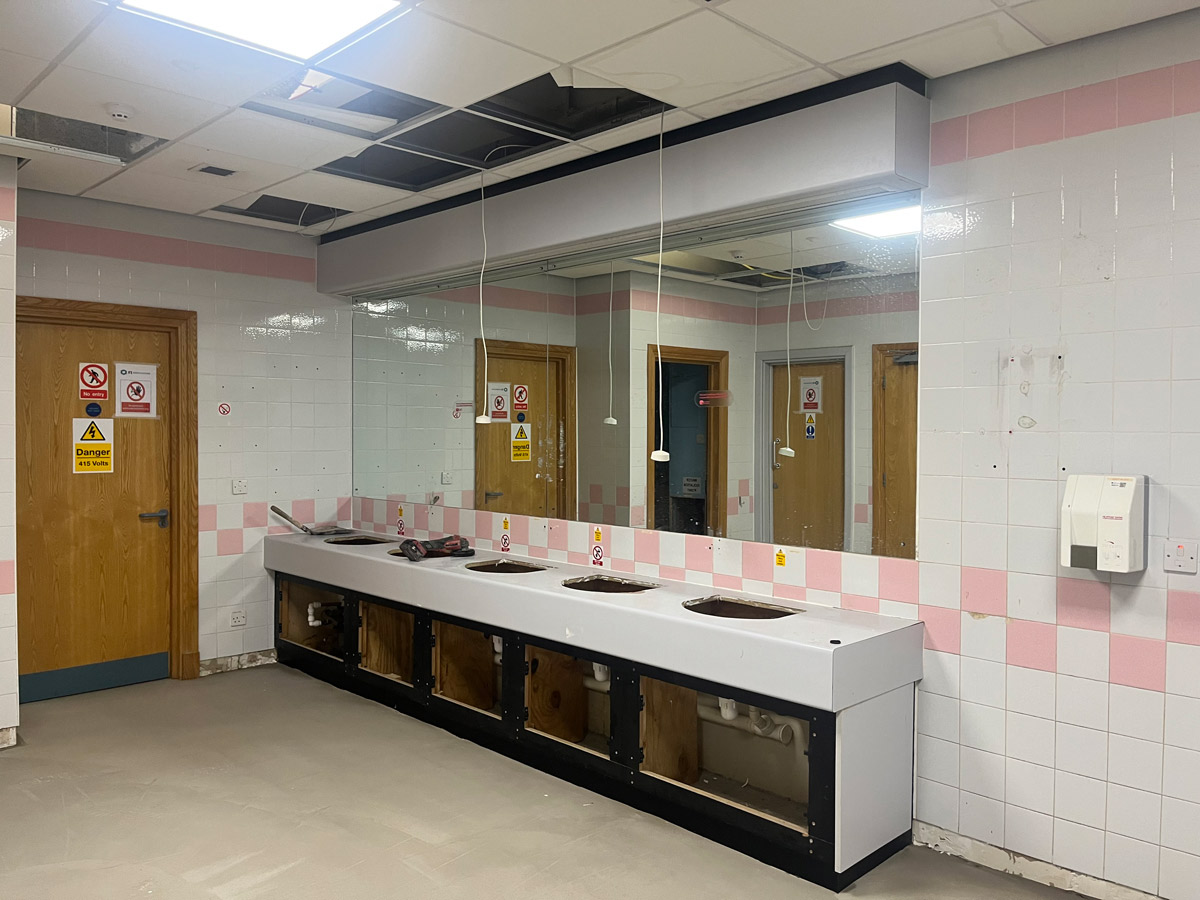
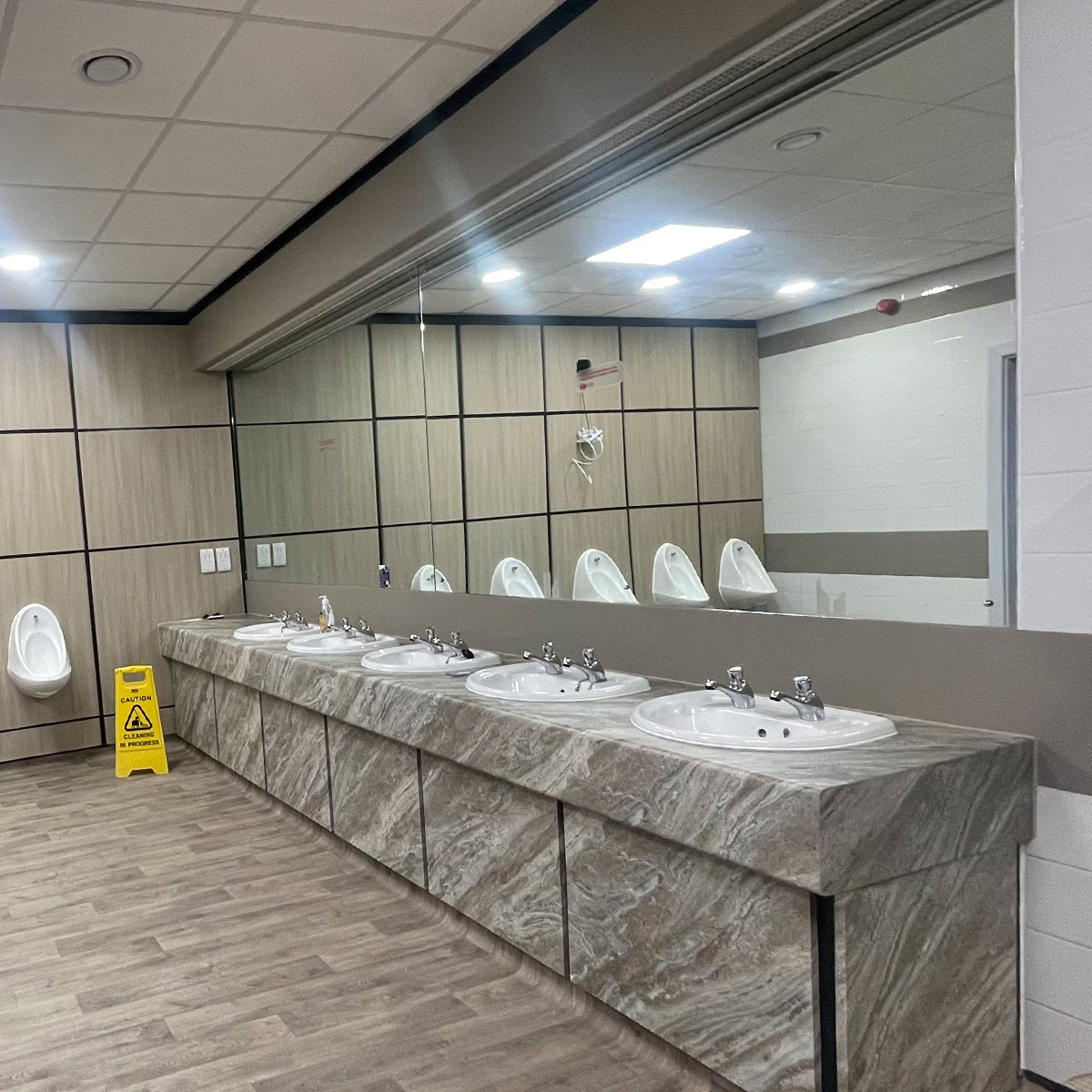
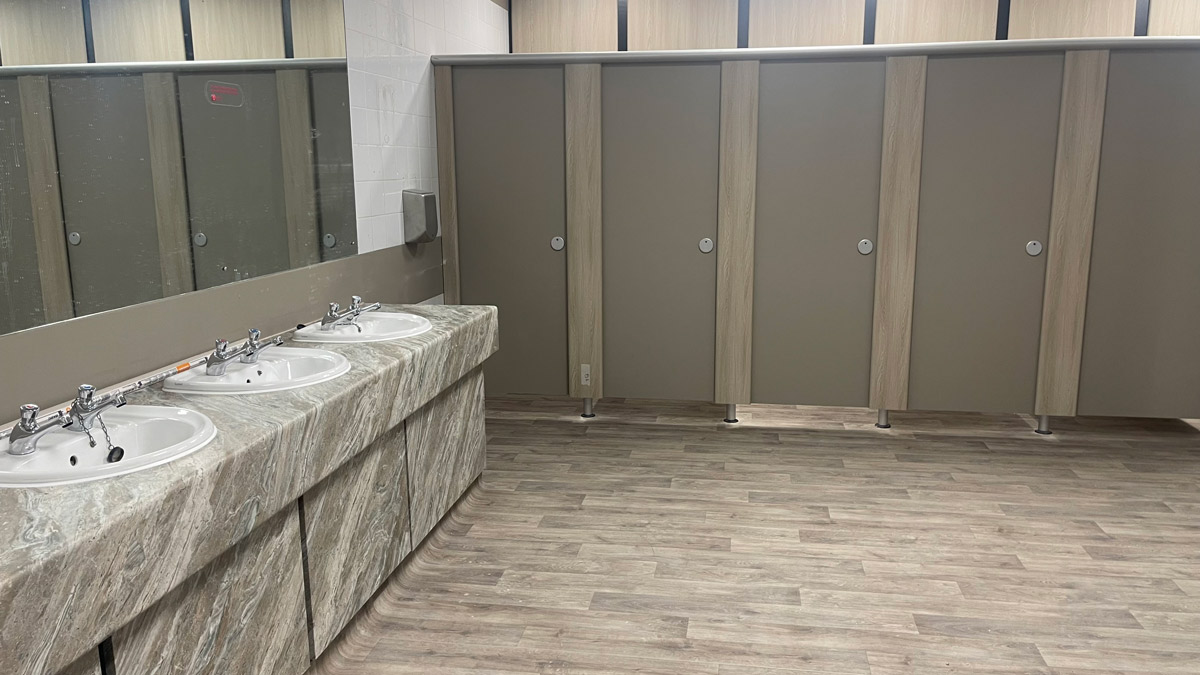
FI Real Estate Durham
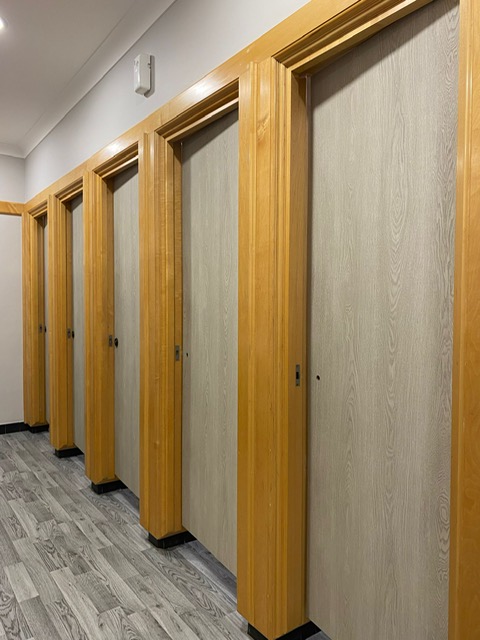
At FI Real Estate Durham, four dated office washrooms were upgraded as part of a larger office renovation. The work included cubicle dividers, IPS panels, doors and vanity units, with the finished scheme using washed oak across the cubicle system and IPS panels, marble-effect vanity units, and mushroom-toned doors and pelmets.
It is a good example of the real point behind this blog. The washrooms were not rebuilt from scratch. The visible elements were upgraded in a way that brought them into line with the rest of the office.

Peterborough Office Washroom Project
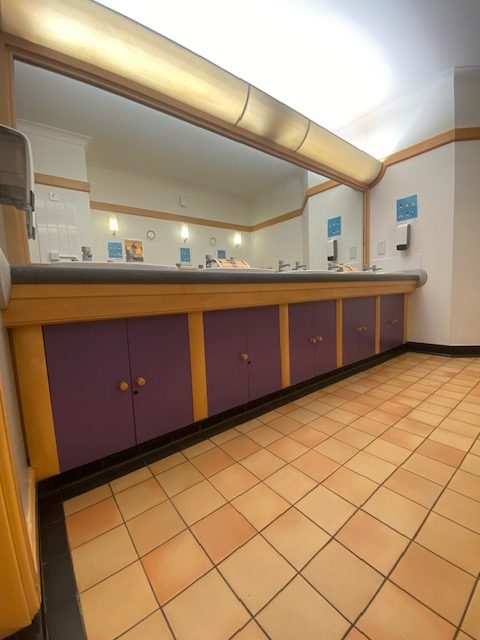
On an office washroom refurbishment project in Peterborough, the work was planned in four phases to minimise disruption in a large office block. The installers wrapped the doors, vanity units and strips, with some filling and some joinery replacement carried out where needed.
Again, the lesson is the same. Not every tired office washroom needs to be stripped back to nothing. In many cases, it makes more sense to assess what is still usable and upgrade from there.

FAQs about Office Washroom Refurbishment
Is washroom vinyl wrapping waterproof?
In practical terms, the finish can be suitable for office washrooms when installed correctly, but detailing still matters. Around sinks and vulnerable edges, sealing is still important, just as it would be with any other finished surface.
Do sinks need to be removed for vanity unit refurbishment?
Not always. Sinks do not necessarily have to be removed, but if they can be taken out, installation is often easier and the finish can sometimes be improved depending on the sink type and the detailing around it.
What if the substrate is damaged?
Minor filling and sanding can be part of standard preparation work. But if the substrate is completely broken, rotting or water damaged beyond repair, wrapping will not solve the underlying problem. In that situation, replacement is usually the right answer.
How long does office washroom refurbishment take?
It depends on the scope, but one of the main reasons refurbishment is chosen is that it is often quicker and less disruptive than full replacement. The Durham office washroom project, for example, transformed four office washrooms in 6 days.
Can washrooms stay open during refurbishment?
Often, yes, at least in part. Washroom refurbishment is commonly planned in phases so sections of the facilities can remain operational while upgrades are completed in stages.
What are the main office washroom refurbishment options?
In most office washrooms, the main refurbishment options are cubicle upgrades, IPS panel refurbishment, vanity unit refurbishment, washroom door upgrades, wall surface upgrades, signage improvements and mirror-related finishes.
Send Photos or Plans For Review
If you are looking at an office washroom and trying to work out what can be refurbished instead of replaced, send over your photos or plans for review by contacting us here.
We can help you assess which elements are suitable for refurbishment, where condition may affect the approach, and whether a surface-led upgrade is the right fit for the project.

