

When a commercial washroom starts to look tired, the immediate assumption is often that everything needs ripping out.
But that is not usually true.
In a lot of office, leisure and hospitality projects, the biggest visual problem is not the plumbing or the layout. It is the finish. Cubicle systems look dated. IPS panels no longer match the rest of the space. Vanity units drag the whole washroom down visually. And once that happens, the entire area starts to feel older than it is.
That is why learning how to refurbish commercial washrooms on a budget is not really about cutting corners. It is about working out what actually needs replacing and what can be upgraded properly in place using vinyl wrapping.
Cubicles and IPS panels are often the biggest visual problem, not the biggest structural one.
A budget washroom refurb should still look intentional.
In This Guide
Quick answer
If you want to refurbish commercial washrooms on a budget, the biggest savings usually come from keeping structurally sound elements in place and upgrading the finish instead of replacing everything. In many projects, that means refurbishing cubicle systems, IPS panels and vanity units rather than stripping them out completely.
What “on a budget” really means in commercial washrooms
In most commercial projects, “on a budget” does not mean doing the cheapest possible thing.
It usually means:
- avoiding unnecessary replacement
- putting money where it matters most
- improving the look of the washroom quickly
- reducing the amount of waste and strip-out
- phasing the works if needed
- keeping the overall project commercially sensible
That is especially important in washrooms, because full replacement can get expensive fast. Once cubicles, IPS panels and vanity units start coming out, the project often becomes much bigger than it first looked.
The biggest opportunity is usually the cubicles, IPS panels and vanity units
If you are trying to refurbish a commercial washroom on a budget, these are usually the first things to assess:
- cubicle systems
- IPS panels
- vanity units
Why?
Because they are:
- highly visible
- bulky and expensive to replace
- repeated throughout the washroom
- often structurally sound even when the finish looks poor
That makes them ideal candidates for refurbishment using vinyl wrapping rather than full strip-out.
When wrapping makes sense
Wrapping usually makes sense when:
- the substrate is still sound
- the visual issue is worse than the structural issue
- the client wants a faster and cleaner refurbishment
- the budget does not support full replacement
- the rest of the scheme is being updated and the washroom needs to catch up
This is especially true with commercial washrooms, where the appearance of the cubicles and IPS often dates the space much faster than the actual construction does.
If the core system is still usable, replacing it just because the finish is tired is often the expensive answer to the wrong problem.
Can damaged cubicles or IPS panels still be wrapped?
Sometimes, yes, but it depends on the condition.
Minor wear, cosmetic damage and tired finishes can often be dealt with through preparation before wrapping. But if the cubicles or IPS panels are damaged beyond repair, unstable or failing structurally, replacement may still be the better option.
That is why site survey matters.
The right question is not just “can this be wrapped?” It is “is this worth wrapping, and will it deliver the right long-term result?”
Will it just look like a cheap fix?
Not if it is done properly.
This is one of the biggest misconceptions about budget-led refurbishment. A lower-cost approach does not have to look temporary or compromised. The key is that the finish still needs to feel deliberate and well chosen.
That is why the best budget washroom refurbishments do not look like patch jobs. They look like the client made smart decisions about what to keep and what to upgrade.
A budget washroom refurb should still look intentional.
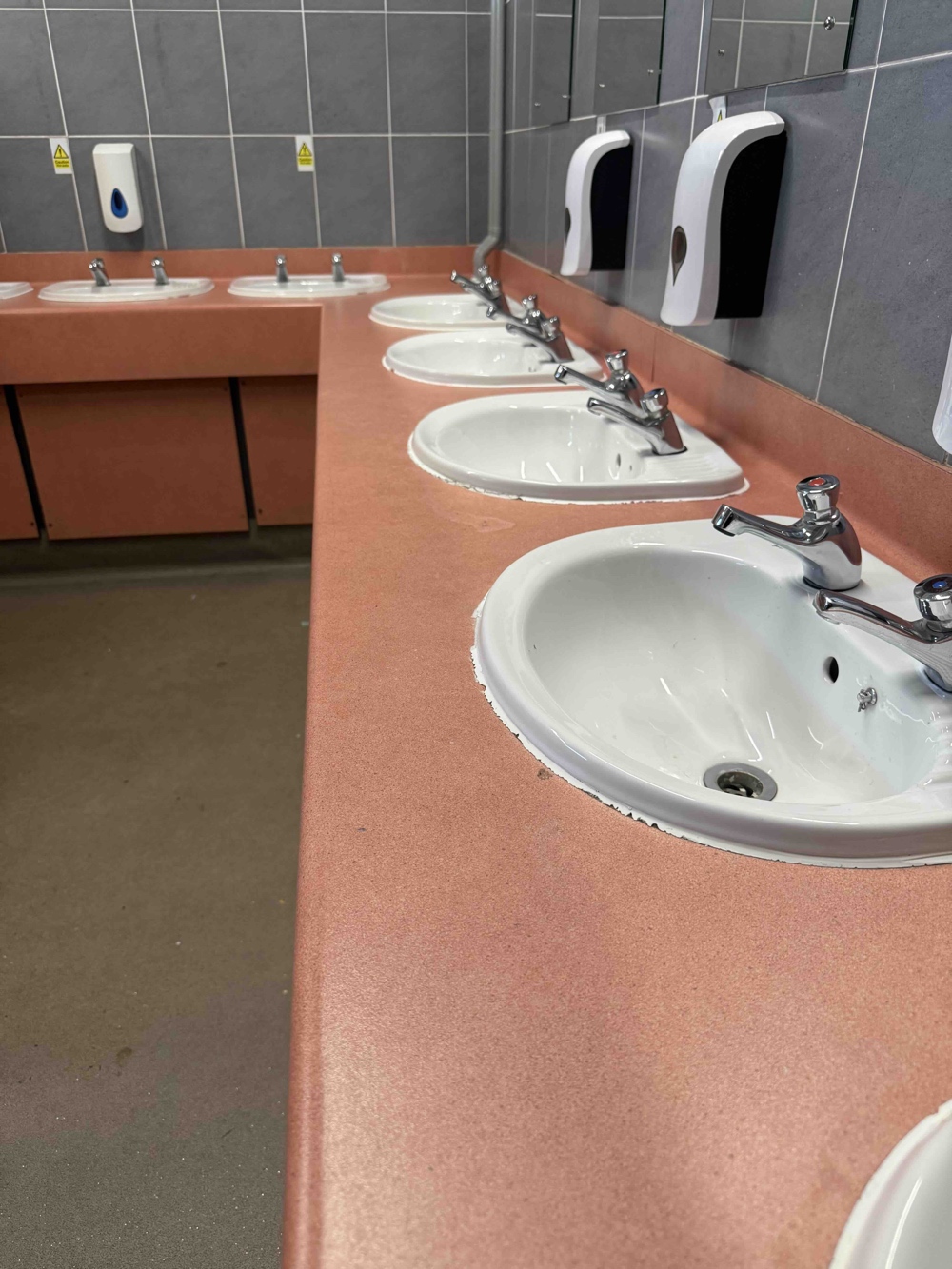
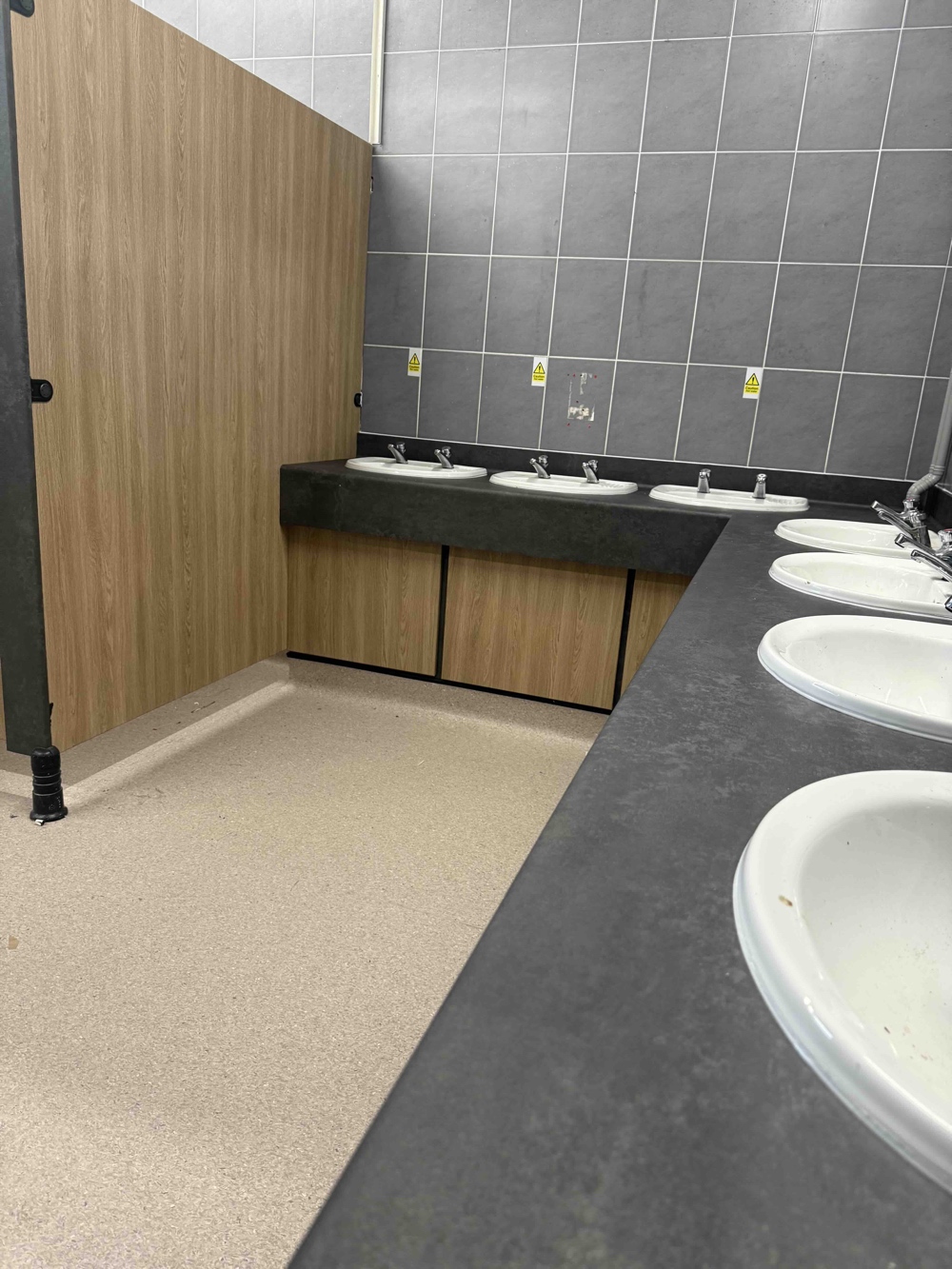
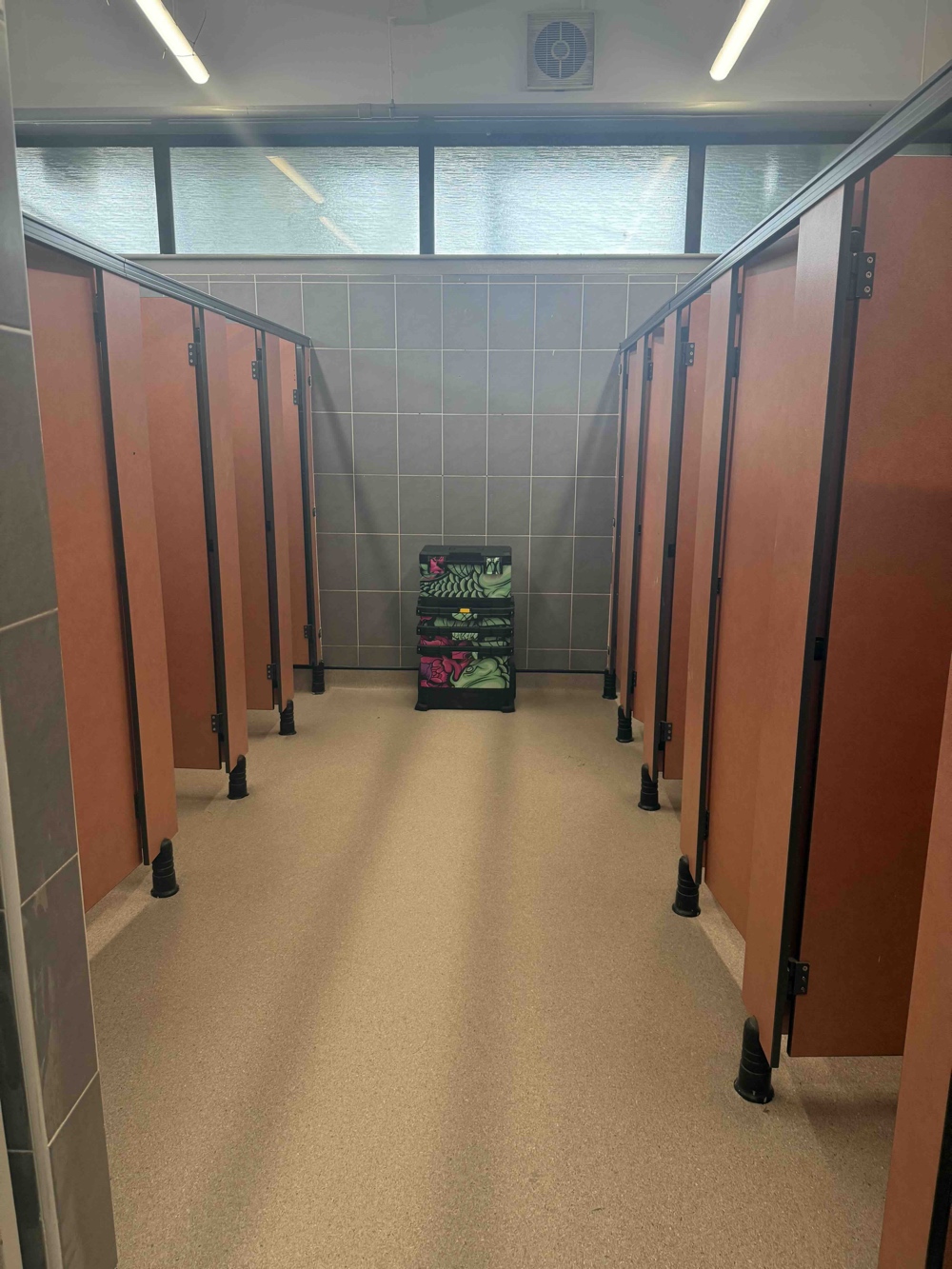
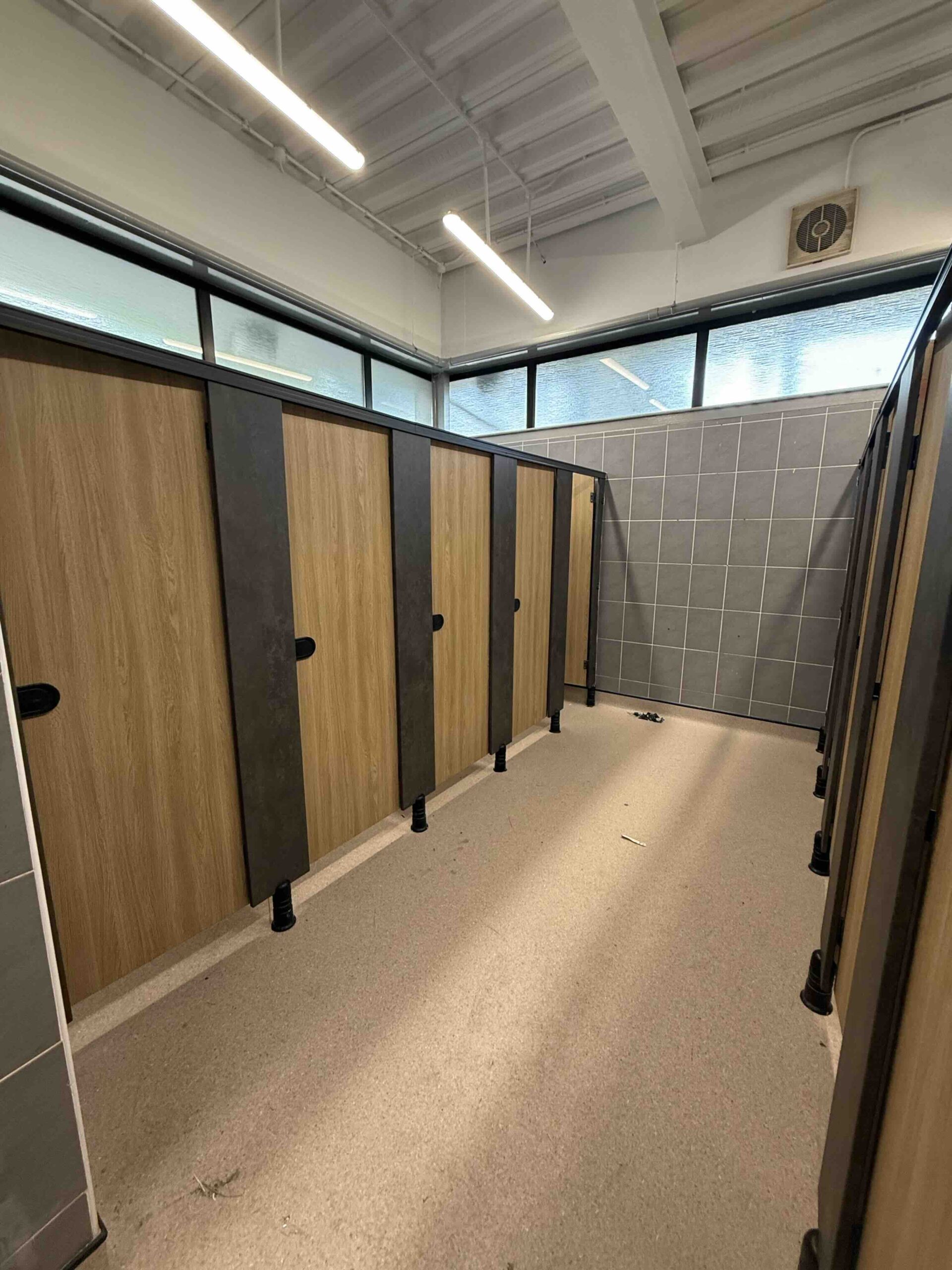
Real project example: The Manchester College
A strong example of this is the newer Manchester College project.
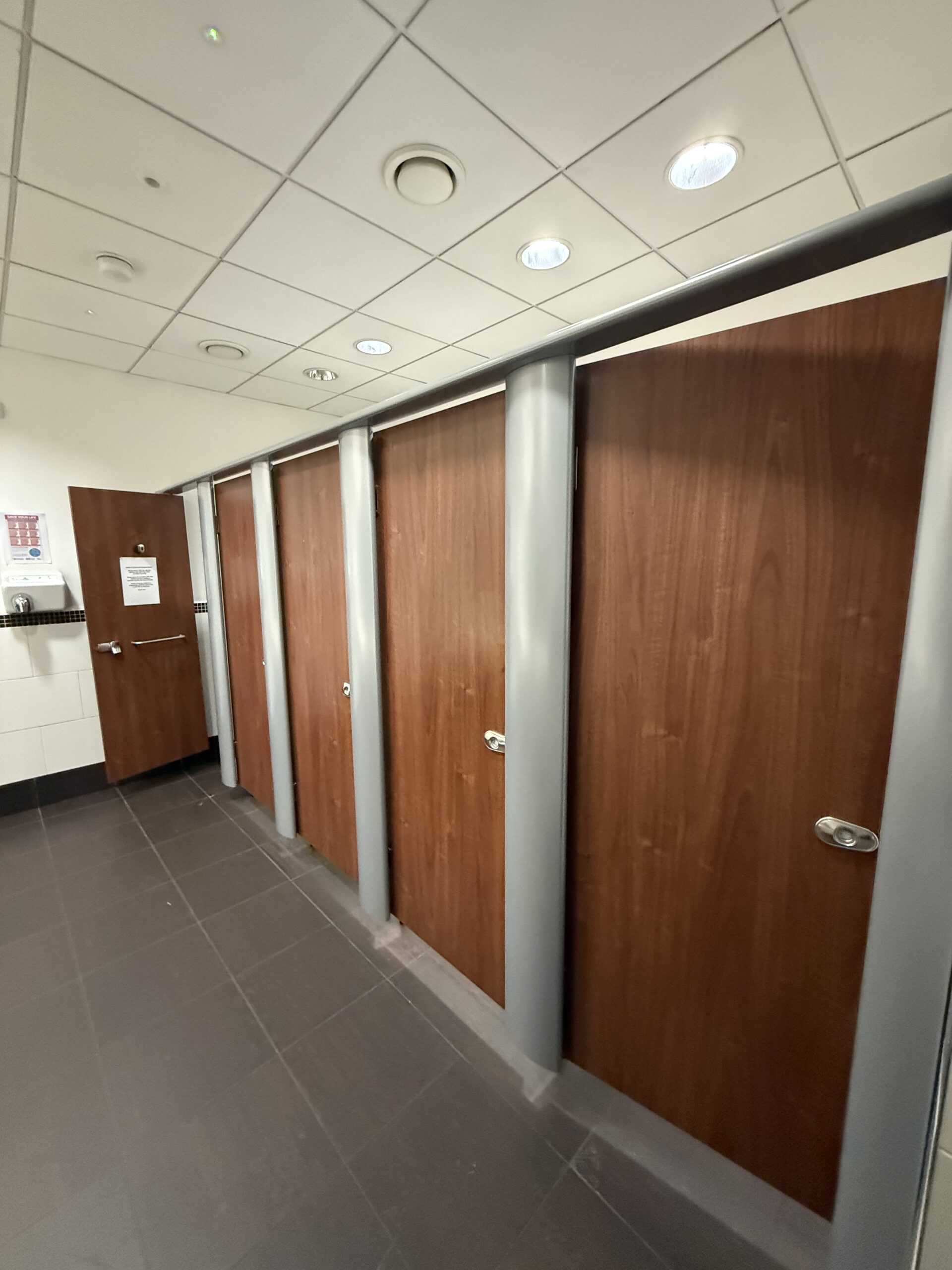
On this job, one large bathroom was wrapped including:
- cubicles
- dividers
- frames
- doors
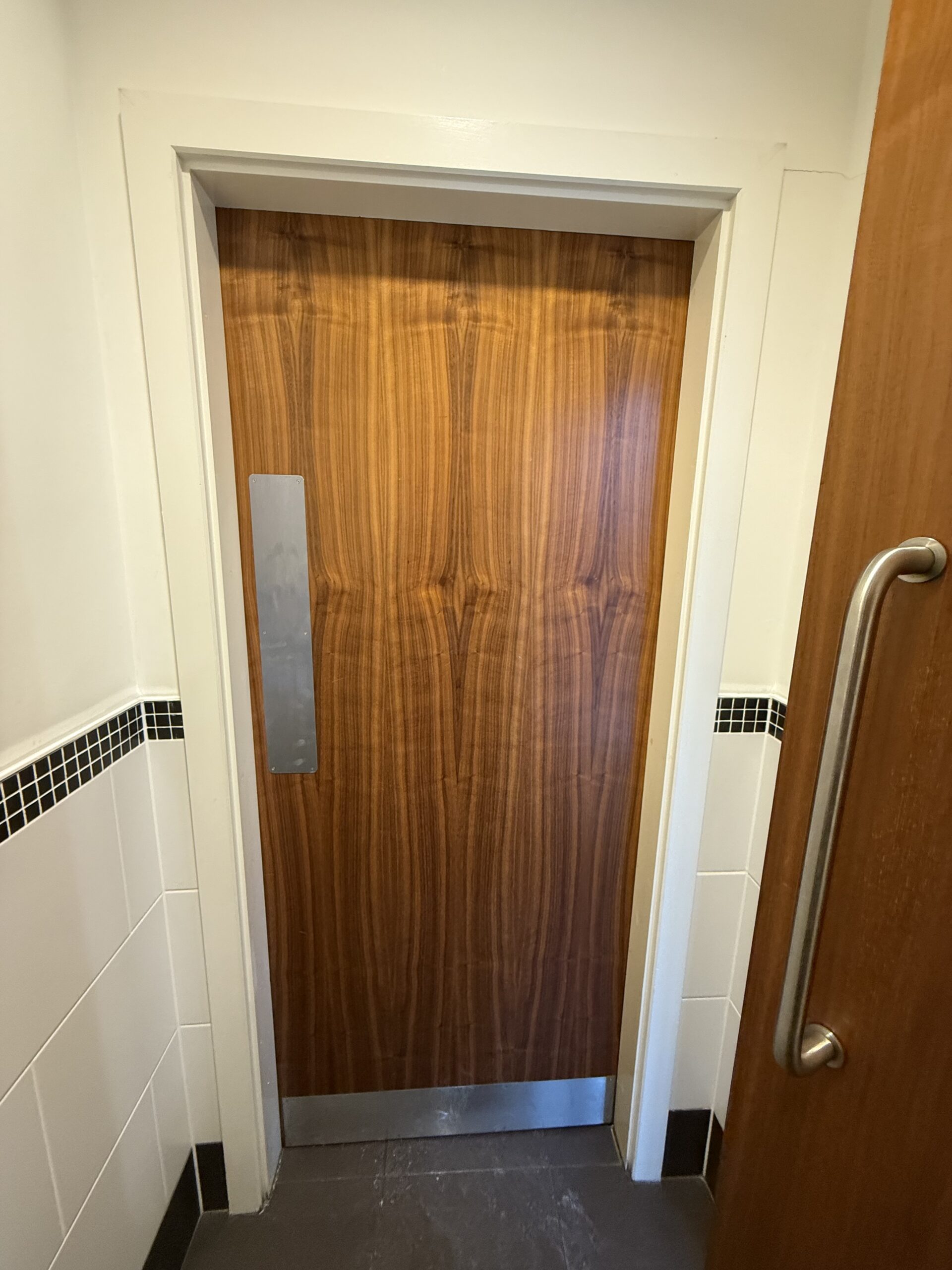
- IPS panels
- vanity units
The finishes used were a stone and wood combination so the refurbished washroom would match the rest of the bathrooms on site that were being fully replaced because those areas were damaged beyond repair.
Two smaller disabled bathrooms were also completed using wrapped IPS panels.
This is a good example of budget-conscious refurbishment being used intelligently. Not everything was replaced. The elements that could be retained were upgraded to sit properly alongside the wider scheme.
Because of the prep requirements and access times, this project took 4 days for 10 cubicles, vanities and IPS. That is a useful reminder that budget refurbishment is not about pretending the work is instant. It is about keeping the right elements and allocating time properly.
Real project example: Findel House
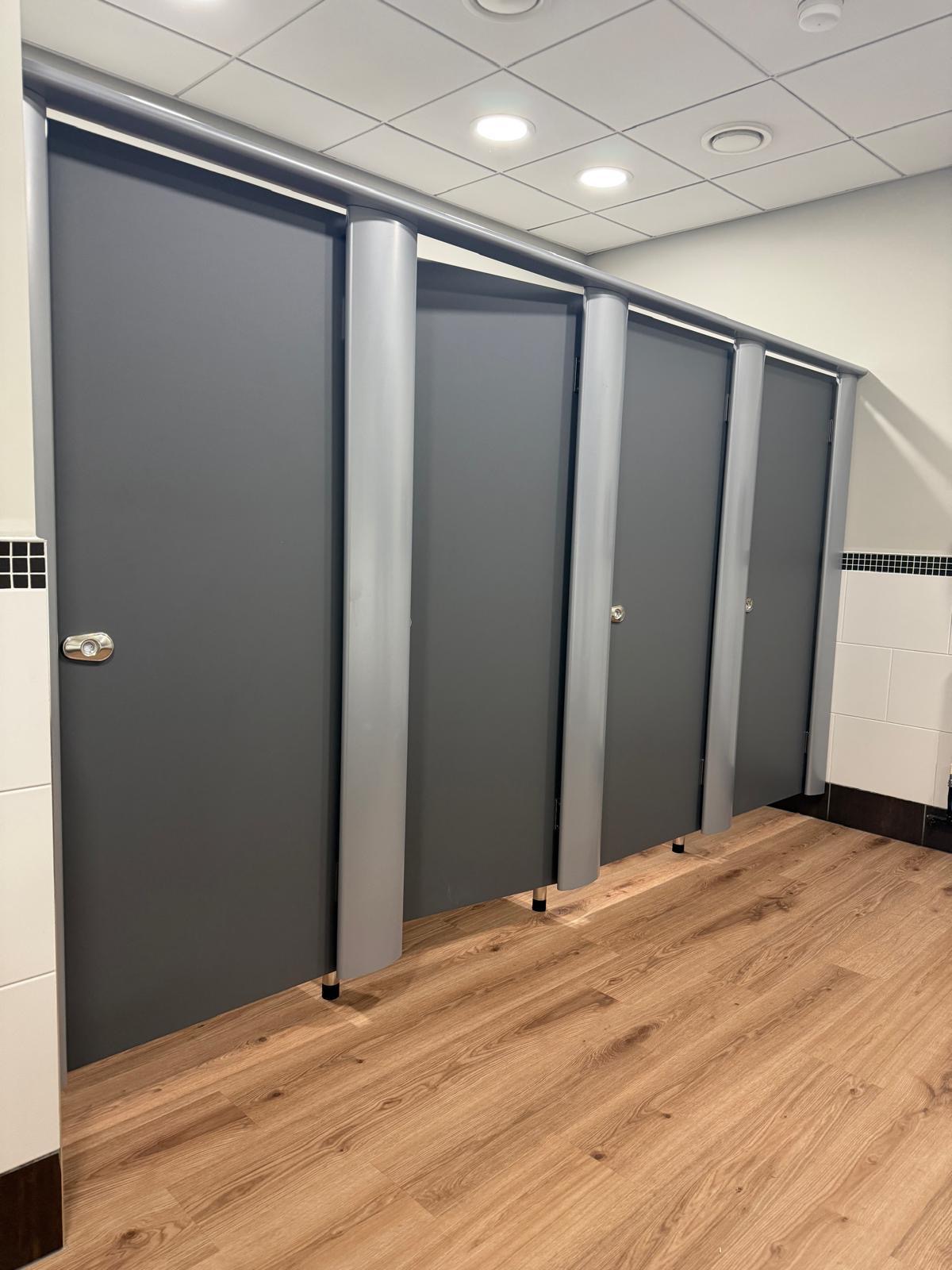
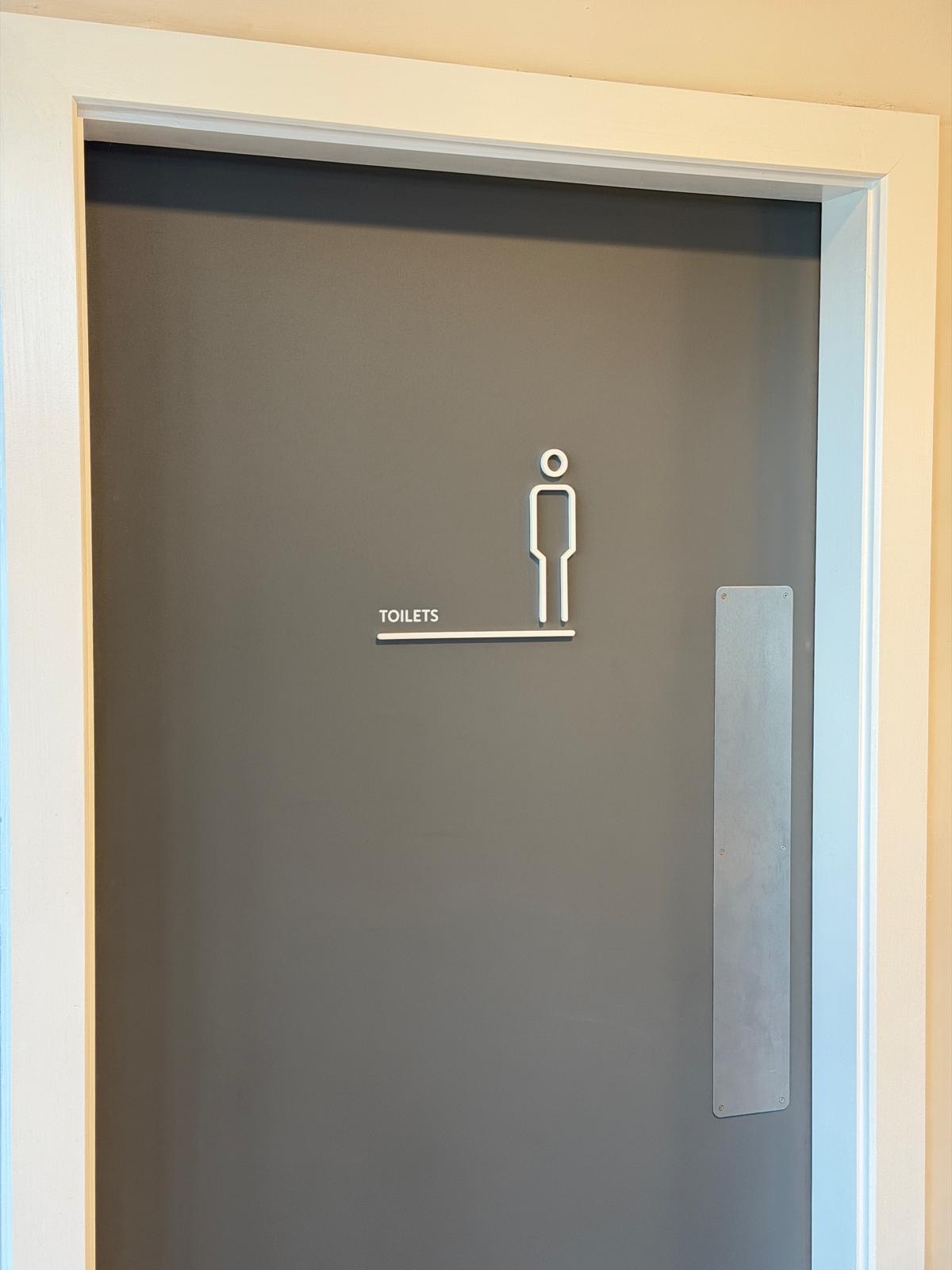
At Findel House, the washroom refurbishment was delivered floor by floor alongside other interior upgrades.
On each floor, the work included:
- around 12 doors
- 4 cubicles
- IPS panels
- framework
The programme was around 2 days per floor.
That is exactly the kind of project where washroom refurbishment makes commercial sense. The washrooms could be improved as part of a wider office upgrade without forcing a much heavier strip-out programme.
How quickly can a budget washroom refurbishment be completed?
This depends heavily on:
- the level of prep
- access windows
- whether the site is live
- how many cubicles or IPS panels are involved
- whether vanity units are included
- whether the works are phased
For example:
- 4 cubicles, including dividers, doors, frames, IPS panels and vanity units, can be wrapped in 1 day in the right conditions
- but a more complex project like The Manchester College took 4 days because of the prep and access constraints
That is why programme planning matters just as much as product choice.
What about moisture around sinks and in leisure environments?
This is one of the main questions clients ask, especially for leisure and hospitality settings.
The honest answer is that washroom refurbishment only works well if the specification suits the environment. Moisture, cleaning routines, substrate condition and installation quality all matter.
That does not mean washroom wrapping is unsuitable. It means it needs to be specified properly.
For vanity units, IPS panels and cubicle systems in leisure or hospitality environments, the right product choice and proper preparation and finishing are what make the difference between a good commercial result and a poor one.
Is wrapping durable enough in washrooms?
Yes, when the right product is chosen and the substrate is suitable.
Washrooms are not low-demand spaces. Cubicles, IPS panels and vanity areas all get repeated use, cleaning and contact. That is exactly why durability is such an important part of the conversation.
The key factors are:
- the quality of the film
- the condition of the surface underneath
- the level of preparation
- the environment
- the installation quality
If those are handled properly, wrapping can be a very effective washroom refurbishment solution.
Can the washroom stay in use during the works?
Sometimes yes, but it depends on the layout and how the project is phased.
In many commercial environments, the practical approach is to work:
- one area at a time
- one floor at a time
- overnight where necessary
- or in planned access windows
That is one of the reasons this approach works well for fit-out contractors and project managers. It gives more flexibility than a full strip-out and replacement programme.
Refurbishment vs replacement in commercial washrooms
If the client is trying to save money, this is usually the real decision:
Refurbishment
Best when:
- the cubicles, IPS panels and vanity units are structurally sound
- the issue is mainly visual
- the budget is limited
- the project needs to avoid unnecessary disruption
Replacement
Best when:
- the systems are damaged beyond repair
- the substrate is unstable
- performance issues mean the elements need replacing
- refurbishment would not deliver the right long-term result
That is why a budget-led washroom strategy still needs judgement. The goal is not to save money by making bad decisions. The goal is to spend more intelligently.
What to Check First
Before deciding how to refurbish commercial washrooms on a budget, it helps to check:
- whether the cubicles are structurally sound
- whether the IPS panels are stable
- whether the vanity units can be retained
- how much of the problem is cosmetic
- how much prep is needed
- what access windows are available
- whether the project needs to be phased
Those are the questions that usually determine whether refurbishment is the right route.
FAQs About Refurbishing Washrooms On A Budget
What is the cheapest way to refurbish a commercial washroom?
The cheapest way to refurbish a commercial washroom is usually not to replace everything. In many projects, the best savings come from keeping structurally sound cubicle systems, IPS panels and vanity units in place, then upgrading the finish instead of stripping them out completely. That approach can reduce waste, lower labour costs and avoid turning a tired washroom into a much bigger replacement project.
Can commercial washroom cubicles be wrapped?
Yes, in many cases commercial washroom cubicles can be wrapped, provided the cubicles are still structurally sound and suitable for preparation. This can include cubicle doors, dividers and frames, depending on the layout and condition of the system. If the issue is mainly cosmetic rather than structural, wrapping is often a much more practical option than full replacement.
Can IPS panels be refurbished instead of replaced?
Yes, IPS panels are often one of the strongest candidates for refurbishment instead of replacement. They are bulky, expensive to remove and often still perfectly usable beneath a dated or damaged-looking finish. If the panels are stable and suitable for preparation, refurbishing them in place can make a big visual difference without the disruption of a full strip-out.
Is wrapping durable enough in commercial washrooms?
Yes, when the right product is specified and the existing surface is suitable, wrapping can be a durable solution for commercial washrooms. Performance depends on the condition of the cubicles or panels, the level of moisture in the environment, the quality of the preparation and the standard of installation. In other words, it needs to be treated as a proper commercial refurbishment solution, not a quick cosmetic shortcut.
Can washrooms stay in use during the works?
Sometimes, yes, but it depends on the layout, access and how the works are phased. In many office, leisure and hospitality projects, the most practical approach is to refurbish one area at a time, one floor at a time, or work in planned access windows. That flexibility is one of the reasons washroom refurbishment can be easier to manage than full replacement.
Will a budget washroom refurbishment look cheap?
Not if it is planned and specified properly. A lower-cost washroom refurbishment should still feel intentional, cohesive and in keeping with the wider scheme. The goal is not to make the washroom look “good for the budget.” The goal is to make smart decisions about which elements can be retained and upgraded so the finished result still looks properly considered.
Can damaged cubicles or IPS panels still be wrapped?
Sometimes, yes, but it depends on the type and extent of the damage. Minor cosmetic wear, tired finishes and some surface imperfections can often be dealt with during preparation, but structurally damaged or unstable elements may still need replacing. The right question is not just whether they can be wrapped, but whether wrapping them will deliver the right long-term result.
Are washroom refurbishments on a budget only suitable for offices?
No. This approach can work well in offices, leisure facilities and hospitality settings, especially where the washroom looks tired but the main elements are still structurally sound. The exact specification will vary depending on the environment, but the core principle is the same: keep what is still usable and upgrade the finish properly instead of replacing everything by default.
Talk to Fusion About Budget-Friendly Washroom Refurbishment
If you are trying to refurbish a commercial washroom on a budget, the smartest move is usually to work out what can be retained before assuming everything has to be replaced.
Fusion Surfaces helps fit-out contractors and project managers upgrade cubicle systems, IPS panels and vanity units without unnecessary full strip-out, helping projects stay commercially sensible while still delivering a strong finished result.
Explore commercial washroom refurbishment or contact our team to discuss your project.

