

Most offices do not need gutting, they need updating properly.
That is the difference between a refurbishment that feels thoughtful and one that creates a huge amount of avoidable waste. In a lot of office projects, the doors still work, the tea point still functions, the reception desk is still structurally sound and the washroom cubicles are still doing their job. The problem is not usually failure. It is that the finishes look tired, dated or out of step with the rest of the scheme.
That is why sustainable office refurbishment should not just mean using better products. It should also mean asking better questions before anything gets ripped out. If a surface can be retained and upgraded properly, filling skips with usable materials is rarely the smartest answer.
You can change how an office feels without filling skips.
In This Guide
At a glance
Best for: offices with tired finishes but structurally sound doors, architraves, washroom systems, wall panels, tea points, reception desks and fitted joinery
Main drivers: downtime, cost, avoiding skip waste, waste reduction and increasingly sustainability targets
Biggest avoidable waste sources: doors, cubicles, IPS panels, reception desks, tea points, wall panels and fitted joinery
Commercial reality: most clients still prioritise downtime and cost first, but sustainability is becoming a more important part of the decision
What Sustainable Office Refurbishment Actually Means
A lot of people hear the word sustainable and think of recycled materials, carbon claims or green credentials.
Those things matter, but in office refurbishment the most obvious sustainability win is often much simpler than that: not throwing away things that are still perfectly usable.
A more sustainable office refurbishment is one that looks carefully at what actually needs replacing and what can be retained, repaired or resurfaced. That might mean:
- refurbishing internal doors instead of replacing them
- upgrading tired washroom cubicles and IPS panels instead of ripping them out
- refreshing tea points and reception desks in place
- retaining wall panels and fitted joinery where the structure is still sound
That is the practical side of sustainability, and in commercial interiors it often makes just as much difference as any material specification.
Why Full Strip-Out Is Not Always the Smarter Option
Traditional office refurbishment often defaults to replacement.
Doors come off. Joinery gets removed. Cubicles are dismantled. Reception desks go in skips. Wall panels and tea points are stripped back even when the basic structure is still fine. That creates waste fast, but it also creates:
- more site mess
- more disruption
- more labour
- more disposal cost
- more pressure on programme
- and often more spend than the visual problem really justified
That is why sustainable office refurbishment should not start with “what can we remove?” It should start with “what actually needs to go?”
The Biggest Sources of Avoidable Waste in Office Refurbishment
From a practical point of view, some of the most obvious waste usually comes from:
- internal doors
- architraves
- washroom cubicles
- IPS panels
- tea points
- reception desks
- wall panels
- storage walls and fitted joinery
These are bulky items. They take up a lot of room in skips and create a surprising amount of landfill volume once a project starts stripping them out.
In many offices, these are also the very elements that are most likely to be replaced for cosmetic reasons rather than structural ones.
Why Retained-Surface Refurbishment Is More Sustainable
Retained-surface refurbishment is exactly what it sounds like. Instead of removing a surface and replacing it with a new one, the existing element is kept in place and upgraded.
That usually means:
- less waste leaving site
- fewer new materials being manufactured, transported and installed
- less disruption to the building
- lower disposal requirements
- a faster and more controlled programme
This is where commercial vinyl wrapping becomes such a useful part of the conversation. Doors, architraves, reception desks, wall panels, tea points, washroom systems and other hard surfaces can often be upgraded in place using architectural film if the substrate is still sound.
That is not only a design decision. It is a practical sustainability decision too.
Sustainable Office Refurbishment vs Full Strip-Out
| Approach | What usually happens | Waste impact | Downtime | Cost pressure | Best when |
|---|---|---|---|---|---|
|
Retained-surface refurbishment |
Existing doors, joinery and surfaces are upgraded in place |
Lower |
Lower |
Lower to medium |
Surfaces are structurally sound but visually tired |
|
Full strip-out and replacement |
Existing items are removed and new ones installed |
Higher |
Higher |
Higher |
Surfaces are damaged beyond repair or unsuitable for refurbishment |
That is the real commercial choice on many office projects.
This is also why the sustainability conversation does not have to fight against commercial reality. Often, the lower-waste option is also the faster, cleaner and more cost-effective one.
Why This Still Works for Fit-Out Contractors, Occupiers and Designers
The idea of retaining surfaces only works if the finished result still feels right.
That is one of the biggest misconceptions around sustainable office refurbishment. Some people hear “retain existing” and assume the office will look compromised. In practice, if the right surfaces are retained and upgraded properly, the finished space can still feel premium, coherent and intentional.
That matters for:
- fit-out contractors, who need a practical solution that keeps programmes moving
- office occupiers, who want upgrades without unnecessary disruption
- designers and project managers, who need the finished office to feel considered, not patched together
This is where retained-surface refurbishment is strongest. It allows the visual quality of the office to improve without forcing replacement of every surface that happens to look a bit dated.
Will It Still Look Premium?
Yes, it can still look premium, if the refurbishment is specified properly and the surfaces selected for retention are the right ones.
The key is not trying to save everything. It is choosing the elements that are still structurally sound and worth keeping, then updating them properly so they sit comfortably within the wider scheme.
That might mean:
- wrapping doors and architraves in a finish that matches the wider office palette
- updating reception desks to align with the new front-of-house look
- refurbishing tea points and wall panels instead of rebuilding them
- refreshing washroom cubicles so they no longer feel like an untouched leftover part of the office
If the retained items are carefully chosen, the result should feel smarter, not second best.
Project at a glance: Warner Leisure
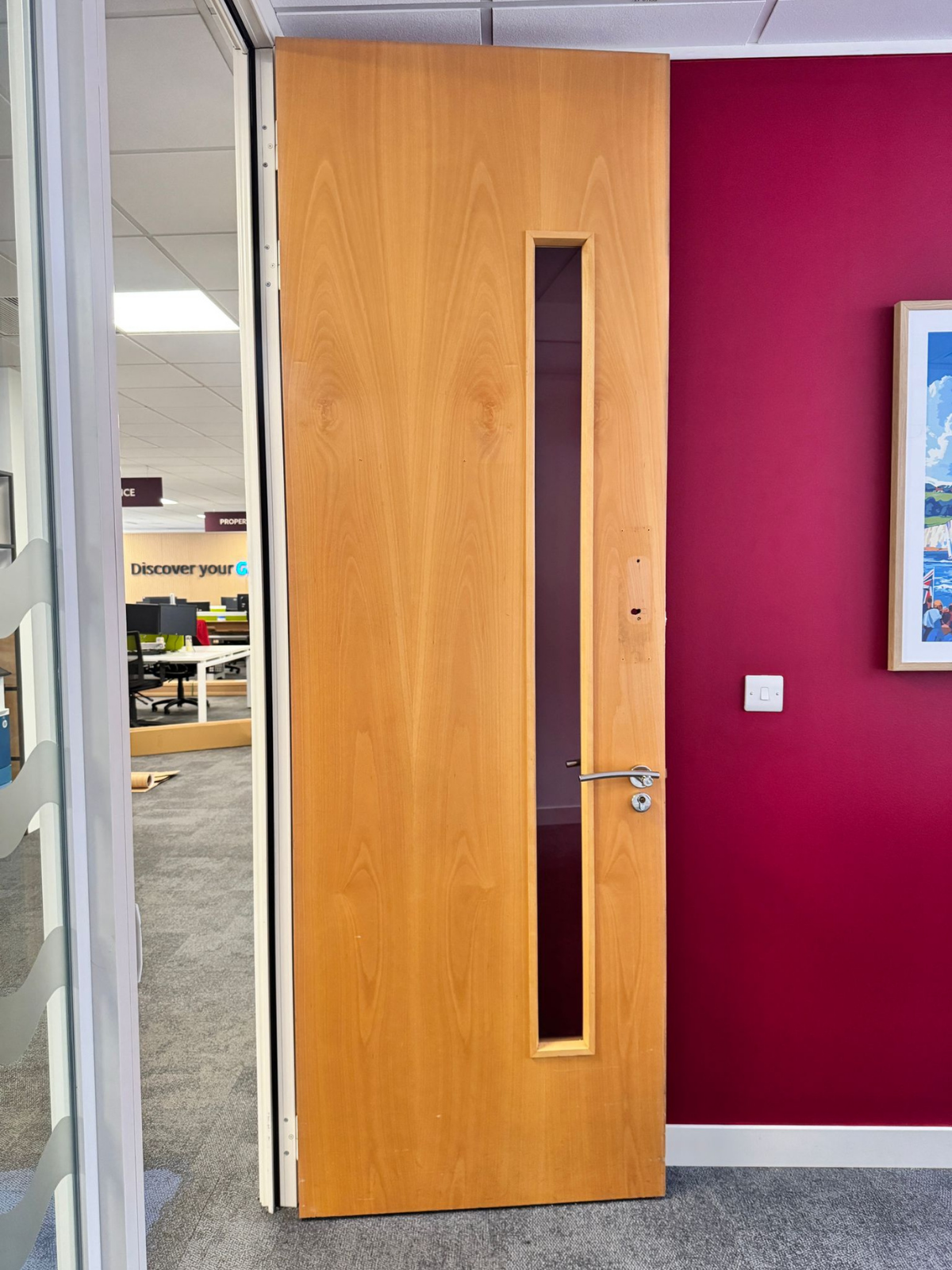
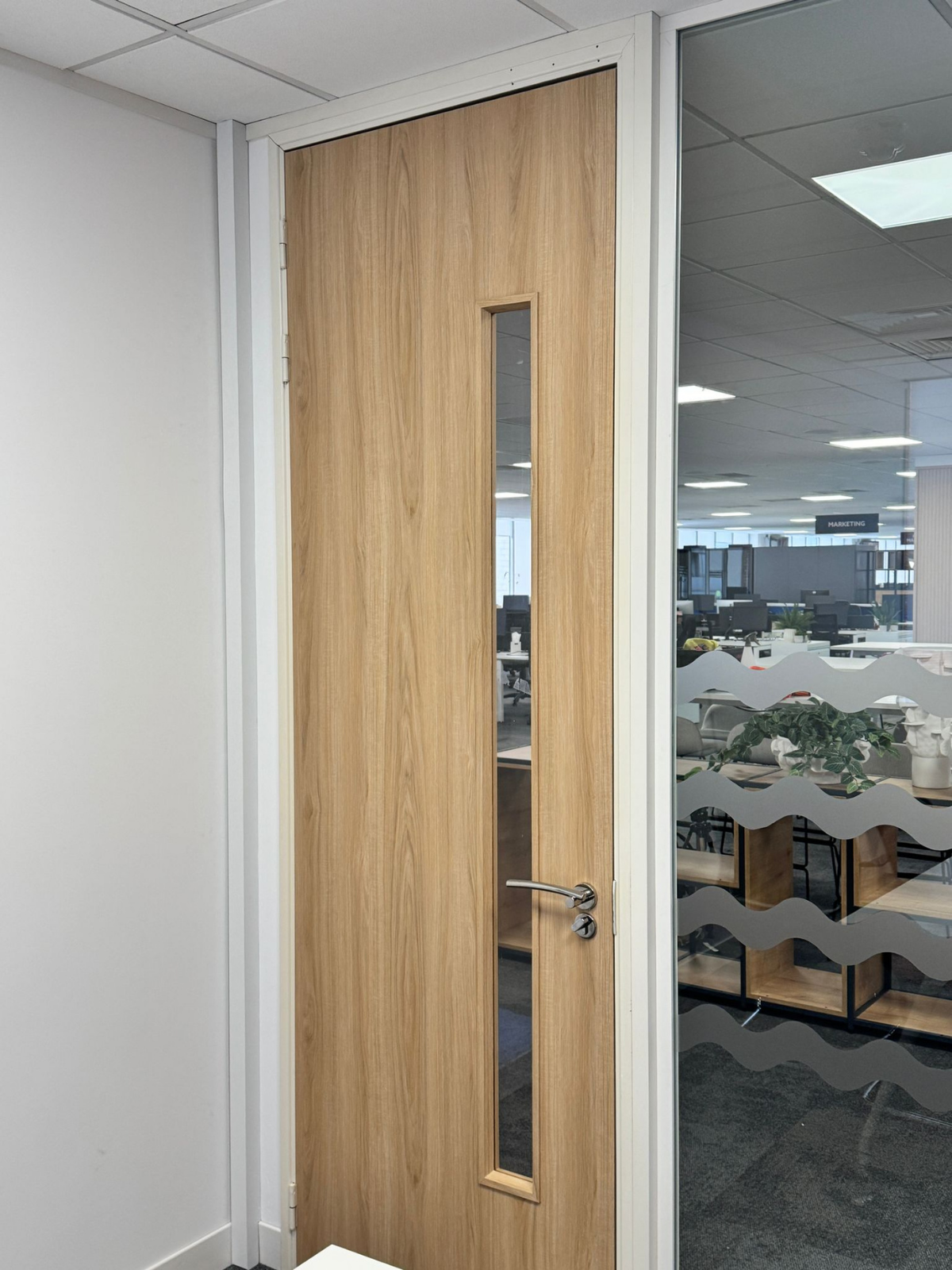
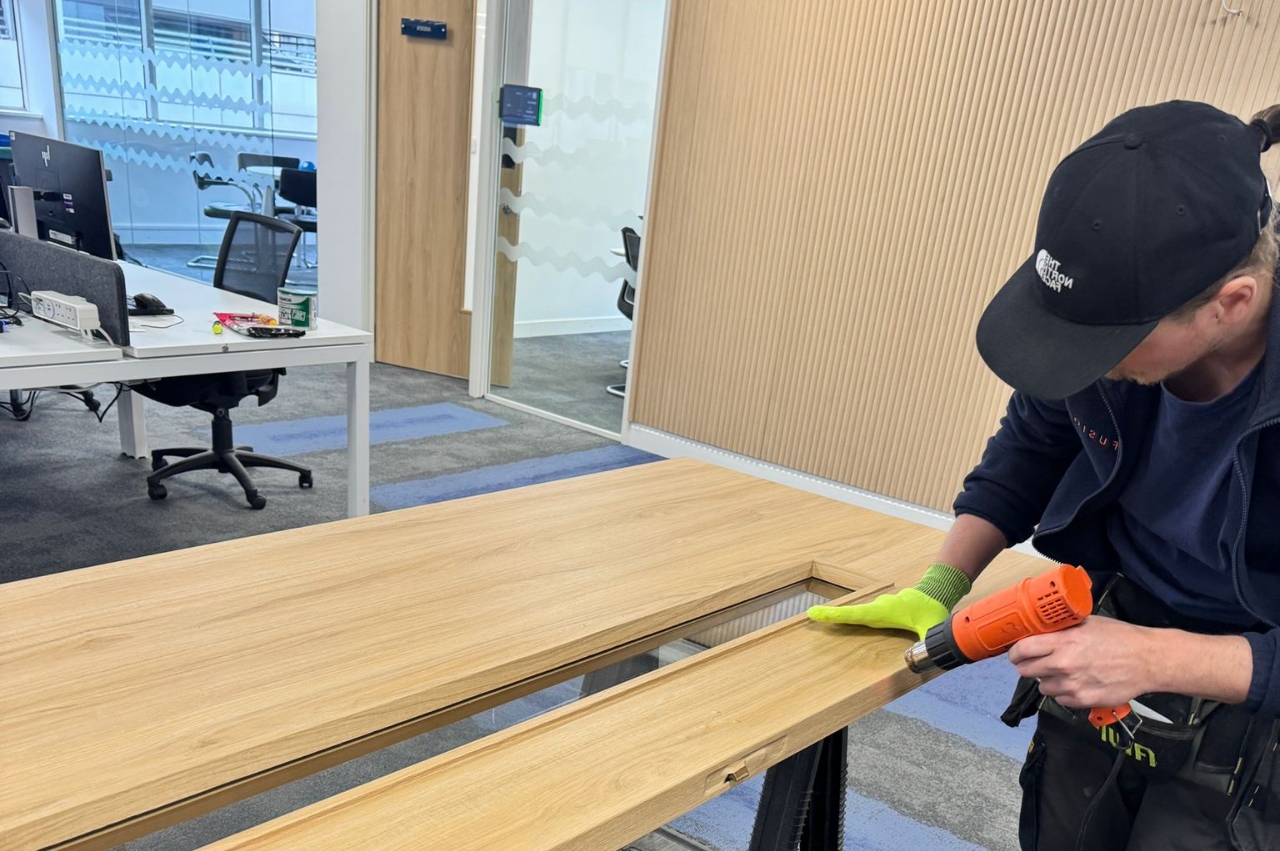
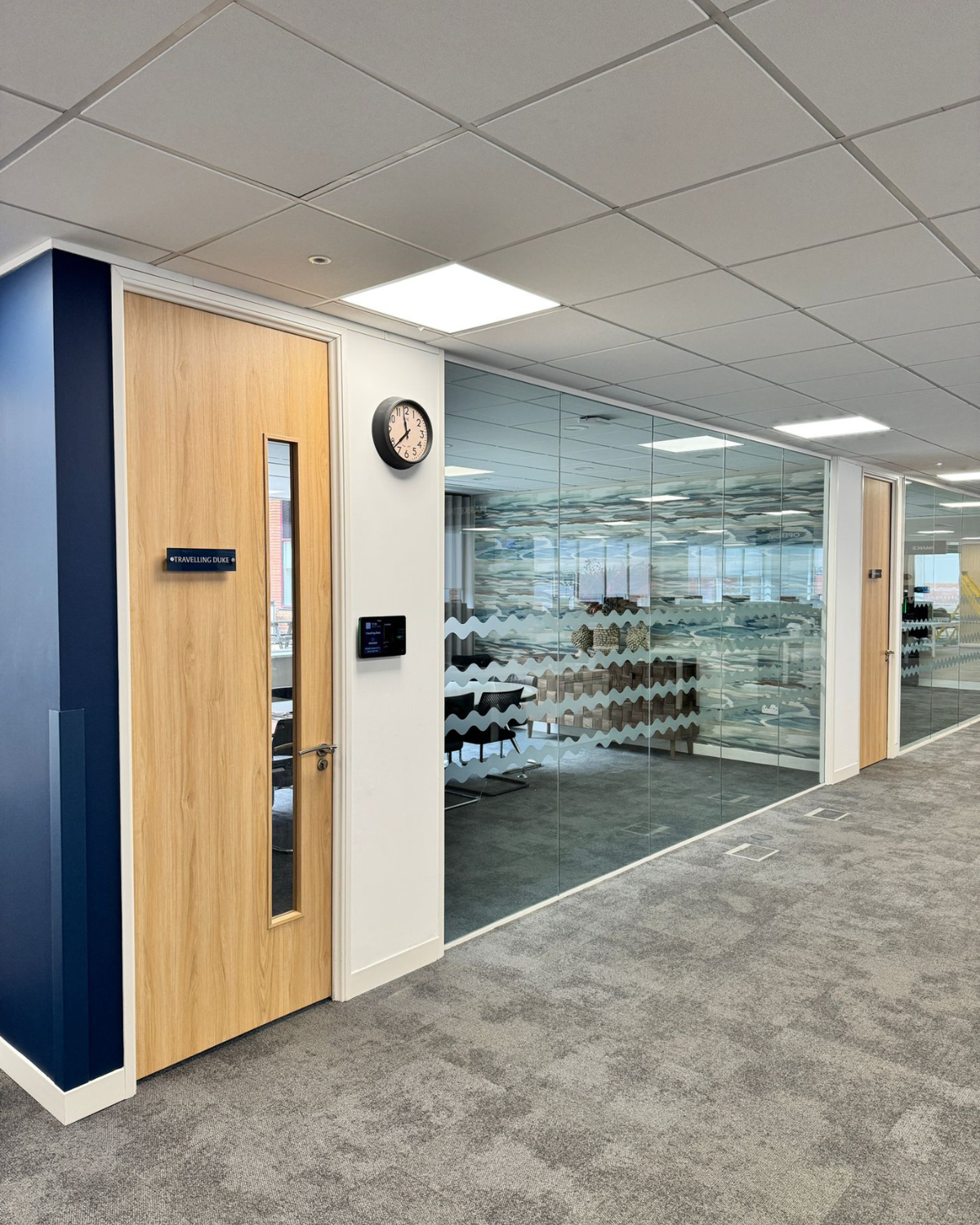
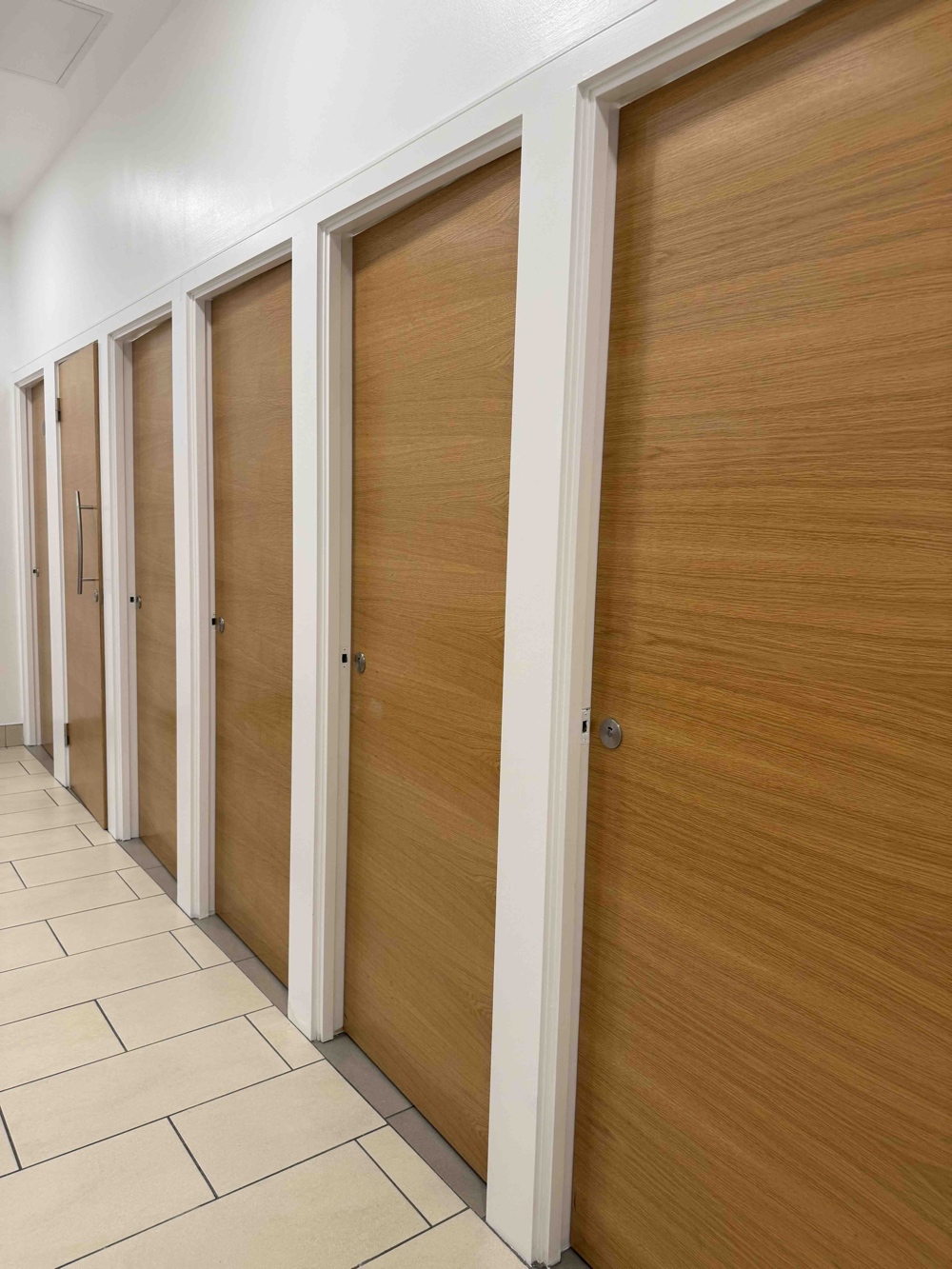
Projects like Warner Leisure are a good example of how retained-surface refurbishment can work in a live office setting.
Instead of assuming the doors needed replacing, the project focused on upgrading existing door surfaces and related details in a way that fitted around building use and avoided unnecessary disruption. That is the sort of commercial logic that makes sustainable office refurbishment work in real life: keep the structure, improve the finish, avoid avoidable waste.
Project at a glance: Atria Bolton
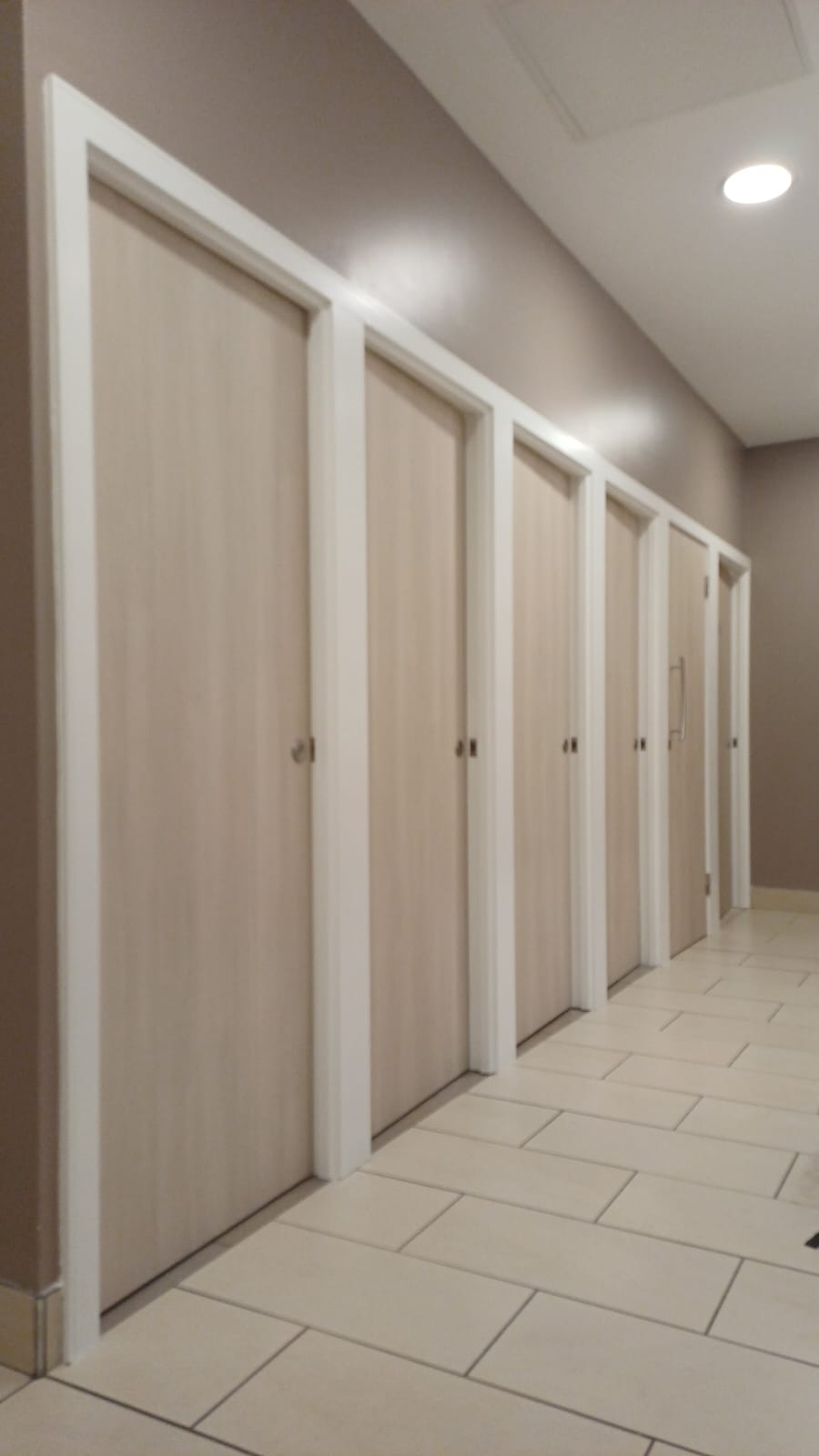
Atria Bolton is another useful office example because it reflects the reality of how many commercial refurbishments actually happen. In these projects, it is often not one dramatic element that dates the office. It is the combined effect of tired surfaces across multiple areas.
That is why retaining and upgrading visible elements instead of stripping them out can make such a difference. It helps the whole office feel more considered without turning the project into a much heavier replacement programme.
Project at a glance: DBSJ Didsbury
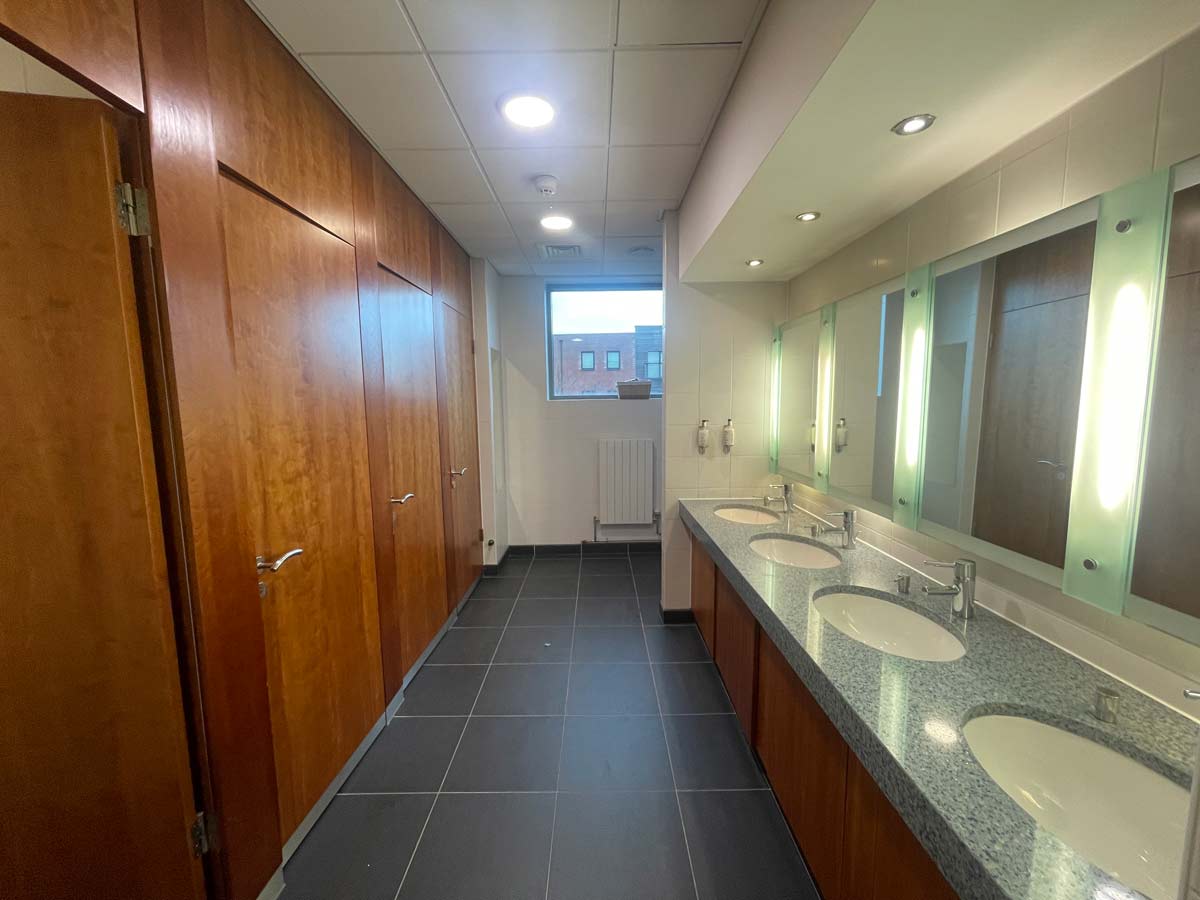
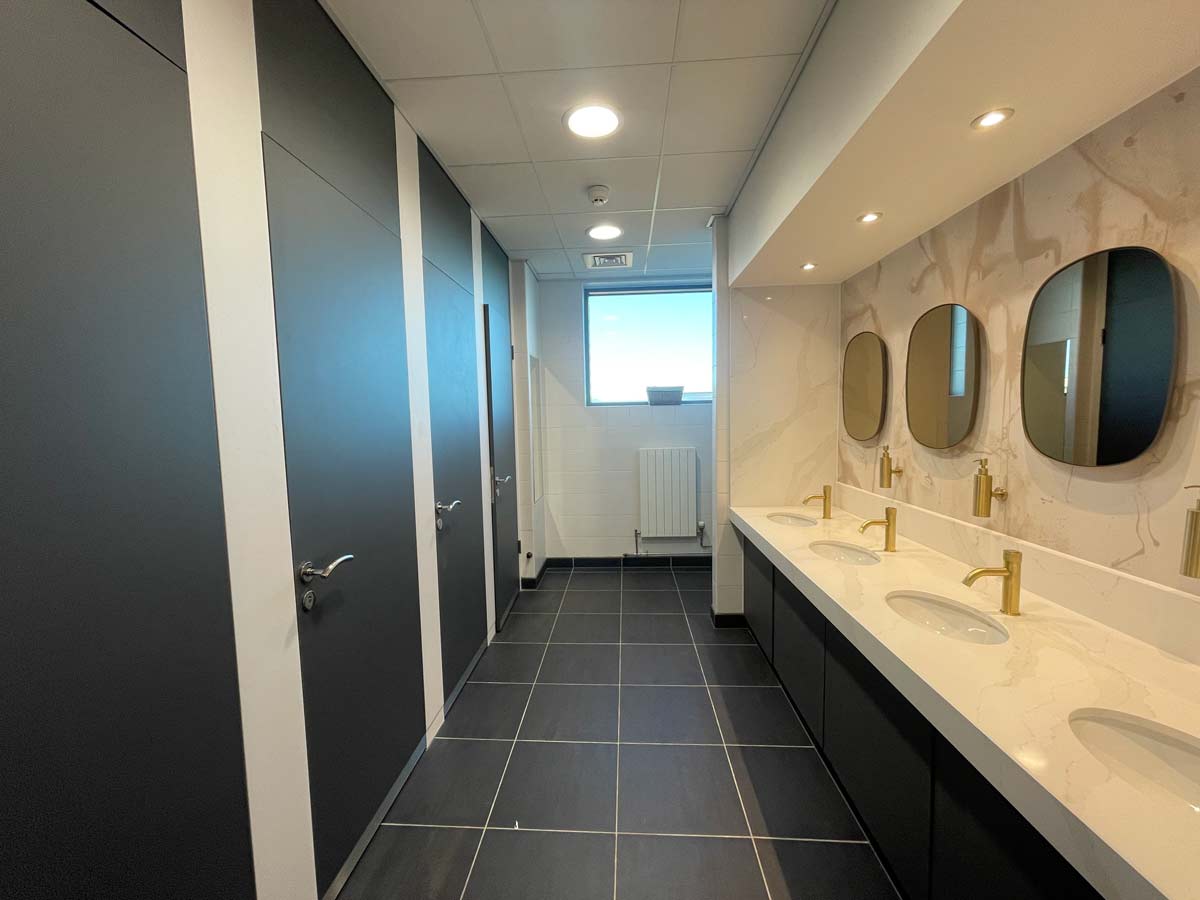
The DBSJ Didsbury Office Bathroom Cubicle Refurbishment project is especially relevant because washroom systems are one of the easiest parts of an office to overlook until they start pulling the whole environment down.
Cubicle systems and IPS panels are bulky, expensive to replace and awkward to remove. If they are still structurally sound, replacing them just because the finish is dated can create a lot of unnecessary waste. Refurbishing those elements instead is often one of the clearest examples of sustainable office refurbishment in practice.


What to Check First Before Deciding to Replace
Before anything gets stripped out, it helps to ask:
- Is the item actually damaged, or just visually tired?
- Is the substrate still sound?
- Would upgrading the finish solve the problem?
- Is replacement being driven by appearance rather than performance?
- Will replacing it create unnecessary waste and disruption?
- Could the budget be used more effectively elsewhere in the project?
Those are the questions that make office refurbishments more thoughtful.
When Replacement Still Makes Sense
This should not be presented as if replacement is always wrong.
Replacement may still be the better option if:
- the substrate is unstable
- the item is structurally damaged
- the surface is unsuitable for refurbishment
- the long-term result would not justify keeping it
- compliance or performance requirements mean the element needs replacing
Sustainable office refurbishment is not about keeping everything at all costs. It is about avoiding unnecessary replacement where the structure is still good enough to keep.
Why This Matters More Now
Sustainability targets are rising in priority, even if they are still not the first thing most clients talk about.
For many fit-out teams and occupiers, the first conversation is still about downtime and cost. But that is exactly why retained-surface refurbishment is such a strong position. It aligns lower waste with the things commercial clients already care about:
- shorter programmes
- less disruption
- lower disposal burden
- more efficient use of budget
That is what makes it more convincing than vague sustainability messaging. It is practical.
FAQs About Sustainable Office Refurbishment
What is sustainable office refurbishment?
Sustainable office refurbishment is an approach that reduces waste and unnecessary replacement by retaining and upgrading existing surfaces where possible, rather than automatically stripping everything out.
Is vinyl wrapping actually more sustainable?
It can be, because it extends the life of structurally sound surfaces and reduces the amount of material being removed and sent to landfill.
Will retained-surface refurbishment still look premium?
Yes, if the right surfaces are selected and the finishes are specified properly. The aim is not to “make do.” It is to upgrade existing elements so the finished office still feels cohesive and high quality.
What creates the most avoidable waste in office refurbishment?
Common examples include doors, architraves, washroom cubicles, IPS panels, reception desks, tea points, wall panels and fitted joinery that are removed for cosmetic reasons rather than structural failure.
When is replacement still the better option?
Replacement is still the right choice where the substrate is damaged, unstable, non-compliant or otherwise unsuitable for refurbishment.
Talk to Fusion About Sustainable Office Refurbishment
f you are planning an office refurbishment and want to avoid unnecessary strip-out, Fusion Surfaces can help you assess which doors, wall panels, tea points, reception desks, washroom systems and other hard surfaces could be retained and upgraded instead of replaced.
That is often the smarter route commercially and environmentally.
Explore commercial vinyl wrapping, Corporate Offices, or contact our team to discuss your refurbishment plans.

