

A lot of commercial refurbishment waste is completely avoidable.
Barely a day goes by without seeing skips full of fitted furniture, doors, panels and joinery that were still structurally usable but ripped out anyway. In many cases, the problem is not that these items have failed. It is that they look tired.
That is the real reason this matters.
A lot of these items are only being replaced because they look tired, not because they’ve failed.
Using architectural vinyl wrapping, many existing surfaces can be refurbished in place instead of removed and replaced. That means less waste leaving site, fewer materials being sent to landfill and a more efficient refurbishment process overall.
For hotels, student accommodation, offices and other live commercial environments, that also usually means lower cost, faster delivery and less disruption than traditional renovation.
In This Guide
Why Traditional Refurbishment Creates So Much Waste
Traditional refurbishment often defaults to replacement.
Doors come off. Fitted furniture gets ripped out. Washroom cubicles, IPS panels, wall panels and joinery are removed in bulk and loaded into skips. The problem is that many of those items are not being removed because they are unusable. They are being removed because the finish no longer suits the space.
That is where so much waste comes from.
In commercial interiors, some of the biggest contributors are:
- fitted furniture
- internal doors
- wardrobes
- washroom cubicle systems
- IPS panels and framework
- wall panels and other fixed joinery
These are large, bulky items. Once they go into skips, the landfill contribution adds up quickly.
How Vinyl Wrapping Reduces Waste
Vinyl wrapping reduces waste because it keeps existing surfaces in place.
Instead of removing a door, wardrobe, cubicle system or wall panel and replacing it with a new one, architectural film is applied to the existing surface to create a new finish in situ. The structure stays. The appearance changes.
That means less waste in three obvious ways:
- fewer usable items are thrown away
- fewer new replacement materials are required
- less packaging, transport and disposal is involved
This is one of the main reasons vinyl wrapping can be a more sustainable refurbishment route, but it is also one of the reasons it often makes more commercial sense.
In most real projects, clients care about cost first. Then, depending on the sector, they care about speed, downtime and keeping the building operational. Waste reduction is often the additional benefit that comes with making the smarter refurbishment choice.
Refurbish Instead of Replace: The Commercial Logic
The phrase “refurbish instead of replace” is not just a sustainability line. It is usually the most practical way to look at commercial interiors.
If a fitted unit, door or washroom system is still structurally sound, replacement is not always the best use of money, time or labour.
Wrapping often makes more sense where:
- the item still functions properly
- the issue is mainly cosmetic
- downtime needs to be kept low
- the building needs to stay operational
- the client wants a cleaner, faster project
That is why vinyl wrapping tends to work so well in:
- hotels
- student accommodation
- offices
- live commercial buildings
- phased refurbishment programmes
What Gets Thrown Away Most Often?
In our experience, the biggest avoidable waste tends to come from fitted furniture and doors.
And that is not surprising.
Doors are repeated across whole floors and buildings. Fitted furniture is heavy, awkward to remove and often still perfectly usable underneath a tired finish. Washroom cubicle systems and IPS panels are another major example. They take up a lot of room in skips, and once those bulky items are removed, the waste volume becomes significant very quickly.
This is why replacement should not be the automatic answer.
A Real Example: Staycity Birmingham
The Staycity project involved 15 apartments, each with three internal doors, a wardrobe and a guest-facing entrance panel. Instead of replacing those items, Fusion Surfaces wrapped 45 doors, 15 wardrobes and 15 entrance panels in two days using LX Hausys architectural film. Nothing was thrown out and that, aside from the film backing and no new materials were needed.
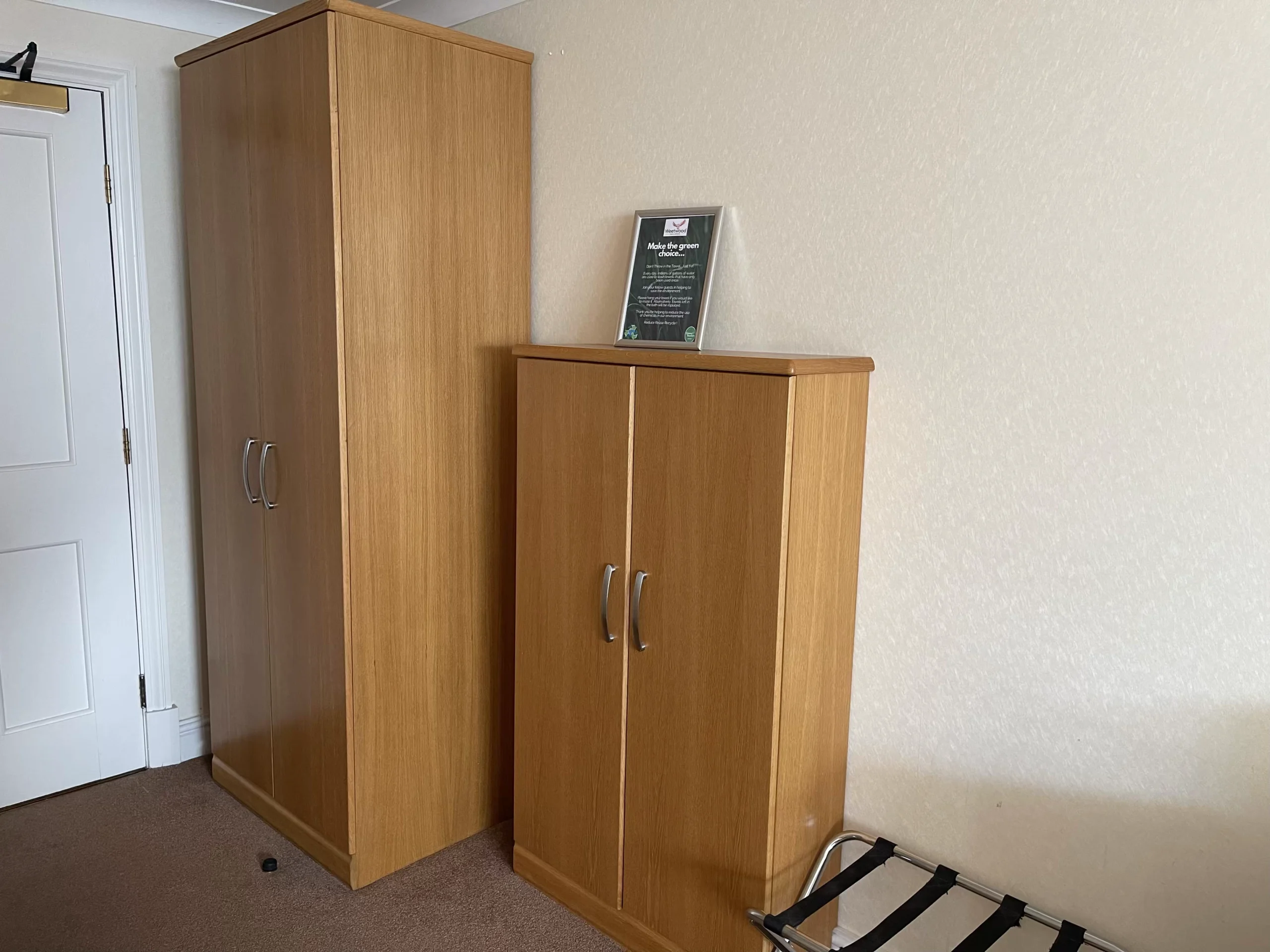
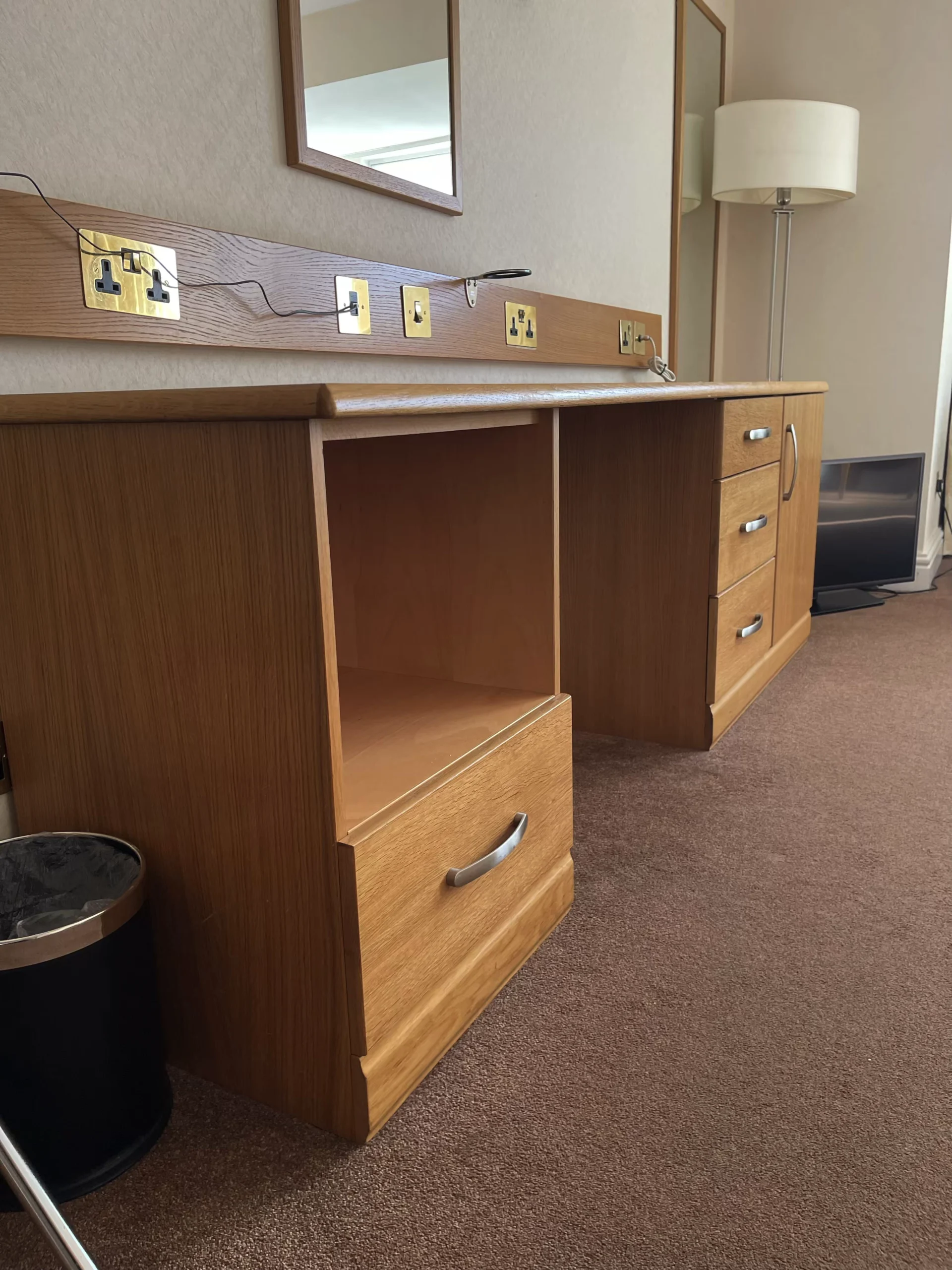
Another Example: Weetwood Hall Estate
The Weetwood Hall Estate project shows the same logic in a hotel setting.
The hotel wanted to refresh guest room interiors, but the existing furniture remained structurally sound. The real issue was appearance, not failure. Replacing the furniture would have created logistical problems because the hotel’s lifts could not accommodate large items, so Fusion Surfaces instead used vinyl wrapping to refurbish the furniture in place. This avoided the disruption and complexity of removing bulky items from guest rooms and allowed rooms to return to service with minimal downtime.


Another Example: Findel House
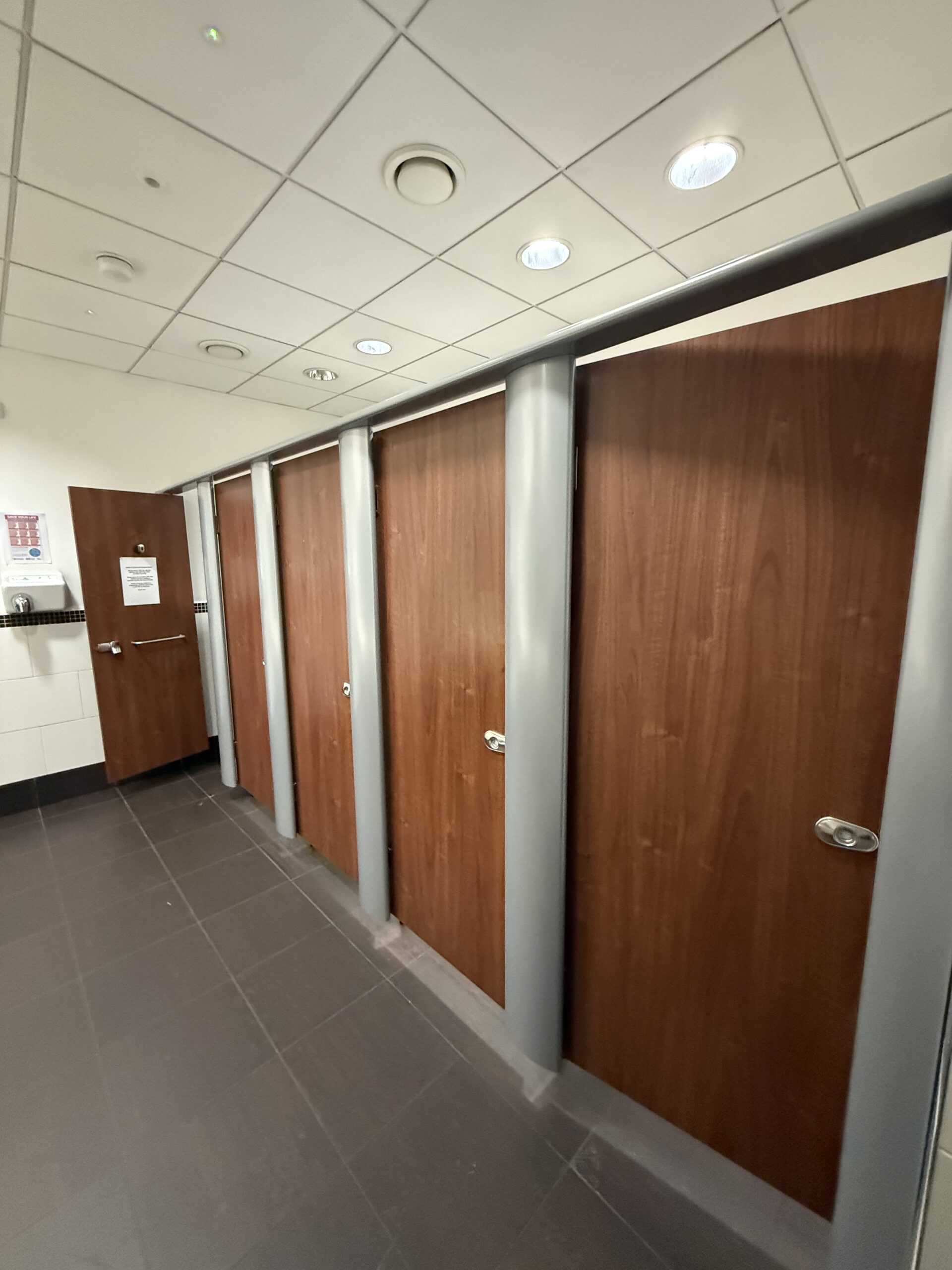
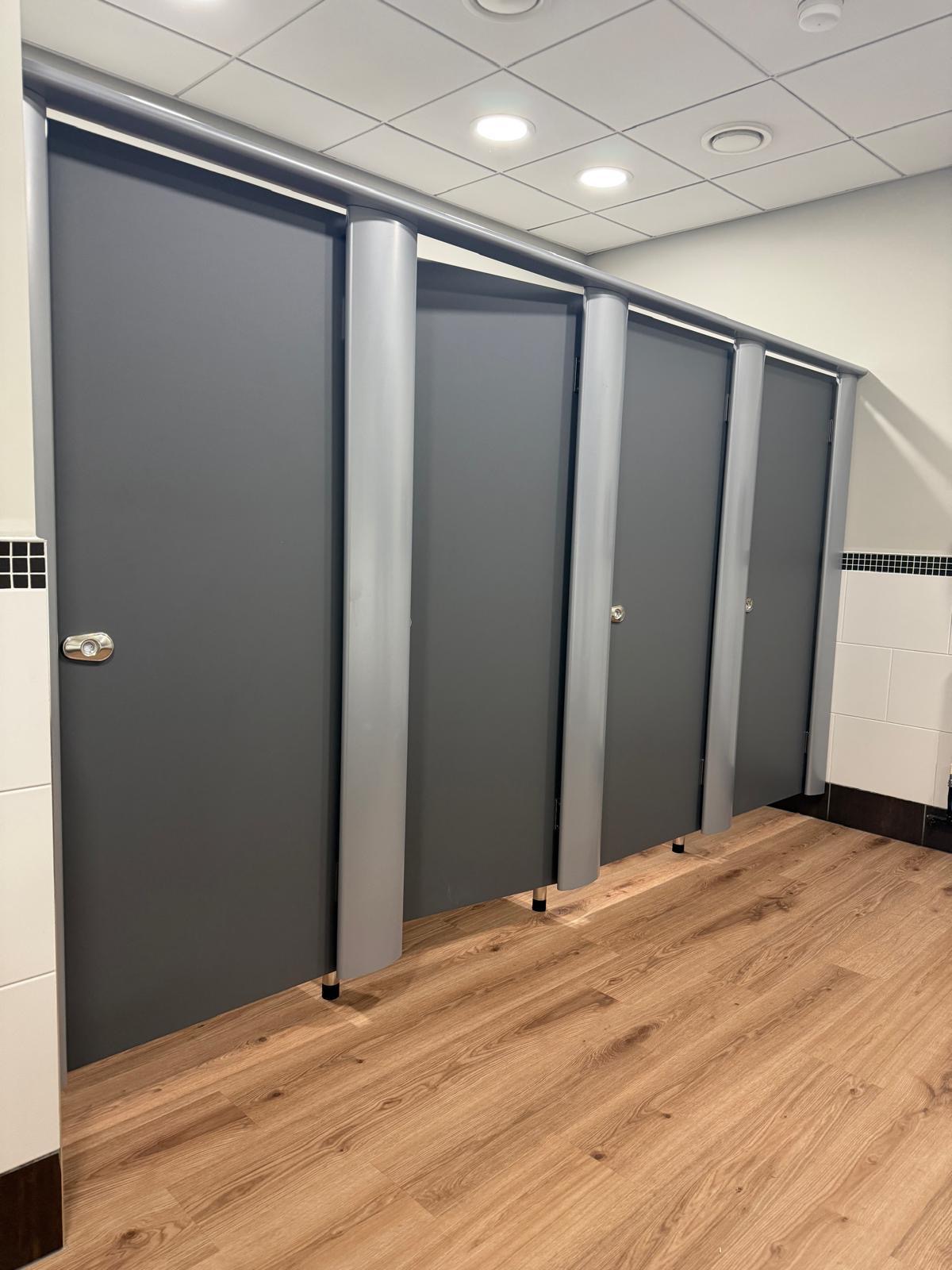
The Findel House project is another strong example because it shows how much waste can be avoided beyond furniture alone.
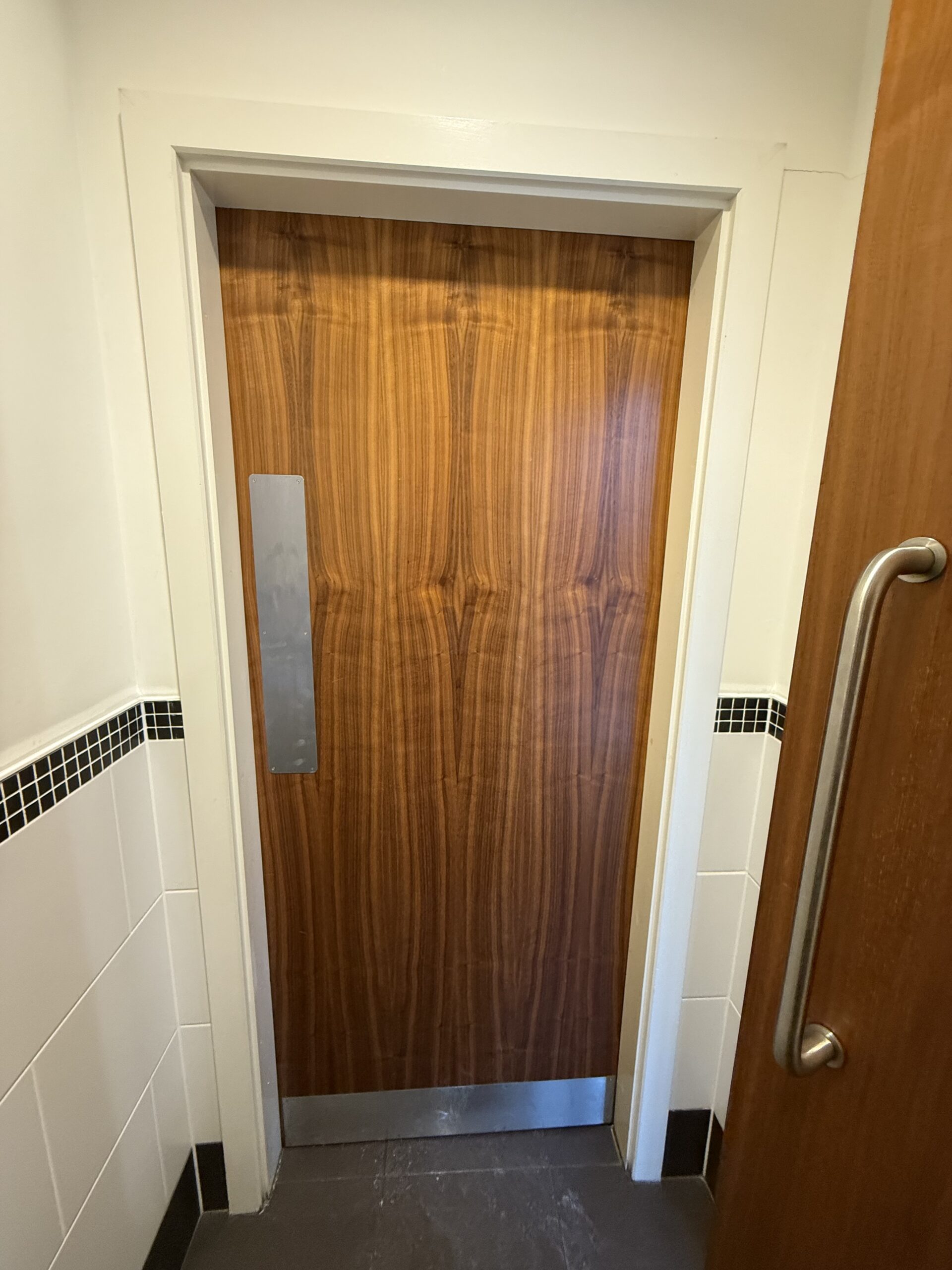
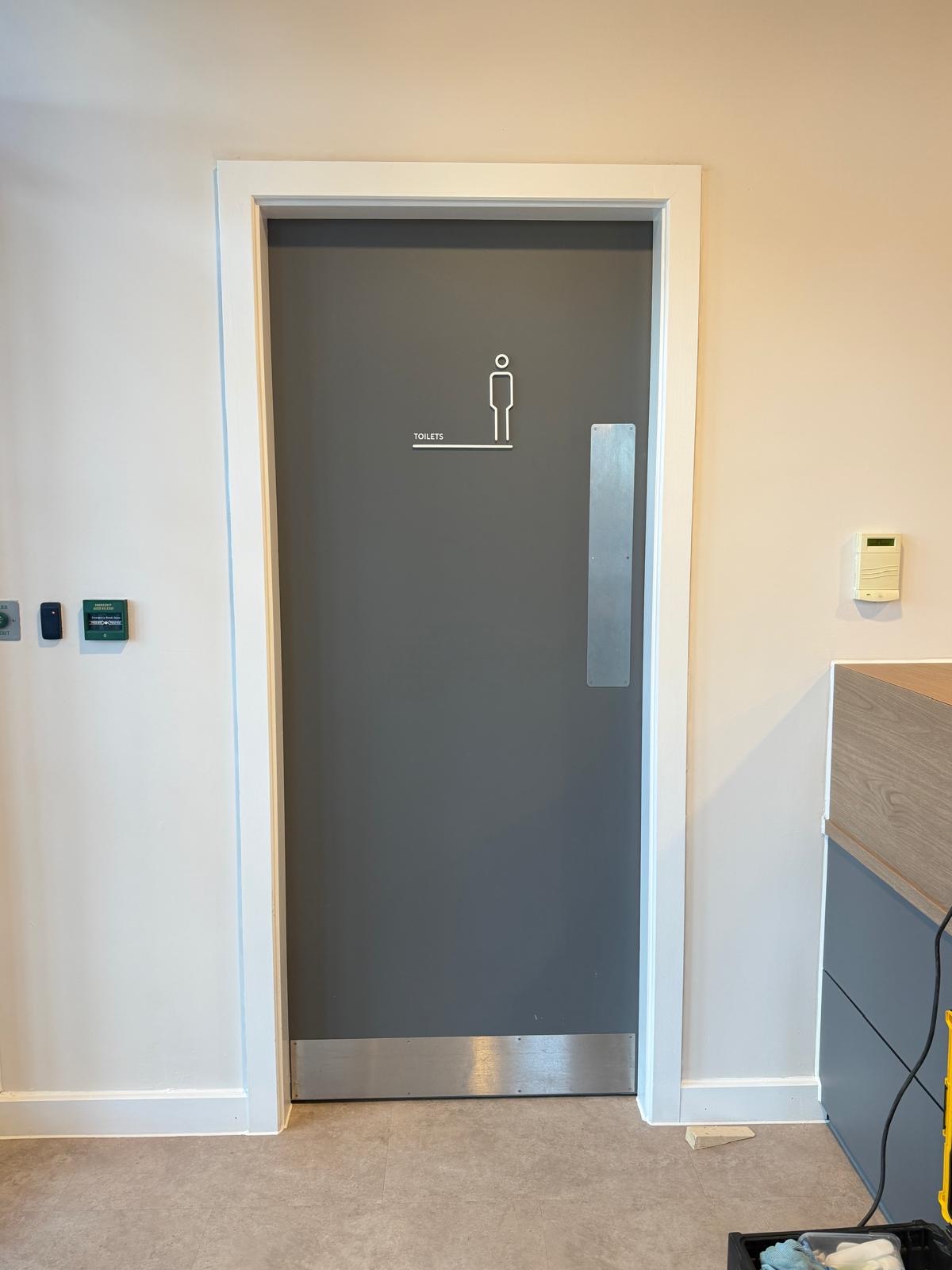
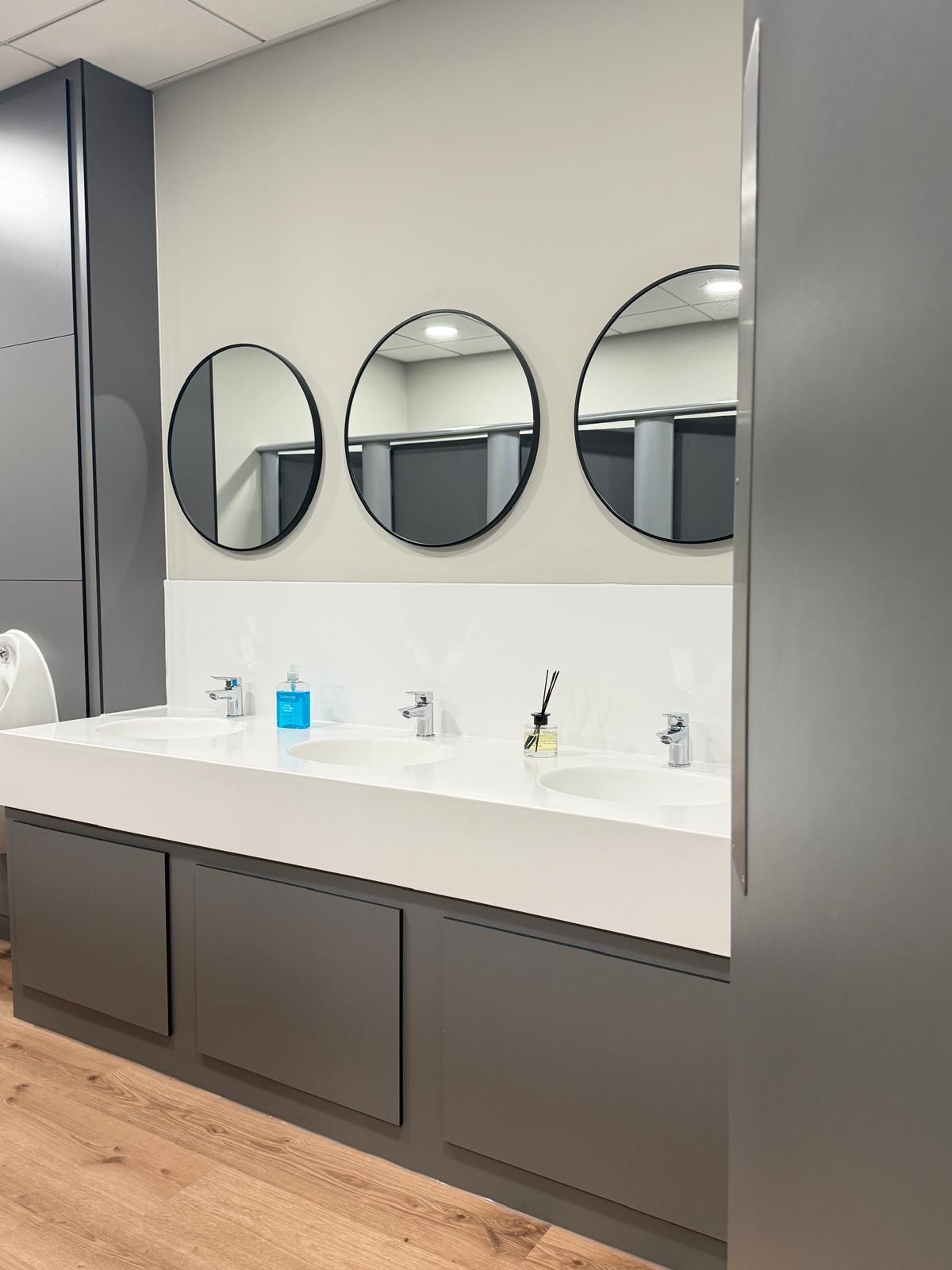
Fusion Surfaces refurbished lobby doors, washroom cubicle systems, IPS panels and a large reception desk across four floors instead of replacing them. Retaining the existing structures reduced waste and supported a more sustainable refurbishment approach.
This is especially relevant for washrooms. Cubicle systems and IPS panels are bulky, awkward and take up a lot of skip space. Replacing them just because the colour or finish is dated can create a much bigger waste problem than most clients realise.
Vinyl Wrapping vs Traditional Renovation
A simple comparison helps here:
| Approach | What usually happens | Waste impact | Disruption | Best when |
|---|---|---|---|---|
|
Vinyl wrapping |
Existing surfaces are upgraded in place |
Lower |
Lower |
Doors, fitted furniture, cubicles and panels are structurally sound but visually tired |
|
Traditional replacement |
Existing items are removed and new ones installed |
Higher |
Higher |
Surfaces are damaged beyond repair or unsuitable for wrapping |
That is the real choice on many projects.
Not every surface should be wrapped. But a lot of surfaces that are currently being skipped do not actually need replacing.
When Wrapping Is the Smarter Environmental Choice
Wrapping is usually the better environmental option when:
- the existing substrate is still sound
- the issue is mainly cosmetic
- large repeated items are involved
- removal would create unnecessary landfill
- the project needs to minimise material waste
That can apply to:
- hotel wardrobes
- office doors
- student accommodation furniture
- washroom cubicles
- IPS panels
- wall panelling
- storage walls
- reception joinery
The environmental benefit comes from extending the life of what is already there.
When Replacement Still Makes Sense
Replacement may still be the better route where:
- the surface is structurally damaged
- the substrate is unstable
- the item is beyond economical repair
- compliance or performance issues require a full replacement
- the existing element is unsuitable for wrapping
That is why proper survey and honest advice matter.
The point is not to wrap everything. The point is to stop replacing things that are still good enough to keep.
FAQs About How Vinyl Wrapping Reduces Waste
How does vinyl wrapping reduce waste?
Vinyl wrapping reduces waste by retaining existing doors, fitted furniture, panels and joinery instead of removing and replacing them. That means fewer materials go to landfill and fewer new products need to be manufactured and installed.
Is vinyl wrapping more sustainable than replacement?
Often, yes. If the existing surface is still structurally sound, wrapping can be a more sustainable option because it extends the life of the item and avoids unnecessary disposal. That said, the right answer always depends on the condition of the substrate.
What kinds of items create the most avoidable waste in refurbishments?
Some of the biggest avoidable waste sources are fitted furniture, internal doors, washroom cubicle systems and IPS panels. Projects like Findel House show how retaining those existing elements can reduce waste significantly.
Is waste reduction the main reason clients choose wrapping?
Usually not. Cost is often the main driver first, followed by downtime or speed depending on the sector. Waste reduction is often a major additional benefit rather than the first reason a client enquires.
When is replacement still the better option?
Replacement may still be the right route when the substrate is structurally damaged, unstable or otherwise unsuitable for wrapping.
Talk to Fusion About Low-Waste Refurbishment
If you are looking at fitted furniture, doors, washroom systems or other hard surfaces and assuming they need replacing, it is worth checking whether they could be refurbished instead.
Fusion Surfaces helps clients upgrade existing commercial interiors in place using architectural vinyl wrapping, reducing unnecessary waste while also improving programme, cost and disruption.
Explore our commercial vinyl wrapping service, view projects like Staycity Birmingham, Weetwood Hall Estate and Findel House, or contact our team to discuss your refurbishment plans.

