

If you are trying to improve student accommodation on a limited budget, the first thing to question is not the furniture. It is the assumption that everything needs replacing.
In a lot of student accommodation projects, the real problem is not structural failure. It is visual wear. Bedroom doors look battered, wardrobes feel dated, desks are marked, shelves let the room down and the whole space starts to feel older than it really is. That is usually what affects how the room is perceived and, ultimately, what the operator feels able to charge for it.
That is why student accommodation refurbishment on a budget is not really about cutting corners. It is about working out what actually needs replacing and what can be upgraded properly in place.
A lot of student accommodation does not need replacing. It needs refreshing properly, and this can be done with vinyl wrapping.
If the room furniture and doors are still structurally sound, refurbishing the finish instead of ripping everything out can be a much more efficient route to a stronger result. For fit out companies, that means faster delivery and better value for the client. For operators, it means a quicker visual upgrade and a faster return on investment.
In This Guide
At a glance
Best for: student accommodation blocks where bedroom doors and fitted furniture look tired but are still structurally usable
Main priorities: cost, summer turnaround speed and durability
Best-value surfaces to refurbish first: bedroom doors, wardrobes, desks, shelves and other fitted furniture
Useful benchmark: around 40 rooms a week can be completed when refurbishing full fitted furniture and doors
Commercial goal: improve the room standard quickly enough to support stronger room value without the cost of full replacement
Why student bedrooms often need refurbishment before replacement
Student accommodation is hard on interiors.
Doors take knocks. Desks get marked. Wardrobes and shelves lose their finish. Over time, the room starts to look worn long before the furniture has actually failed. That is one of the biggest reasons operators end up overspending. They look at the room, see that it feels tired, and assume the answer is full replacement.
Often, it is not.
The wear is usually visual long before the furniture has actually failed.
That is what makes refurbishment such a strong option in this sector. If the doors, wardrobes, desks and shelving are still structurally sound, updating them in place can make a major difference without the cost and disruption of replacing the whole room set.
The biggest opportunity is the fitted furniture and doors
If you want to refurbish student accommodation bedrooms for less, the biggest opportunity is usually the fitted room package itself.
That means:
- bedroom doors
- wardrobes
- desks
- shelves
- other fitted furniture
These are the surfaces students see and use every day. They are also the surfaces that age the room fastest.
If you replace every wardrobe and desk, the budget disappears fast.
That is why so many student accommodation projects make more commercial sense when the fitted furniture is retained and the finish is upgraded instead. You still change how the room feels, but you avoid the cost of removing usable items just because they no longer look good enough.
Why upgrading in place is often the better value option
The first thing most people compare is the upfront cost.
That is understandable, but it is not the whole story.
If the fitted furniture and doors are still sound, replacing them introduces:
- higher supply costs
- more labour
- removal and disposal
- more pressure on programme
- more waste leaving site
- and a bigger scope than the room really needed
By contrast, refurbishing those surfaces in place usually gives you:
- a lower replacement burden
- a faster route to visual improvement
- less disruption
- and a more efficient way to upgrade repeated room types at scale
That is exactly why this approach works so well in student accommodation, where the same bedroom layout is repeated over and over again.
A budget refurbishment should still look intentional
This matters more than people think.
Accommodation providers are not improving rooms just for the sake of it. They want the rooms to feel better, present better and justify stronger commercial performance. That means the refurbishment cannot look like a compromise.
The room still needs to feel:
- clean
- current
- consistent
- and properly thought through
That is why finish selection matters. If the doors and fitted furniture are upgraded properly, the room can feel significantly newer without the cost of rebuilding it from scratch.
Why this works so well in summer turnaround windows
Summer turnaround is one of the biggest commercial pressures in student accommodation. The work has to happen quickly enough to fit the short access window between occupancies.
That is one of the biggest reasons this refurbishment route works so well.
Where the furniture and doors are staying in place, the programme is usually much lighter than a full replacement package. And because these are repeated room sets, the process can become very efficient once access and sequencing are planned properly.
As a working benchmark, around 40 rooms a week can be completed where the scope includes full fitted furniture and doors. That is exactly the kind of throughput that matters in student accommodation, where speed is just as important as finish quality.
Project at a glance: Edinburgh
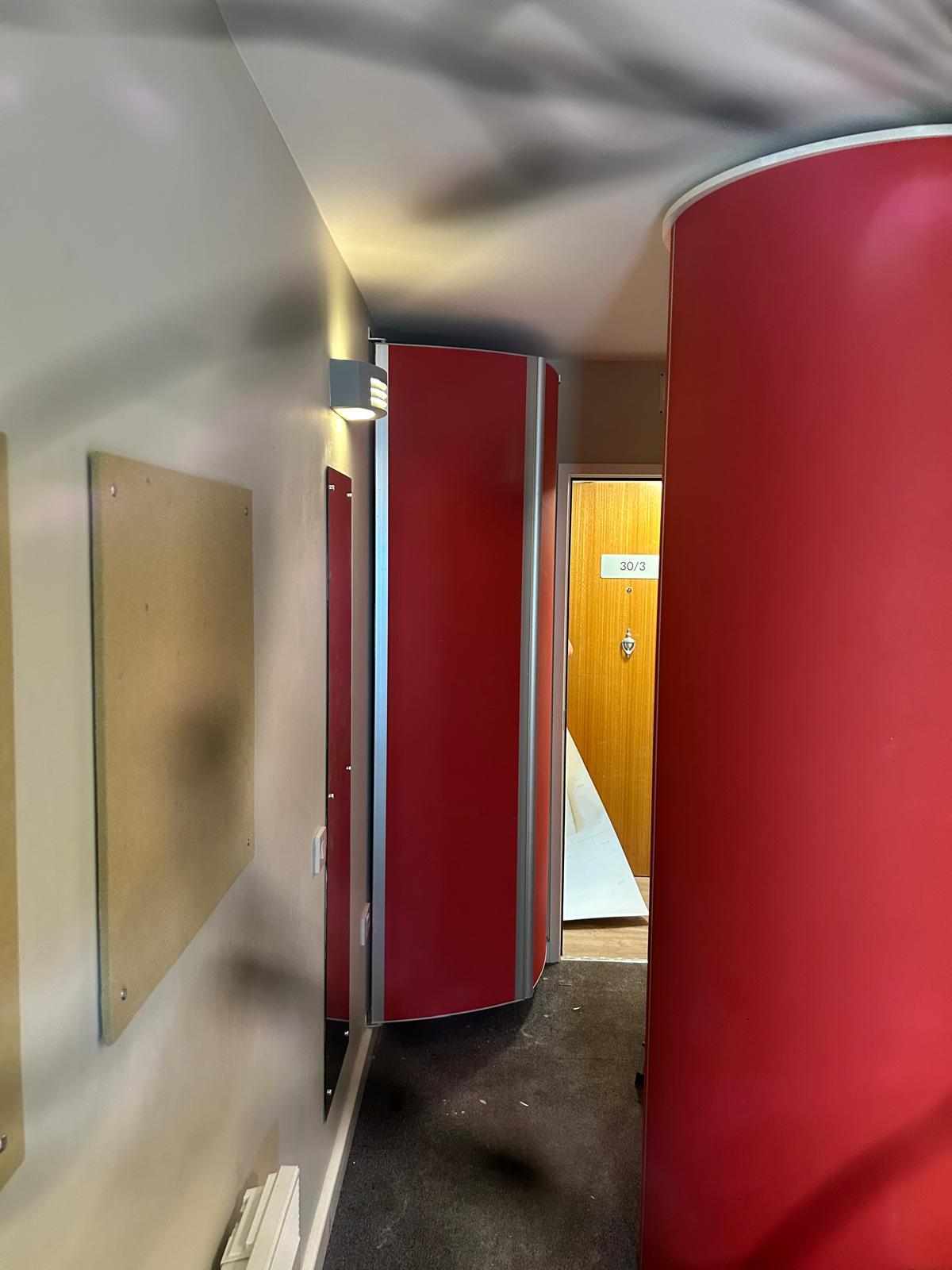
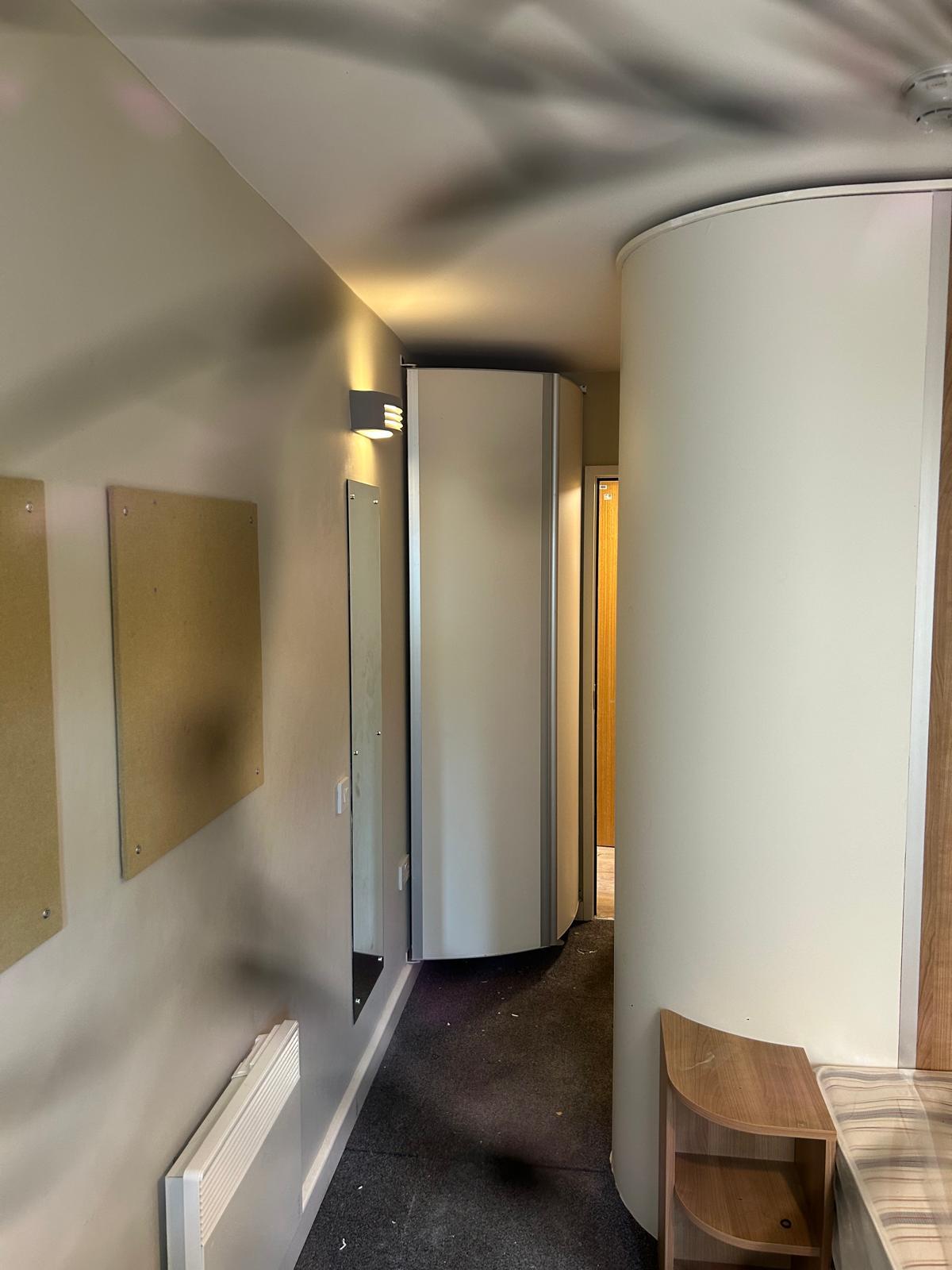
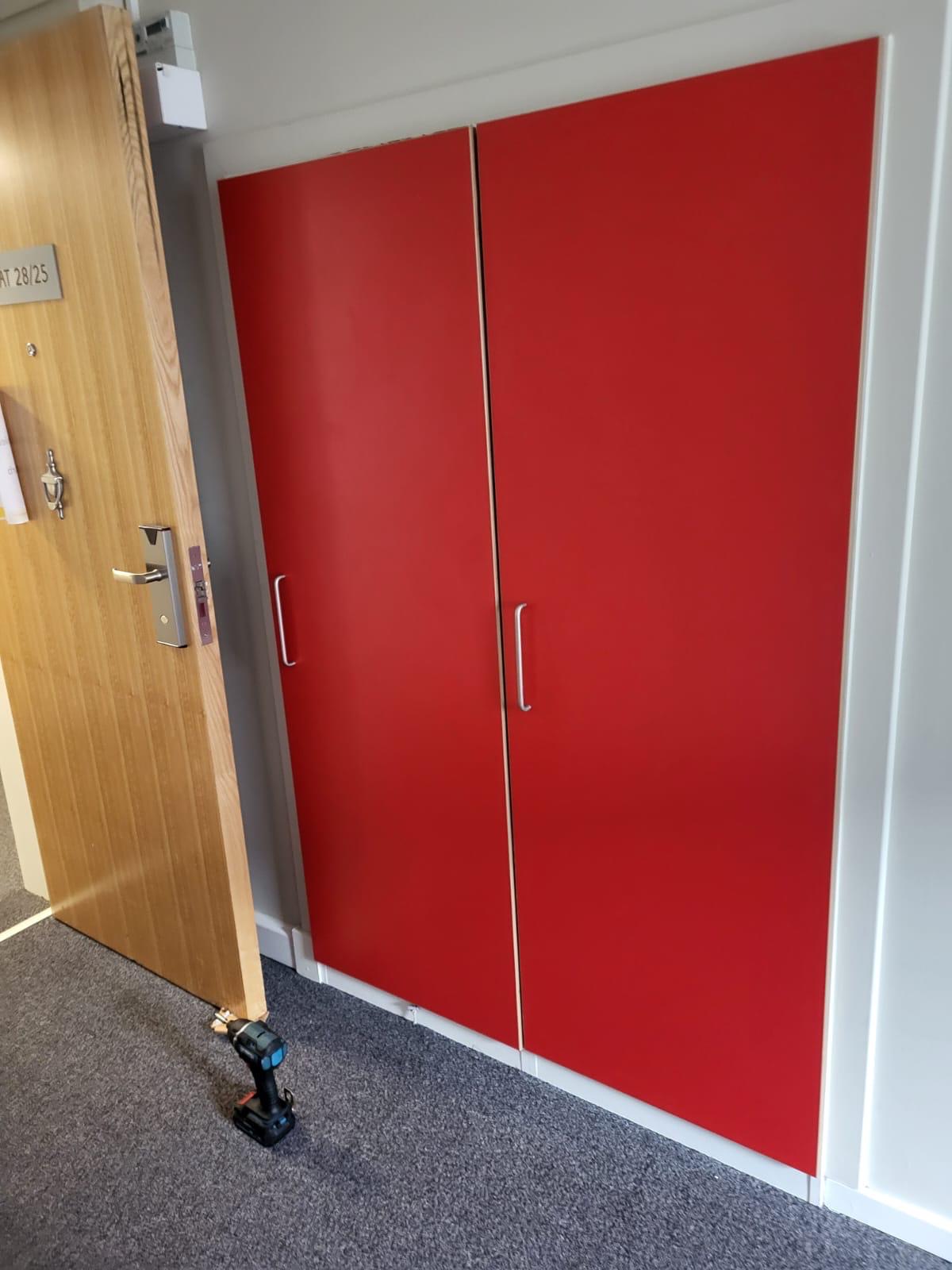
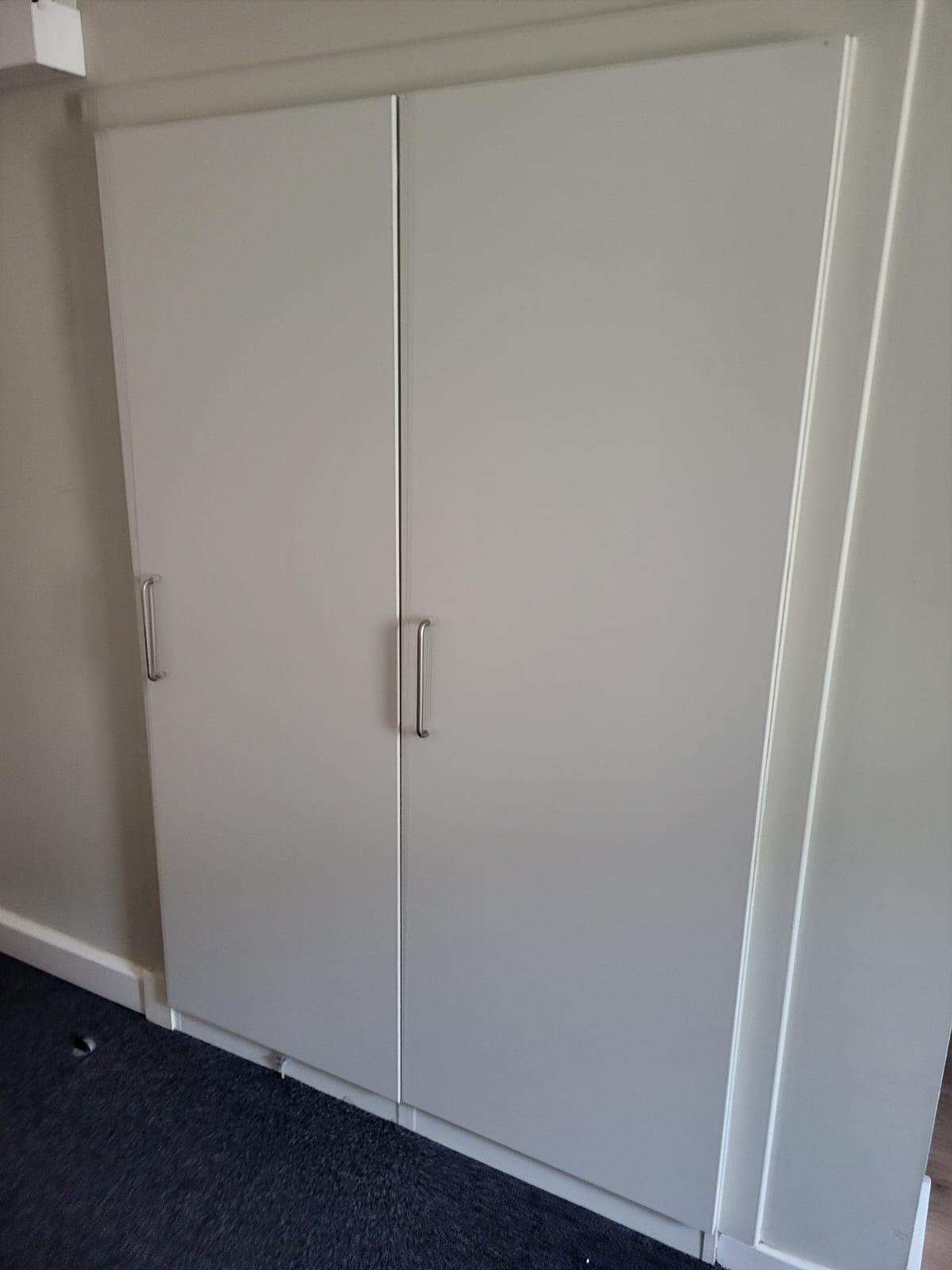
A strong example of this approach is the student accommodation project in Edinburgh, where 216 rooms were upgraded using vinyl wrapping on wall panelling and wardrobes.
This is a good example of bedroom refurbishment being used at real scale. Instead of treating each room as a separate problem, the project focused on repeated surfaces that were making the rooms look tired and upgraded them in a consistent way.
That is one of the biggest strengths of this kind of project. Once the specification works, it can be repeated efficiently across a large number of rooms.
Project at a glance: Preston
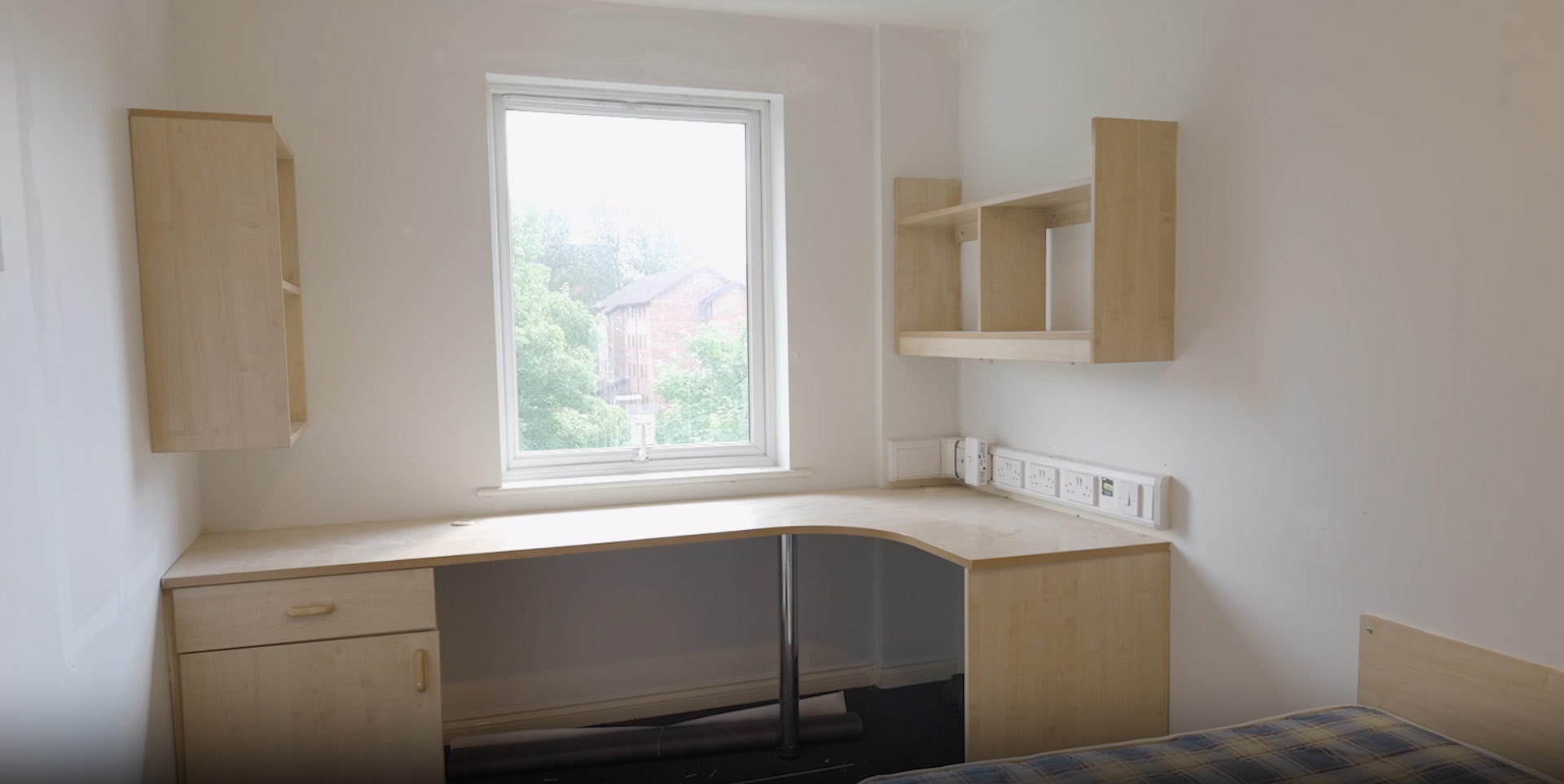
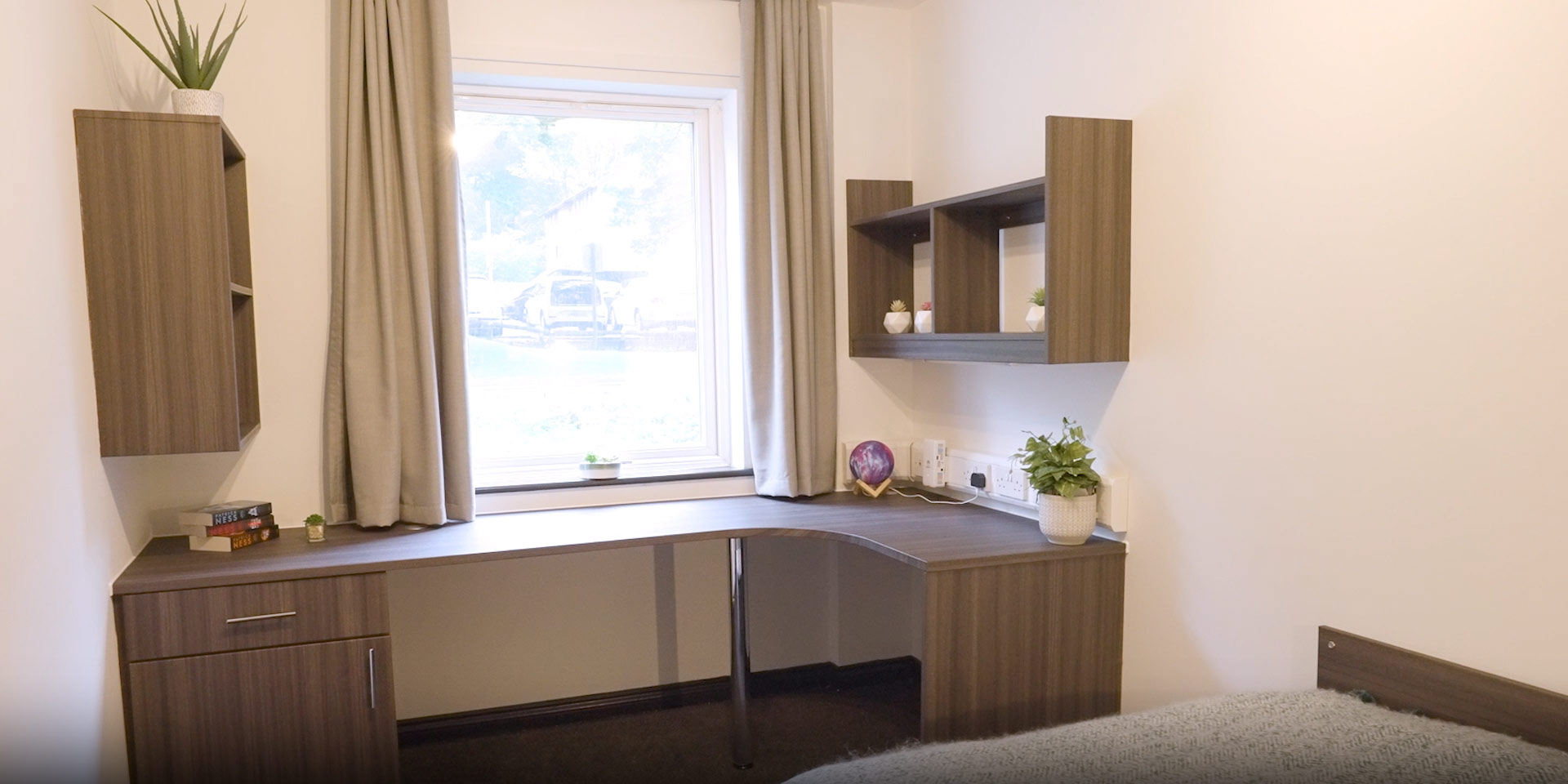
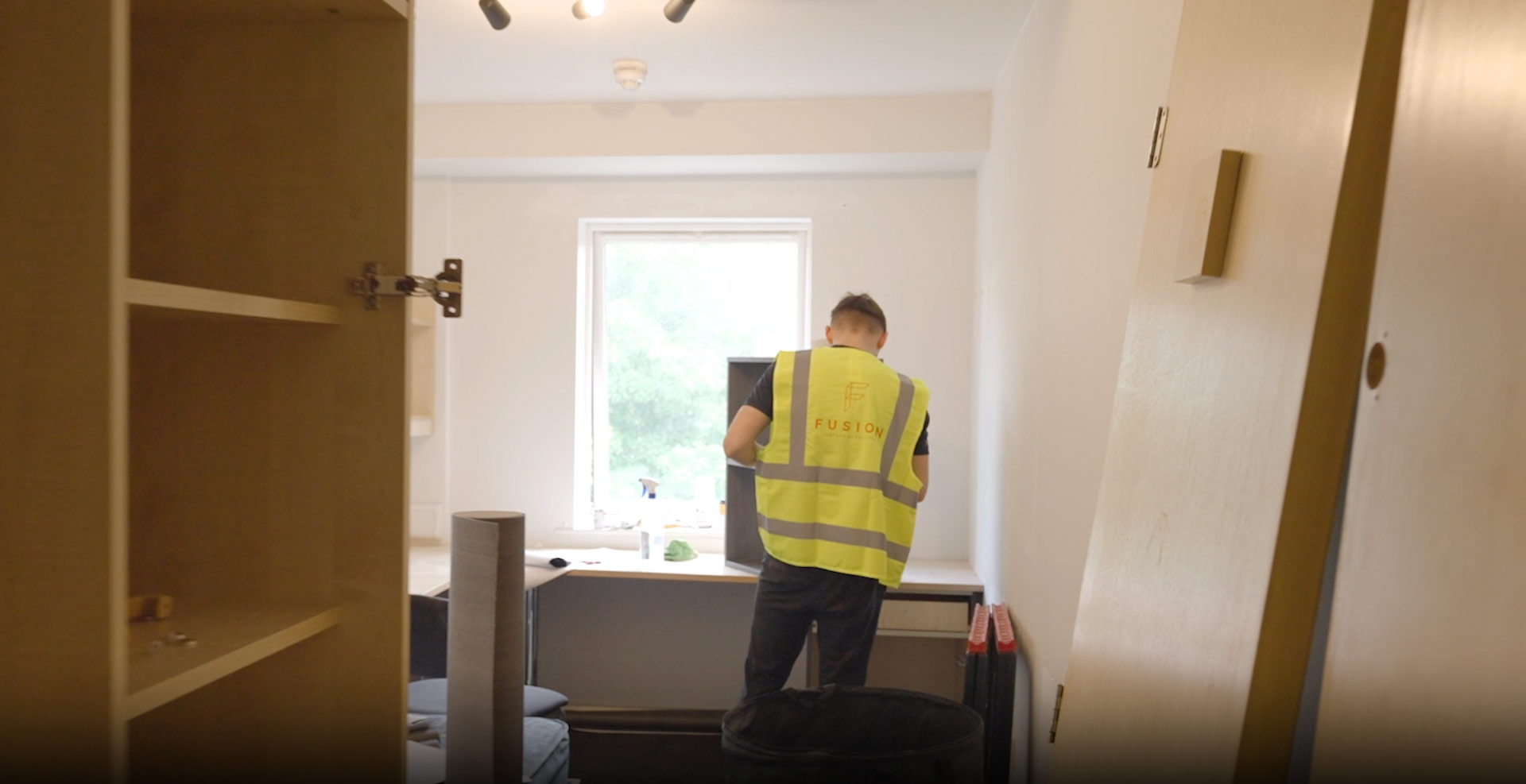
Another strong example is the student accommodation project in Preston, where around 100 rooms were upgraded including desks, shelves, wardrobes and doors.
This is exactly the kind of project that shows how much can be achieved without full replacement. The fitted furniture and doors were the parts of the room package most likely to affect how the accommodation looked and felt, so they became the priority. That is usually the smartest route when the budget needs to go further.

Can damaged furniture still be wrapped?
Sometimes, yes, but it depends on the condition.
Minor cosmetic wear, tired finishes and some surface damage can often be dealt with during preparation. But if the furniture is unstable, badly damaged or beyond economical repair, replacement may still be the better route.
That is why the right question is not just “can it be wrapped?” It is “is it worth wrapping, and will that give the right long-term result?”
For student accommodation, that distinction matters because there is a big difference between:
- furniture that looks worn
- and furniture that is genuinely beyond saving
Will it last with students?
This is one of the main objections, and it is a fair one.
Student accommodation is not a light-use environment. Doors, desks and wardrobes take daily wear, so durability has to be part of the decision. The good news is that high-quality architectural film is designed for interior refurbishment and can perform well when the substrate is suitable and the installation is done properly.
Durability depends on:
- the quality of the film
- the condition of the existing furniture or door
- the level of use
- the preparation
- and the installation standard
In other words, it needs to be treated as a serious commercial refurbishment solution, not as a cosmetic shortcut.
Is it actually cheaper than replacement?
In many cases, yes, particularly when you look beyond the price of one item in isolation.
The real commercial saving usually comes from the fact that you are not:
- buying new doors, wardrobes and desks
- removing old ones
- paying for disposal
- or extending the programme more than necessary
This is especially important in student accommodation because the room package is repeated at scale. Once you multiply replacement across dozens or hundreds of rooms, the cost difference becomes much more significant.
That is why this approach is often the better value option, even when the conversation starts with budget.
A light note on compliance-sensitive doors
In student accommodation, some bedroom or corridor doors may need extra consideration depending on the door type and the wider specification.
That does not mean refurbishment is off the table, but it does mean compliance-sensitive doors need to be assessed properly and handled in line with the relevant requirements. The answer is not to assume every door can be treated the same way. It is to identify which ones are suitable and what method is appropriate.
That is why proper survey and specification still matter.
What to Check First
Before deciding how to refurbish student accommodation bedrooms and furniture for less, it helps to ask:
- which surfaces make the room feel most tired?
- are the fitted furniture and doors structurally sound?
- how many rooms are involved?
- what does the summer programme actually allow?
- is the goal purely visual improvement, or also stronger room value?
- which elements are worth retaining and which genuinely need replacement?
Those questions usually make the best route much clearer.
When replacement is still the better option
Refurbishment is not always the answer.
Replacement may still be the better route if:
- the furniture is unstable
- the substrate is badly damaged
- the door or furniture has failed structurally
- the long-term result would not justify refurbishment
- compliance or performance issues mean new elements are needed
The point is not to save money by making the wrong decision. The point is to avoid replacing perfectly usable elements just because they look worn.
FAQs About Student Accommodation Refurbishment
What does student accommodation refurbishment on a budget usually involve?
It usually means identifying which bedroom elements are still structurally sound and upgrading those in place instead of replacing everything. In most schemes, the biggest opportunities are the bedroom doors, wardrobes, desks, shelves and other fitted furniture, because these are the surfaces that make the room feel tired fastest and also the surfaces that are expensive to replace across large room numbers.
Is it cheaper to refurbish student accommodation furniture instead of replacing it?
In many cases, yes. The main saving is not just the cost of one wardrobe or desk, but the fact that you avoid buying new room packages, removing the old furniture, paying for disposal and stretching the programme unnecessarily. Once that is multiplied across dozens or hundreds of rooms, refurbishing in place often becomes a much stronger value option.
Will refurbished wardrobes, desks and doors last with students?
They can, yes, provided the existing surfaces are suitable and the refurbishment is specified properly. Student accommodation is a high-use environment, so durability depends on the quality of the film, the condition of the original surface, the amount of wear the room sees and the standard of preparation and installation. It needs to be approached as a proper commercial refurbishment solution, not as a quick cosmetic cover-up.
Can student accommodation bedrooms be upgraded during summer turnaround?
Yes, and that is one of the main reasons this approach works so well. Because the furniture and doors are usually retained rather than replaced, the programme can move much faster across repeated bedroom layouts. With the right access and planning, around 40 rooms a week can be completed where the scope includes full fitted furniture and doors.
Can damaged furniture still be wrapped?
Sometimes, yes, but it depends on the extent and type of damage. Minor cosmetic wear, tired finishes and some surface imperfections can often be dealt with during preparation, but unstable or badly damaged furniture may still need replacing. The real question is not just whether it can be wrapped, but whether wrapping it will give the right long-term outcome.
Will a budget refurbishment still look good enough?
Yes, if it is done properly. A lower-cost bedroom upgrade should still feel intentional, clean and commercially credible. The aim is not to make the room look “good for the budget.” The aim is to make smart decisions about which surfaces can be retained and upgraded so the finished room still feels more modern and more valuable.
Are bedroom doors always suitable for refurbishment?
Not always. A lot of bedroom doors can be upgraded successfully when the issue is cosmetic wear rather than structural failure, but some doors may need additional consideration depending on their condition and the wider specification. That is why survey and correct specification matter, especially where compliance-sensitive doors are involved.
Talk to Fusion About Student Accommodation Refurbishment on a Budget
If you are trying to improve student bedrooms without unnecessary replacement, Fusion Surfaces can help you work out which doors, wardrobes, desks, shelves and other fitted furniture can be retained and upgraded instead of replaced.
That is often the fastest and most commercially effective way to improve room quality without pushing the project into a much heavier replacement programme.
Explore Student Accommodation & Education, commercial vinyl wrapping, or contact our team to discuss your project.

