

In London, access is often a huge part of the job.
The doors are usually the easy bit. The real challenge is everything around them: restricted access windows, live buildings, loading restrictions, sign-in procedures, occupiers still working on site, guests still staying in the building, and projects that need to be delivered floor by floor without throwing the programme off course.
That is exactly why commercial door wrapping in London works so well.
Instead of ripping out perfectly usable doors and creating a much heavier replacement package, existing doors can be refurbished in place using architectural film. For fit out contractors and project managers, that means a faster, cleaner and more controlled way to bring tired doors back into line with the rest of the scheme. For offices, hotels and student accommodation, it means a strong visual upgrade without the disruption of full replacement.
Most London clients do not have the luxury of shutting the building down.
In This Guide
At a glance
Best for: offices, hotels, student accommodation and fit-out projects in live London buildings
Main drivers: programme speed, restricted access, working around live occupiers, phased delivery, matching new fit-outs
Common door types: plain internal doors, vision panel doors, washroom doors, lobby doors, hotel bedroom doors, corridor doors, frames and architraves
Popular finishes: black woodgrains, oak finishes, walnut tones and matte finishes
Main commercial advantage: upgrading existing doors without creating the disruption of full replacement
Why Commercial Door Wrapping Works So Well in London
London projects usually come with more constraints than most.
It is rarely just a question of whether the doors need updating. It is whether they can be updated:
- around occupiers
- around sign-in and security procedures
- around loading restrictions
- around limited access windows
- around live hotel guests or office staff
- and around a wider fit-out programme that has no room for delay
That is what makes commercial door wrapping London such a practical solution. If the doors are still structurally sound, wrapping allows them to be upgraded without turning the job into a much larger replacement exercise.
This is especially useful where the visual mismatch is the problem, not the door itself.
What Types of Doors Can Be Wrapped?
In London commercial projects, door wrapping is commonly used on:
- plain internal doors
- vision panel doors
- washroom doors
- lobby doors
- hotel bedroom doors
- corridor doors
- frames and architraves, where suitable
That gives fit-out contractors and project teams a lot more flexibility when the brief is to modernise a building without replacing every door set.
In many cases, the issue is not just the door face. It is the fact that the door, frame and surrounding details no longer relate properly to the rest of the interior. That is why door and frame wrapping is often part of the conversation too.
Why Offices, Hotels and Student Accommodation Use Door Wrapping in London
The logic is slightly different in each sector, but the practical value is the same.
Offices
In office projects, the doors often become the element that lets the fit-out down. The partitions may look sharp, the reception may have been upgraded and the finishes elsewhere may all feel current, but the old doors still make the space feel unfinished.
Hotels
In hotels, the issue is usually live occupancy. Doors are highly visible, repeated throughout the building and heavily used, but replacing them can mean far more disruption than most operators want.
Student accommodation
In student accommodation, it is often about programme, compliance and the sheer number of repeated doors across the building. If the doors are sound, refurbishment usually makes more sense than full replacement.
That is why door wrapping works so well across all three. It solves a visible problem without automatically creating a much heavier site programme.
Where Commercial Door Wrapping Works Best in London
| Sector | Why clients choose it | Common door types | Delivery approach |
|---|---|---|---|
|
Offices |
Match a new fit-out, avoid disruption to staff, keep programme moving |
Plain internal doors, vision panel doors, lobby doors, washroom doors |
Phased access, out-of-hours work, floor-by-floor delivery |
|
Hotels |
Modernise guest-facing doors without taking the building offline |
Bedroom doors, corridor doors, service doors |
Live-site planning, phased room access, guest-sensitive working |
|
Student accommodation |
Upgrade repeated doors quickly before or around occupancy periods |
Bedroom doors, corridor doors, communal doors |
Fast programme, block-by-block phasing, limited access windows |
|
Fit-out projects |
Deliver a cleaner final finish without a full door replacement package |
Mixed internal doors, frames, architraves |
Coordinated with wider programme and site logistics |
The Real Challenge on London Projects
The surfaces are only half the story.
The real challenge on London jobs is often:
- congestion and access restrictions
- booking deliveries and loading slots
- security procedures and sign-in
- tight programmes
- working around live office staff or hotel guests
- carrying out works in phases
- handing back areas quickly
This is where door wrapping earns its place. It is not just the finish that makes it attractive. It is the fact that the process fits live buildings far better than a more disruptive replacement package.
Commercial Door Wrapping vs Full Door Replacement
| Option | Upfront spend | Disruption | Programme speed | Waste | Best when |
|---|---|---|---|---|---|
|
Commercial door wrapping |
Lower than full replacement package overall in many live projects, especially once disruption is factored in |
Lower |
Faster |
Lower |
Doors are structurally sound but the finish is tired or dated |
|
Full door replacement |
Higher |
Higher |
Slower |
Higher |
Doors are damaged beyond repair or unsuitable for wrapping |
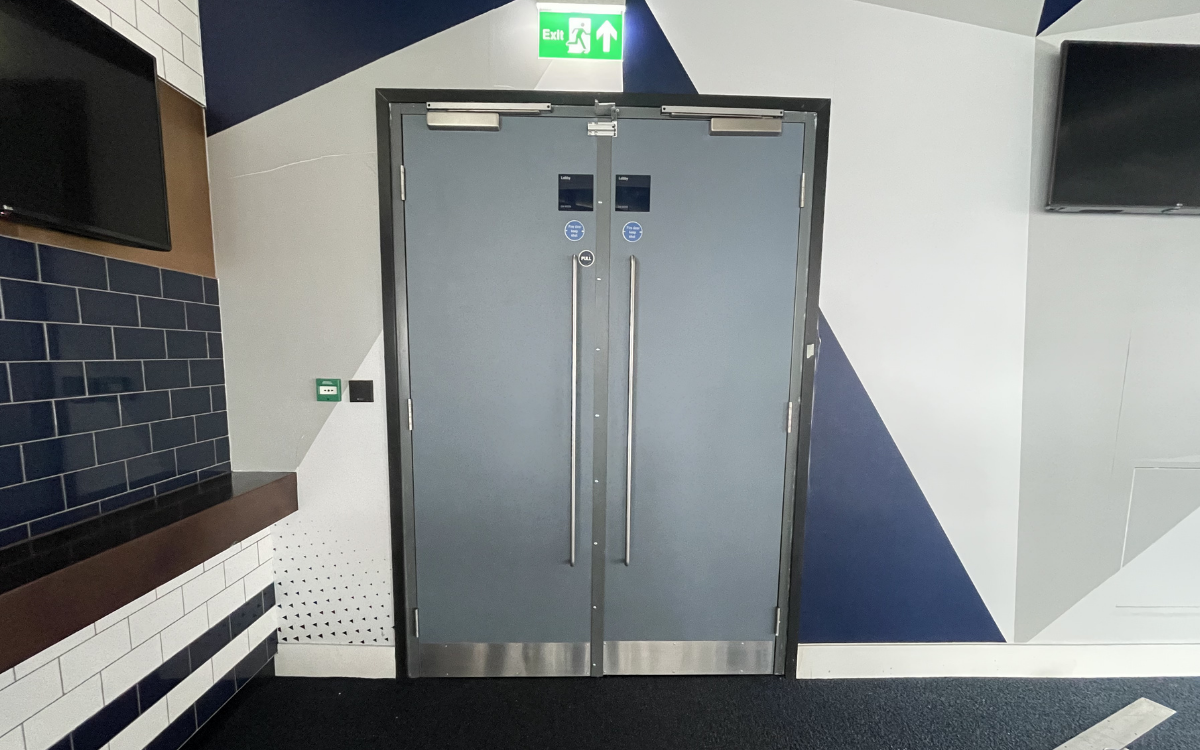
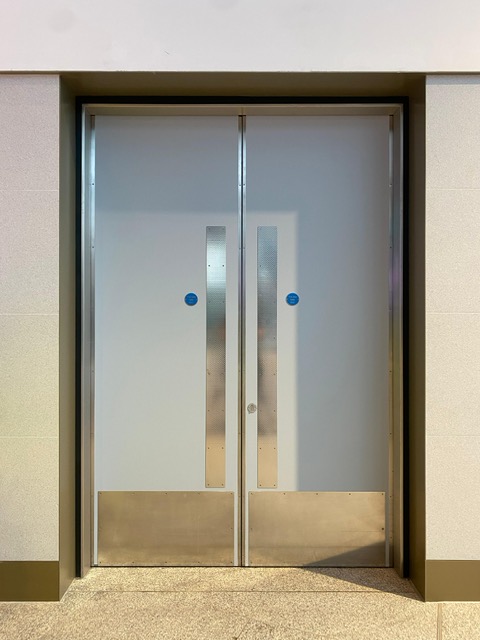
Project at a glance: Tottenham Hotspur
Tottenham Hotspur is a strong example of the kind of London project where quality, speed and operational sensitivity all matter.
In high-profile hospitality environments, the finish has to feel right and the work has to fit around a demanding live venue. That is exactly the kind of setting where wrapping existing surfaces makes more sense than introducing unnecessary replacement.

Project at a glance: Runnymede Hotel
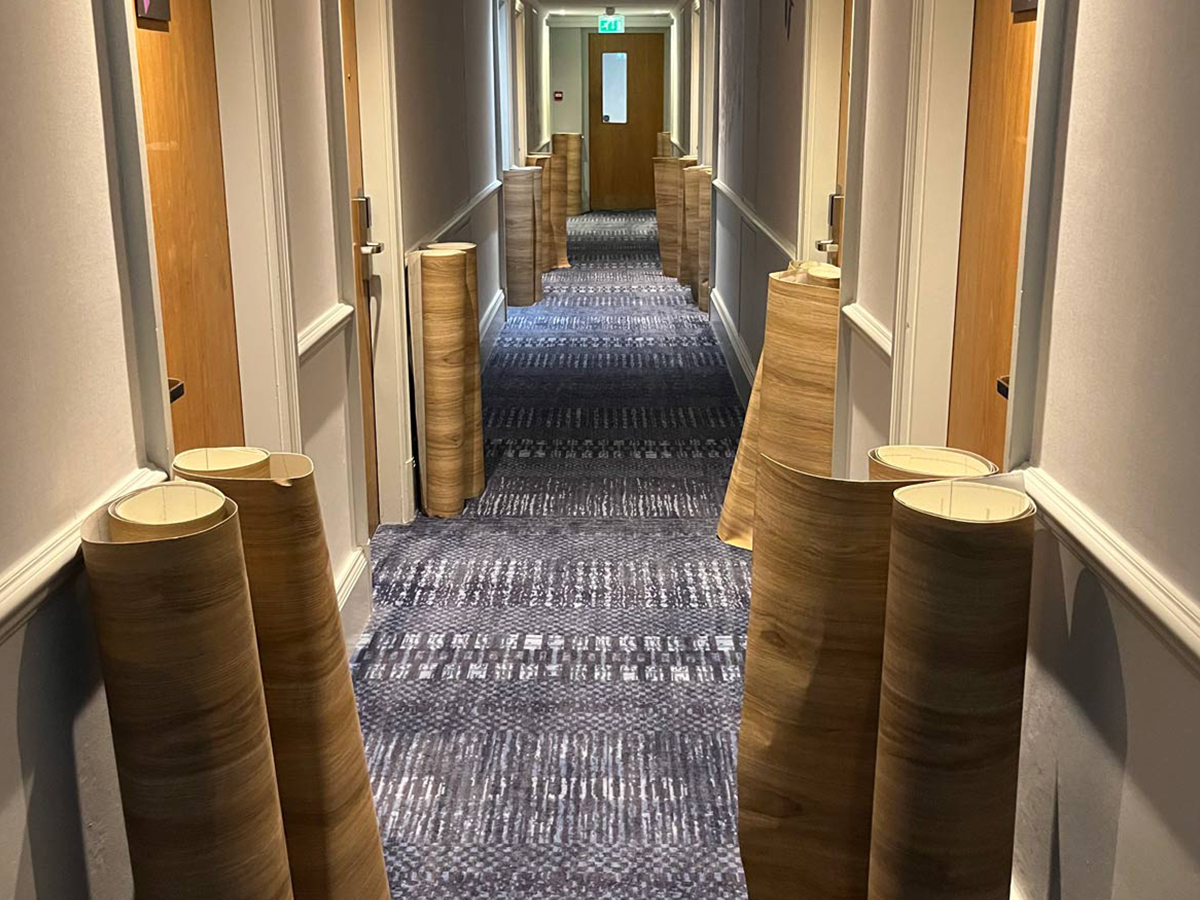
At The Runnymede Hotel, we wrapped over 200 doors in one week while the hotel remained open.
That is exactly the kind of operational example that matters for London and South East hotel work. It shows what happens when a project is planned around a live building rather than treated like an empty shell. The visual result changes, but the real value is the way the programme fits around the building still functioning.


What finish directions are most popular in London?
At the moment, the strongest finish directions in London projects tend to be:
- black woodgrains
- oak finishes
- walnut tones
- matte finishes
These work well because they feel current, architectural and commercially strong without looking too trend-led.
Black woodgrains and darker walnut tones are particularly effective where the goal is to give the doors more presence. Oak and softer matte directions work well where the scheme needs to feel warmer or more refined.
Can You Do It Without Disrupting the Building?
This is one of the main questions London clients ask, and rightly so.
Yes, commercial door wrapping can often be delivered with far less disruption than replacement, particularly when it is planned around:
- phased access
- closed days
- out-of-hours installation
- restricted working windows
- wider fit-out sequencing
That is one of the biggest reasons contractors and PMs choose it. In live buildings, the method matters just as much as the finish.
Is Commercial Door Wrapping Durable?
Yes, when the correct film is specified and the door is suitable for preparation, door wrapping can be a durable option for commercial interiors.
Like any finish, it is not indestructible. But on internal commercial doors it performs well when:
- the substrate is sound
- the installation is carried out properly
- the finish is suited to the environment
- the door is maintained properly afterwards
That is why the better question is not just “does it last?” but “is it the right surface, with the right product, in the right environment?”
Can Fire Doors Be Wrapped?
Before specifying commercial door wrapping in London, it helps to confirm:
- which sectors the project sits in
- how many doors are involved
- whether frames and architraves are included
- whether the building is live during works
- what access restrictions apply
- whether out-of-hours working is needed
- whether the brief is mainly about speed, appearance or coordination with a wider fit-out
That makes the programme much easier to shape properly from the start.
What to Check First
Before specifying manifestation, it helps to confirm:
- whether the glazing is in a critical location
- whether there are already alternative visual indicators
- whether the main priority is safety, privacy, branding or a mix
- whether the manifestation needs to be subtle or feature-led
- whether cost control is the main concern
- whether the glazing is internal or external
Door Wrapping in London FAQs
Can commercial doors be wrapped instead of replaced?
Yes. If the existing doors are structurally sound and suitable for preparation, wrapping can provide a faster and more cost-effective alternative to replacement.
Is door wrapping durable enough for commercial interiors?
Yes. High-quality architectural films are designed for commercial interior refurbishment and can be suitable for doors and joinery in busy environments when the right product is specified.
Can door frames be wrapped as well?
Yes. In many projects, frames, architraves and nearby joinery can also be wrapped to create a consistent finish.
Talk to Fusion About Commercial Door Wrapping in London
If you are planning a refurbishment project and want to upgrade existing doors without full replacement, Fusion Surfaces can help.
We provide commercial door wrapping in London for offices, hotels, student accommodation and other operational environments, using high-quality architectural film to modernise doors, frames and internal joinery with minimal disruption.
Explore our commercial door & fire door vinyl wrapping service, view our London-relevant projects, or contact our team to discuss your project.

