

Office doors are one of the first things to let a refurbishment down.
The walls may have been redecorated, the flooring may be new, the glazing may have been updated, and the reception might look sharp again. But if the internal doors are still scratched, dated or inconsistent with the new scheme, the office can still feel unfinished.
That is why office door wrapping has become such a practical option for fit-out contractors, office occupiers and designers. Instead of replacing perfectly usable doors, architectural film can be applied to existing surfaces to update the finish in place. For live office environments, that usually means less disruption, lower replacement cost and a much faster route to a cohesive result.
A lot of office doors do not need replacing because they have failed. They need attention because the finish no longer matches the rest of the space.
In This Guide
At A Glance
Best for: offices where internal doors, vision panel doors, washroom doors, lobby doors and architraves look tired or no longer match a new fit-out
Most common drivers: dated finishes, matching a wider office refurbishment, cost control, minimising disruption to staff
Typical turnaround: around 45 minutes to wrap a standard-height plain door, excluding removal and rehanging
Large programmes: around 40 doors can often be completed in 2–3 days with unrestricted access
Architraves: around 1.5 hours for both sides, so programmes should allow extra time where frames are included
Why Office Doors Often Need Updating Before They Need Replacing
In office refurbishments, internal doors are often structurally fine long after the finish has become a problem.
That is especially true when:
- a workspace has been modernised in phases
- older timber finishes no longer match the new office scheme
- dated grey woods or older laminates make the building feel tired
- refurbished areas now make untouched doors stand out even more
This is one of the biggest reasons office door wrapping works so well. It allows the doors to catch up with the rest of the fit-out without forcing the project into unnecessary replacement.
Replacing dozens of doors in a live office is a bigger and more disruptive job than most people think. If the door leaf is still sound, replacement is not always the smartest answer.
What Types of Office Doors Can Be Wrapped?
Office door wrapping can often be used on:
- plain internal doors
- vision panel doors
- washroom doors
- lobby doors
- selected surrounding joinery
- architraves and frames, where suitable
That makes it particularly useful for office refurbishments where consistency matters across multiple floors or departments.
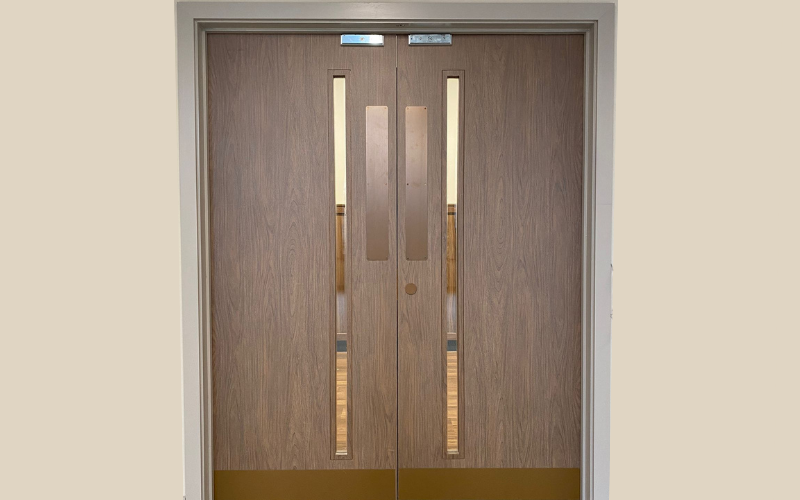
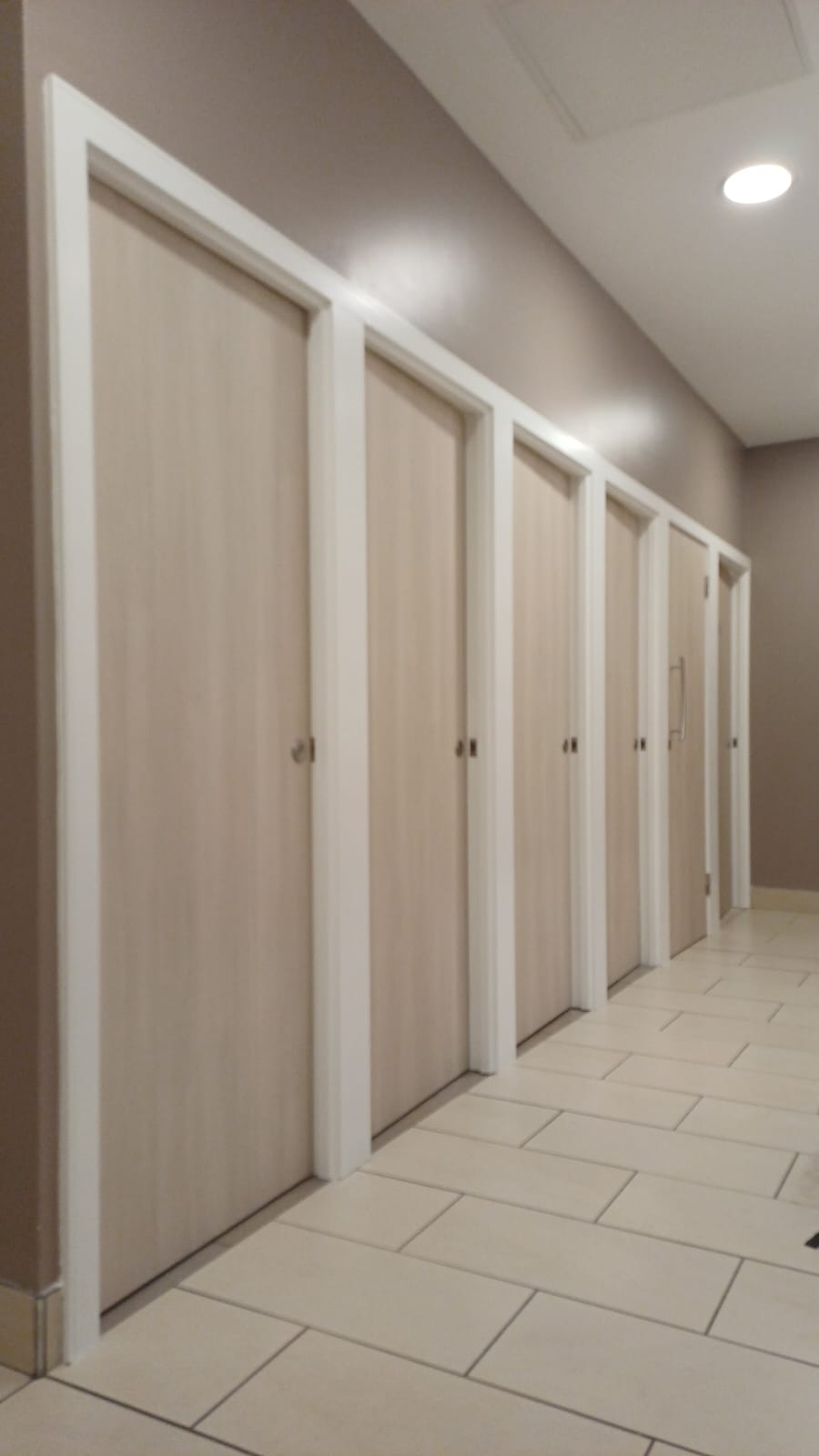
In many projects, the visual problem is not just the door face. It is the fact that the doors, frames and surrounding details no longer work together. That is why office door and frame wrapping can be such a useful option when the goal is a more complete finish.


Office Door Wrapping vs Full Replacement
When an office fit-out reaches the doors, there are usually two choices: replace them or refurbish them.
| Option | Best when | Cost | Disruption | Programme speed | Typical outcome |
|---|---|---|---|---|---|
|
Office door wrapping |
Existing doors are structurally sound but the finish is tired or outdated |
Lower |
Lower |
Faster |
Existing doors are updated in place to match the new scheme |
|
Full door replacement |
Doors are damaged beyond repair or unsuitable for wrapping |
Higher |
Higher |
Slower |
New door sets are supplied and installed |
The difference is not just material cost. Replacement can also involve:
- removing and disposing of the old doors
- extra labour and joinery
- more disruption in live office environments
- longer lead times
- more coordination around access and programme
Wrapping often makes more sense where the main issue is visual rather than structural.
Why Fit-Out Contractors Use Office Door Wrapping
For fit-out contractors, office door wrapping is usually about two things: cost and downtime.
If a new office scheme is coming together well, tired old doors can stand out fast. But replacing every internal door can push the budget, stretch the programme and create more disruption on site than the project really needs.
That is why wrapping is often used to:
- align old doors with a new fit-out
- avoid replacing sound door sets
- keep programmes moving
- reduce site mess and disruption
- achieve a more complete finish without a bigger joinery package
It is a practical solution, which is why it fits so naturally into office refurbishment work.
What to check first
Before specifying office door wrapping, it helps to confirm:
- how many doors are involved
- which doors are plain and which are vision panel
- whether architraves are included
- whether access will be unrestricted
- whether the office needs to remain live throughout
- whether the finish needs to match a wider fit-out palette
- whether any doors are beyond economical repair
This makes programme planning and specification much easier from the start.
How Quickly Can Office Door Wrapping Be Completed?
One of the biggest advantages of office door wrapping is speed.
As a practical benchmark:
- a standard-height plain door takes around 45 minutes to wrap, not including removal and rehanging
- if the project includes a large number of doors, around 40 doors can often be completed in 2–3 days with unrestricted access
- architraves take longer, typically around 1.5 hours for both sides
That makes programme planning important. If the project includes door and frame wrapping, it is still significantly more efficient than replacement in many cases, but the extra scope needs to be allowed for properly.
Can Office Door Wrapping Be Done Without Disrupting Staff?
Yes, and this is one of the main reasons office occupiers choose it direct.
Office clients usually care most about downtime. They want the space upgraded, but they do not want normal working patterns disrupted more than necessary.
That is why office door wrapping works best when it is planned around:
- closed days
- phased access
- out-of-hours work where needed
- restricted working areas
- coordination with the wider fit-out programme
Because the existing doors are being refurbished rather than replaced, the process is often easier to manage in a live office than a full door replacement package.
Popular Finish Directions for Offices Right Now
The finish direction matters almost as much as the process. There are many ranges available in hundreds of options, to fit any desired aesthetic.
At the moment, office clients are often choosing:
- black woodgrain finishes
- oak woodgrains
- solid colours
- RAL-matched tones that work with paint finishes specified elsewhere in the scheme
Grey woods seem less popular this year than darker or more natural wood finishes. For many offices, the goal is to create something cleaner, warmer or more contemporary without losing consistency across the space.
Solid colours are also useful when doors need to tie in with painted elements such as frames, architraves or other joinery details.

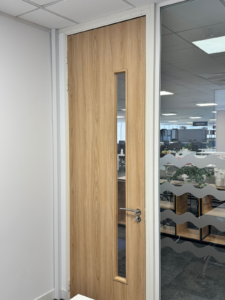
Project at a glance: Warner Hotels Head Office
A recent example of office door wrapping was the project at Warner Hotels Head Office.
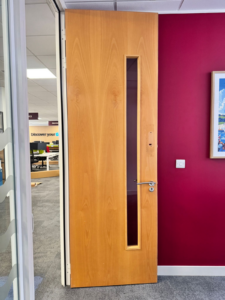
The office had a mix of plain and vision panel doors that needed updating to fit the wider scheme. Fusion Surfaces wrapped 12 office doors, together with some of the architraves, and planned the work around the days the office was closed so there was no disruption to staff.
The project was completed by 2 installers in 2 days and included:
- removing and reinstating all ironmongery
- removing doors where required
- wrapping the door faces
- rehanging the doors on completion
That is exactly where office door wrapping works best: the office gets the visual upgrade it needs without the disruption of replacing every door.
Project at a glance: Findel House
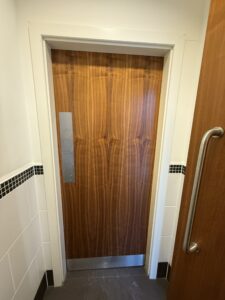
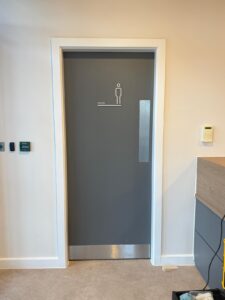
Findel House is another strong example because it shows how office door wrapping often sits within a wider interior refurbishment.
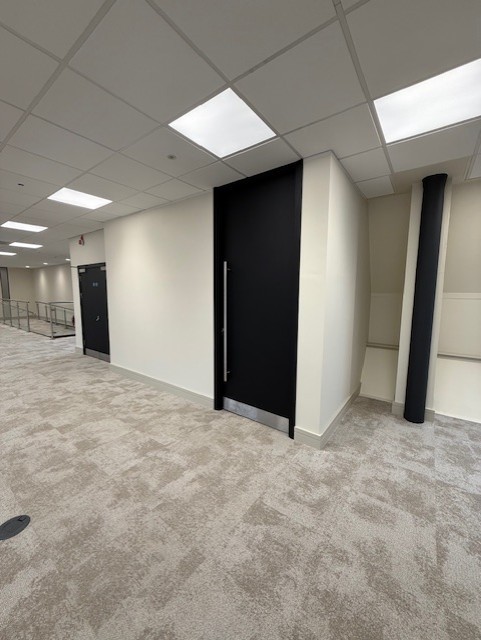
The project involved a 4-floor office interior refurbishment, including 32 lobby doors as well as washroom cubicle systems, IPS panels and a large reception desk. It is a good reminder that office doors are often only one part of the visual problem. Once other elements are being updated, doors that were previously ignored can quickly become the weakest part of the space.
That is why linking door wrapping into a wider office refurbishment strategy often delivers the best result.
Is Office Door Wrapping Durable?
This is one of the main objections clients raise, and it is fair.
Yes, office door wrapping can be durable when:
- the correct film is specified
- the door is suitable for preparation
- the installation is carried out properly
- the level of wear is understood from the start
Like any finish, it is not indestructible. But on internal office doors, high-quality architectural film can perform very well when it is professionally applied to a sound substrate.
That is why the conversation should not just be “does it last?” but:
- what type of door is it?
- how much traffic does it take?
- is it a plain or vision panel door?
- is the frame included?
- what finish is being specified?
When Replacement May Still Be the Better Option
Wrapping is not the answer to every door.
Replacement may still be the better route where:
- the door is structurally damaged
- the substrate is unstable
- the surface is unsuitable for preparation
- compliance issues mean a new door set is needed
- the long-term result would not justify wrapping
The point is not to wrap every office door automatically. The point is to avoid replacing doors that are still perfectly usable just because the finish is dated.
A Smarter Way To Finish An Office Fit-Out
Office door wrapping is one of those upgrades that can make a huge difference to the finished space without becoming a huge job in itself.
For fit-out contractors, it helps deliver a cleaner, more complete office without unnecessary replacement. For office occupiers, it offers a practical way to modernise the space with less disruption to staff. For designers and project managers, it makes it easier to keep the scheme visually consistent right through to the final details.
When the doors are sound but the finish is letting the office down, wrapping is often the more efficient route.
Office Door Wrapping FAQs
Is office door wrapping cheaper than replacing office doors?
In many cases, yes. If the existing doors are structurally sound, wrapping can reduce the cost and disruption associated with full replacement.
Can vision panel office doors be wrapped?
Yes. Vision panel doors can often be wrapped, provided the door and surrounding areas are suitable and the programme is planned properly.
Can office door frames and architraves be wrapped too?
Yes. In many office projects, frames and architraves are wrapped alongside the doors to achieve a more consistent finish. This will depend on the surface area and detailing of the frames.
How long does office door wrapping take?
A standard-height plain door takes around 45 minutes to wrap, excluding removal and rehanging. Larger projects depend on access, quantities and whether architraves are included.
Is office door wrapping durable?
Yes, when the right film is used and installed correctly on a suitable substrate. Durability depends on the condition of the door, the environment and the level of use.
Can office door wrapping be done without disrupting staff?
Yes. Projects can often be phased or planned around closed days or restricted access windows to minimise disruption in live offices.
Talk to Fusion About Office Door Wrapping
If you are planning an office fit-out or refurbishment and want to update internal doors without replacing them, Fusion Surfaces can help.
We work with fit-out contractors, office occupiers and designers to refurbish plain internal doors, vision panel doors, washroom doors, lobby doors and architraves using architectural film, helping projects stay on programme while delivering a more complete finish.
Explore commercial door & fire door vinyl wrapping, view Findel House and other office projects, or contact our team to discuss your project.

