

Reeded glass film has become one of the most popular glazing finishes in office fit outs, and it is not hard to see why.
It gives privacy without making a space feel shut off. It keeps light moving through the office. It softens meeting rooms and glazed partitions. And it gives plain office glass a more considered, design-led finish without replacing the glazing itself. That combination is exactly why it has become such a popular choice in office projects, especially for fit out companies and designers trying to create something that feels current but still practical.
A lot of clients ask the same questions:
Does it still let light through? Is it enough privacy for meeting rooms? Is it just a trend?
The short answer is that reeded glass film works because it solves more than one problem at once. It helps with privacy, it supports zoning, and it gives glazing more character than standard frosting, which is why it is now being used far more often in modern office interiors.
In This Guide
At a glance
Reeded glass film is popular in offices because it adds privacy and zoning while still letting light flow through the space. It is commonly used on glazed partitions, meeting rooms and office screens where clients want something softer and more design-led than plain frosted film. It can be installed onto existing glazing, which makes it a practical alternative to replacing partitions with real fluted or reeded glass.
Why Reeded Glass Film Is So Popular in Offices
Office design has moved away from either fully open glass or completely closed solid partitions. Clients still want light, openness and visibility through the space, but they also want discretion, softer zoning and a more considered look.
That is where reeded glass film fits perfectly.
It gives glazed partitions more texture and more visual depth than plain frosting, which is why it has become especially popular in meeting rooms, breakout spaces and feature office partitions. It feels intentional rather than purely functional. That is one of the biggest reasons designers and fit out teams are specifying it more often.
It also helps that it can be applied to existing glazing. That makes it attractive in refurbishment projects where the partitions are staying but the finish needs to feel new.
What Reeded Glass Film Actually Does
Reeded glass film is designed to mimic the look of fluted or ribbed glass without changing the actual glazing.
In office settings, that gives you three main benefits:
- visual privacy without fully blocking light
- softer zoning between spaces
- a more contemporary, design-led look for plain glazing
That matters because reeded film is not just a decorative add-on. Installed properly, it becomes part of how the office feels and functions.
Does Reeded Glass Film Still Let Light Through?
Yes. That is one of the main reasons clients choose it.
Reeded glass film distorts views rather than blacking out the glazing. Suppliers commonly describe it as a way to improve privacy while maintaining brightness, and that is exactly why it works so well in offices with internal partitions and meeting rooms.
This is especially useful in workplaces where:
- meeting rooms sit in the middle of the floorplate
- internal partitions help move natural light through the office
- designers want privacy without making the space feel enclosed
- the client wants a softer alternative to solid frosting
That balance is one of the biggest reasons reeded film has become such a trend. It answers a real practical need, not just a styling one.
Is Reeded Glass Film Private Enough for Meeting Rooms?
In many office situations, yes.
It will not create the same level of visual block as a completely opaque or heavily frosted film, but it does offer a useful level of distortion and screening. That makes it a strong option for:
- meeting rooms
- internal glazed partitions
- collaboration spaces
- office fronts
- screening between teams or departments
The exact level of privacy depends on:
- the pattern depth and spacing
- whether the film is installed full height or in bands
- lighting conditions
- how close someone is standing to the glass
This is why the best answer is not “it is fully private” or “it is not private enough.” It is that reeded film gives a more balanced form of privacy, which is often exactly what offices want.
Reeded Glass Film vs Frosted Film vs Real Reeded Glass
| Option | Privacy | Light flow | Design impact | Disruption | Best for |
|---|---|---|---|---|---|
|
Reeded glass film |
Medium to high, depending on coverage |
High |
High |
Low |
Offices wanting privacy and a more design-led finish without replacing glazing |
|
Frosted film |
Medium to high |
Medium |
Medium |
Low |
Simpler privacy requirements and lower-cost office partitions |
|
Real reeded glass |
High |
High |
High |
High |
New-build or major replacement schemes where new glazing is already being specified |
This is usually the real comparison on office projects.
Reeded glass film vs frosted film
Frosted film is still a very good solution, especially if cost control is a major priority. It is simpler and often more obviously “privacy-led.” But reeded film feels softer and more architectural. It gives partitions a stronger design presence.
Reeded glass film vs frosted film
Real reeded glass can look excellent, but it usually means replacing glazing rather than enhancing what is already there. That introduces more cost, more site work and more disruption. By contrast, reeded glass film is applied directly to the existing partitioning, which is why suppliers commonly describe it as a cost-effective and faster alternative to replacement glass.
Where Reeded Glass Film Works Best in Offices
The strongest office applications are usually:
- glazed meeting rooms
- internal partitions
- crittal-style partition systems
- office fronts
- breakout spaces
- screening between work zones
At the moment, banded reeded film between crittall bars is probably the most popular look. It feels intentional and ties in well with the grid of the partitioning.
That said, full-height reeded film is also being used more often where clients want stronger privacy and a bigger visual statement.
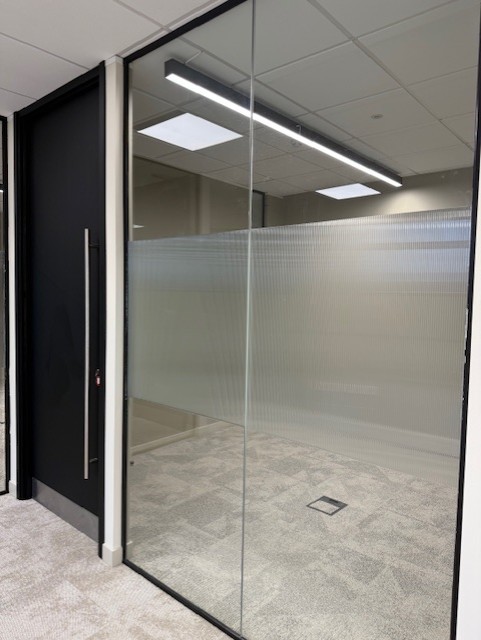
In one recent London office project, Fusion Surfaces installed around 150 linear metres of full-height reeded glass film to glazed office partitions, leaving a 150 mm gap by the glazed panel near the door to maintain a sight line through the space. That kind of detail matters because it shows the film is being used strategically, not just rolled out blindly.
Full Height vs Banded Reeded Film
This is one of the most useful decisions to get right early.
Full-height reeded film
Best when:
- privacy matters more
- the client wants a stronger visual transformation
- the glazing needs to feel more screened overall
- the office wants a more enclosed meeting-room effect without losing light
Banded reeded film
Best when:
- the look needs to feel lighter
- the partitioning has crittal bars or grid sections
- the client wants the reeded effect without fully covering the glazing
- cost and visual restraint matter more than maximum privacy
Neither is inherently better. It depends on the office and what the glazing needs to do.
Is Reeded Glass Film Just a Trend?
It is definitely a trend, but that does not mean it is superficial.
What makes it strong is that it solves a genuine office design problem:
People want glass to keep spaces bright and connected, but they also want privacy, zoning and a finish that feels more refined than standard frosting.
That is why it has stuck.
Clients are not just asking for it because it looks current. They are asking for it because it gives them a more balanced answer to privacy and openness.
What to Check First
Before specifying reeded glass film in an office, it helps to confirm:
- whether the main goal is privacy, zoning or design impact
- whether full-height or banded application is more suitable
- whether the glazing needs manifestation or other compliance considerations alongside the film
- how much sight line the client wants to retain
- whether the office is live during installation
- whether the surrounding fit-out uses crittal bars, black trims, oak finishes or other elements the glazing needs to work with
Real Office Example: Manchester
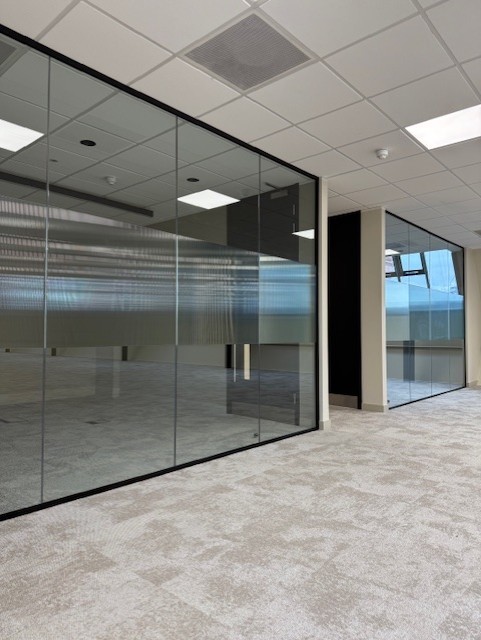
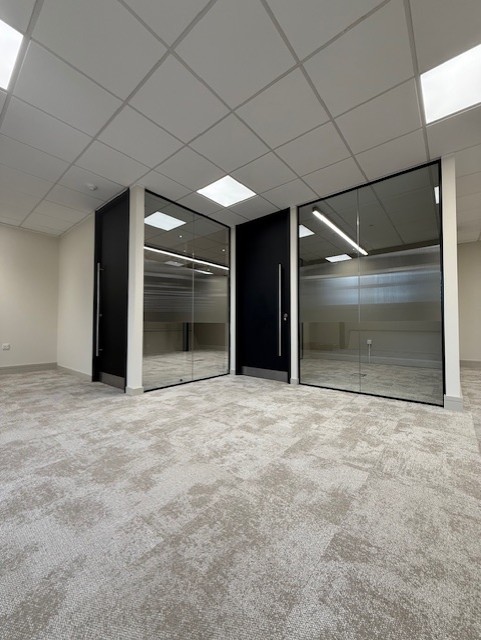
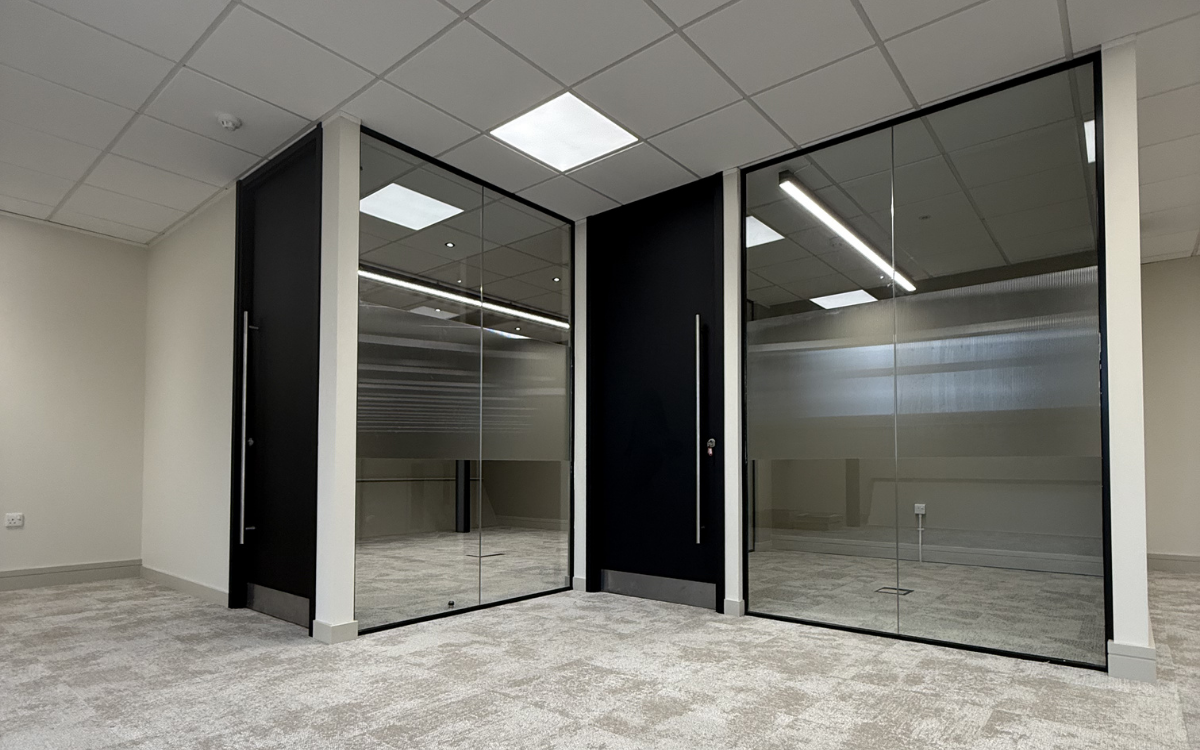
Fusion Surfaces’ Office Interior Door Refurbishment project in Manchester already shows this in practice. Alongside the door refurbishment works, the team applied reeded glass film to glazed office partitions, improving privacy while maintaining light flow between workspaces.
FAQs About Reeded Glass For Offices
Does reeded glass film still let light through?
Yes. One of the biggest advantages of reeded glass film is that it distorts views while still allowing light to pass through, which is why it works so well on office partitions and meeting rooms.
Is reeded glass film private enough for offices?
In many cases, yes. It offers a useful level of privacy for meeting rooms and glazed partitions while still keeping the office bright and visually connected.
Is reeded glass film better than frosted film?
It depends on the brief. Frosted film is often the lower-cost and more obviously privacy-led option, while reeded film gives a softer, more design-led finish.
Is reeded glass film cheaper than replacing the glass?
In many cases, yes, because it avoids replacing existing partitions and is commonly described by suppliers as a cost-effective alternative to reeded or fluted glazing.
Is reeded glass film just a trend?
It is a trend, but it has become popular for practical reasons as well. It helps offices balance privacy, light flow and design much better than plain clear glass or basic frosting in many fit-out schemes.
Talk to Fusion About Reeded Glass Film for Offices
If you are looking at glazed office partitions and want a finish that improves privacy without making the space feel shut off, reeded glass film is one of the strongest options available.
Fusion Surfaces supplies and installs reeded glass film for offices, helping fit out contractors, designers and office clients create better privacy, stronger zoning and a more considered visual finish on existing glazing.
Explore commercial window film & glass graphics, view our Manchester Office Door project, or contact our team to discuss your office glazing.

