

Planning a hotel refurbishment is rarely just about choosing new finishes. You also need to think about programme, guest experience, downtime, budget and how the work will be delivered in a live environment.
For many hotels, vinyl wrapping offers a faster and more cost-effective alternative to full replacement, especially when upgrading guest bedroom doors, fitted furniture, reception areas and other high-impact interior surfaces. At Fusion, we deliver hotel & hospitality refurbishment and commercial vinyl wrapping solutions designed for live operational environments, helping hotels modernise interiors without unnecessary disruption.
In this guide, we explain how to plan a hotel refurbishment using architectural film, which surfaces can be upgraded, how to phase the works around hotel operations and why this approach is becoming an increasingly practical alternative to replacement.
In This Guide
At A Glance
- Vinyl wrapping helps hotels upgrade doors, fitted furniture and reception areas without full replacement.
- It is especially useful in live environments where occupancy and guest experience matter.
- Refurbishment can often be phased around hotel operations.
- A trial room or sample item can help de-risk a wider rollout.
- In the right setting, it can reduce downtime, waste and programme cost.
Why Vinyl Wrapping Is Ideal for Hotel Refurbishment
Hotels need refurbishment solutions that improve tired interiors without taking large parts of the building out of use. Replacing doors, joinery and fitted furniture often brings longer lead times, more waste, more labour and more disruption than expected.
Vinyl wrapping, also known as architectural film, allows existing surfaces to be refurbished rather than removed. That makes it particularly useful for hotels where maintaining occupancy and protecting guest experience matter just as much as the finished appearance.
It can be used to upgrade a wide range of hotel interior surfaces, including:
- guest bedroom doors
- wardrobes and fitted furniture
- headboards
- desks and vanity units
- bedside cabinets
- reception desks
- selected wall features and joinery
This is why hotel vinyl wrapping is often a strong fit for refurbishment programmes that need to balance design, cost and operational continuity.
Start by Defining Your Refurbishment Goals
Before choosing finishes or setting a programme, it is important to define exactly what the refurbishment needs to achieve.
For example, are you:
- bringing interiors in line with updated brand standards?
- refreshing worn guest room doors and furniture?
- modernising corridors or reception spaces?
- trying to reduce capital spend versus replacement?
- planning a phased hotel refurbishment while remaining operational?
The clearer the objectives are at the start, the easier it is to decide which items should be wrapped, what needs to be replaced and how the project should be sequenced.
A strong hotel refurbishment plan should always consider appearance and practicality together. The right finish matters, but so does choosing a solution that works in a live hospitality environment.
Gather Feedback From Guests and Hotel Staff
A refurbishment should respond to real guest experience, not just assumptions about what needs updating.
Guest reviews, hotel surveys and staff feedback can all help identify where interiors are underperforming. In many hotels, the biggest issues show up in the spaces guests interact with most often, such as:
- bedroom doors
- corridors
- reception areas
- dining spaces
- fitted bedroom furniture
Front-of-house teams, housekeeping and maintenance staff often know exactly where the problems are. They see which surfaces are scratched, worn, dated or no longer consistent with the standard the hotel wants to project.
This stage helps you prioritise the areas where refurbishment will have the greatest visual and operational impact.
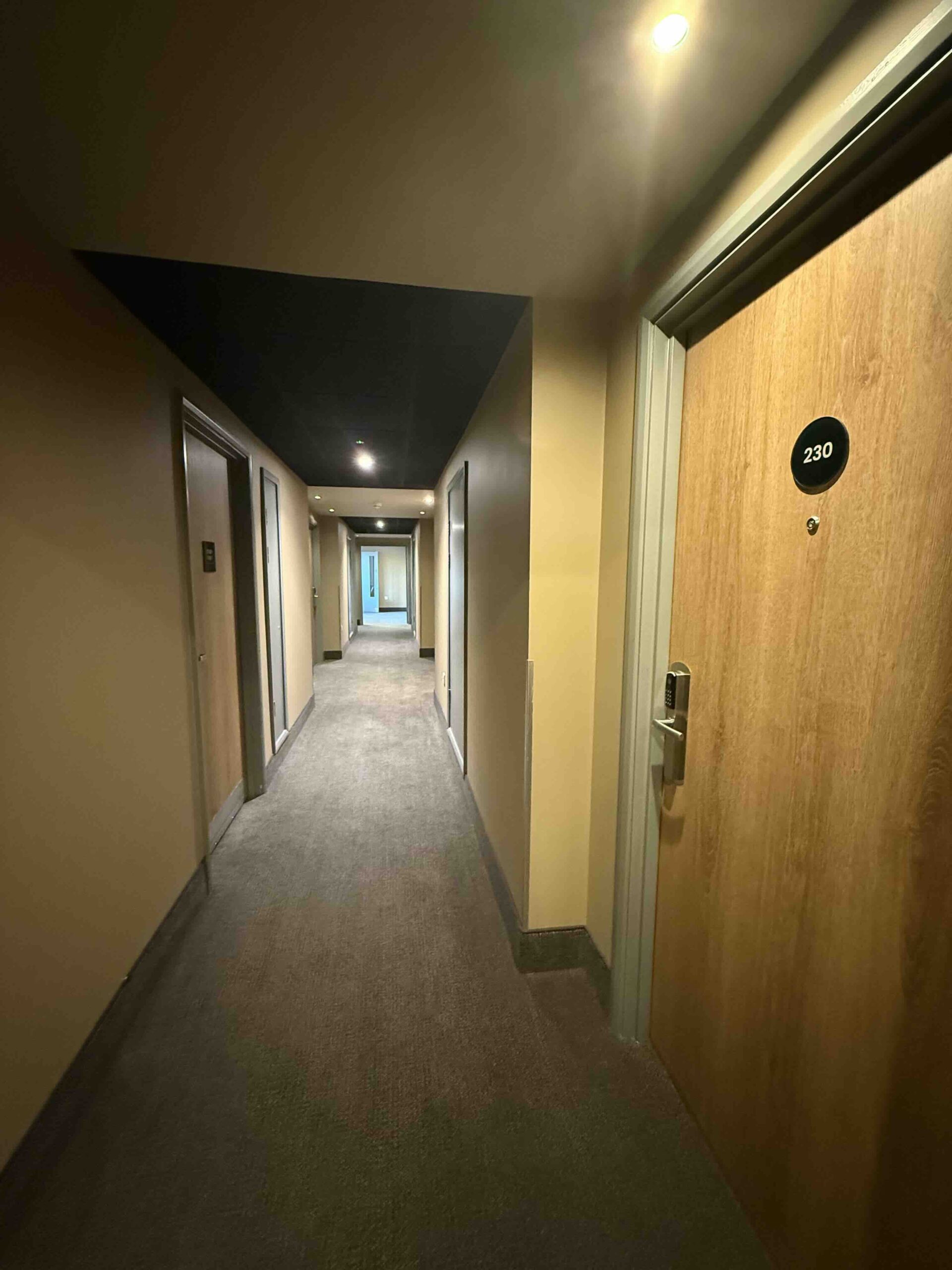
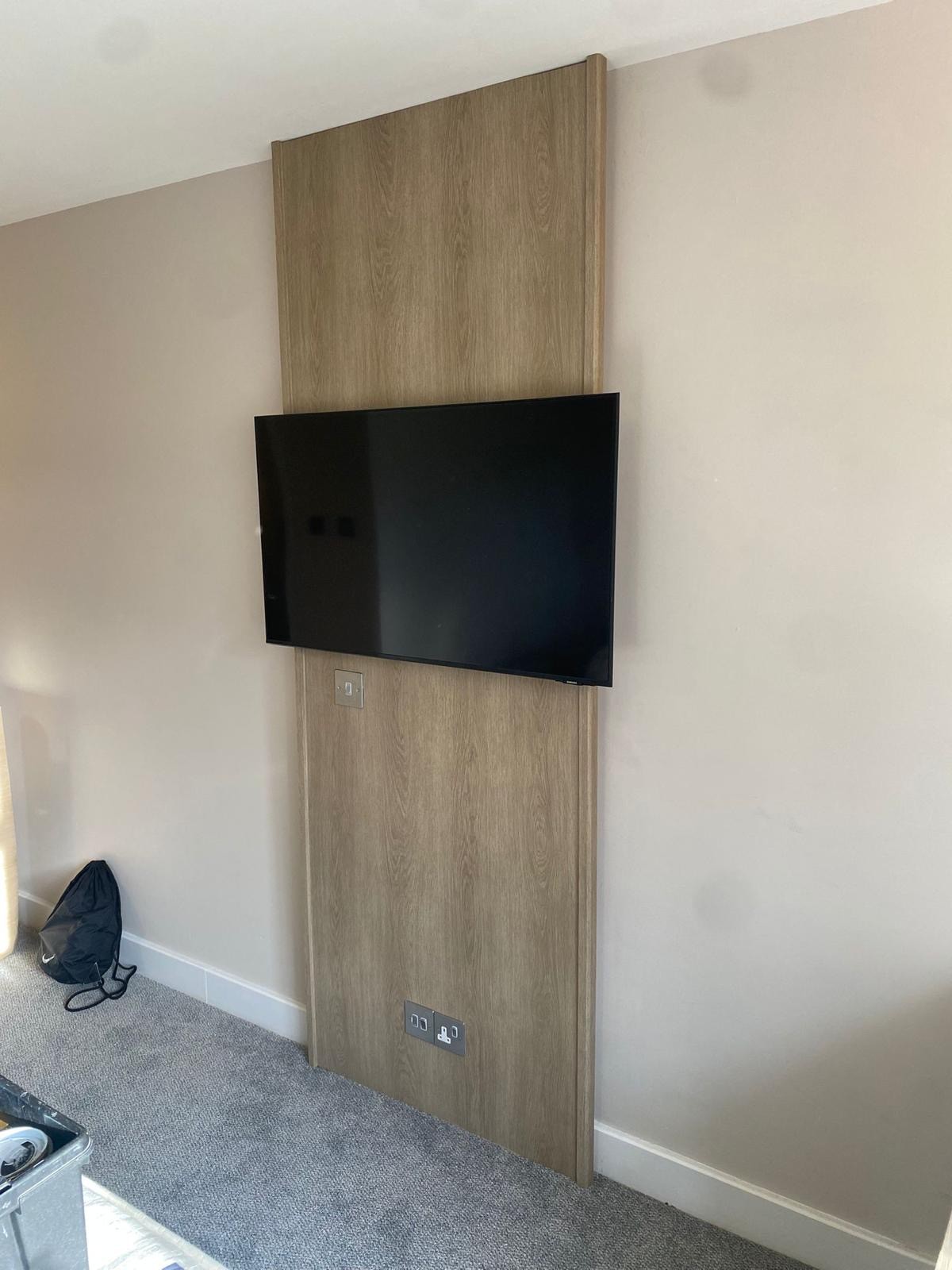
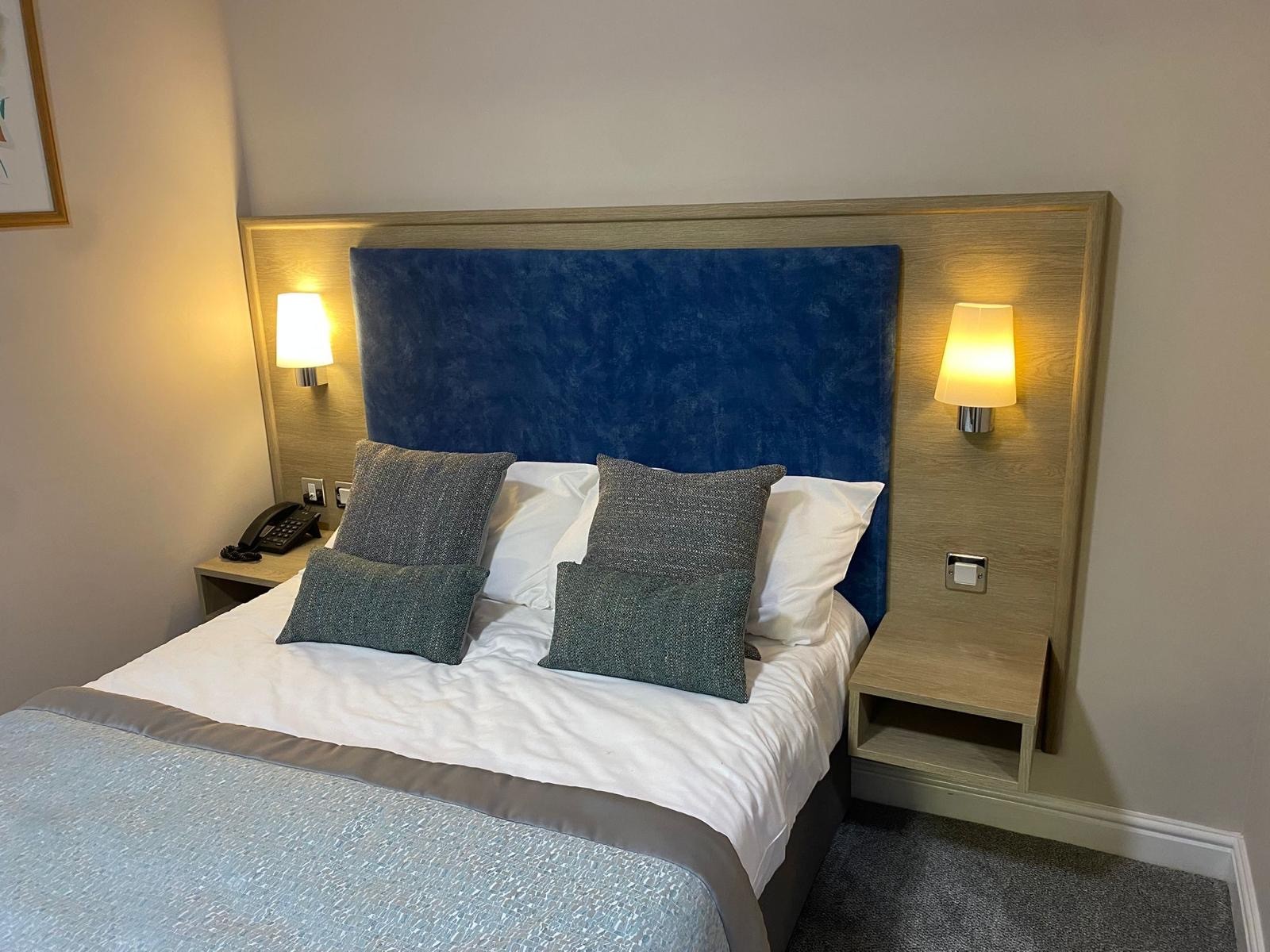


Decide Which Hotel Surfaces Can Be Vinyl Wrapped
One of the most important planning steps is understanding what can be refurbished instead of replaced.
Architectural film can be applied to a wide range of hotel surfaces, provided the existing substrate is suitable and in repairable condition. Common examples include:
- hotel bedroom doors
- wardrobes
- headboards
- desks and vanity units
- bedside cabinets
- reception desks
- selected joinery and wall features
Not every item will be suitable, and not every damaged surface should be wrapped. That is why an early site survey matters. It helps identify what can be upgraded, what needs preparation work and what is beyond economical repair.
In many cases, surfaces do not need to be perfect to be wrapped, but they do need to be stable and properly prepared.
What usually needs checking first
- Surface stability
- Existing damage
- Moisture exposure
- Poor previous repairs
- Whether the item is beyond economical repair
Plan the Refurbishment Around Hotel Operations
Hotels rarely have the option to shut down for refurbishment, so the programme needs to work around operations.
That means planning around:
- occupancy levels
- room availability
- housekeeping schedules
- guest arrival patterns
- access restrictions
- other trades on site
If vinyl wrapping is part of a wider hotel fit-out or refurbishment programme, it is often best scheduled towards the end, once dust-heavy works are complete and surrounding surfaces are ready.
This is also where phased delivery becomes important. A good hotel refurbishment contractor should be able to structure the programme so areas are upgraded in manageable stages rather than causing unnecessary disruption across the whole building.
A phased hotel refurbishment plan should usually consider
- Which rooms can be taken offline, and when
- How housekeeping access will work
- Whether trades overlap in the same areas
- When guests are most sensitive to disruption
- Which items can be upgraded room by room
- Whether any trial room should be completed first
A Real Example: B&B Hotels Refurbished 125+ Bedroom Doors in Phases
A strong example of this is our B&B Hotels Ipswich project.
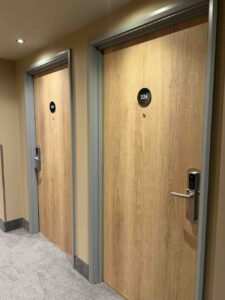
The hotel needed to modernise more than 125 guest bedroom doors without replacing them and without disrupting day-to-day operations. The doors had become worn, visually inconsistent and, in some cases, misaligned through daily use. Fusion Surfaces delivered a phased refurbishment solution using architectural vinyl wrapping, carrying out repairs and adjustments before finishing the doors in a durable oak woodgrain film. The works were completed in 12 days, with no room closures required, allowing the hotel to remain operational throughout the programme. The completed doors aligned with the hotel’s brand standards while avoiding the cost, waste and disruption of replacement.
Choose Finishes That Match Your Brand Standards
One of the biggest advantages of architectural film is the range of finishes available.
Hotels can choose from:
- woodgrains
- stone and marble effects
- metallics
- matte textures
- solid colours
- fabric-inspired finishes
This makes it possible to update interior surfaces in line with current brand standards without the cost and lead time of replacing perfectly serviceable joinery or furniture.
For larger hotel groups, this can support consistency across multiple locations. For boutique hotels, it creates flexibility to design distinctive spaces while still keeping the programme practical.

Trial a Room or Feature Item Before Full Rollout
For larger refurbishment programmes, it often makes sense to trial a room, a wardrobe, a desk or a sample door before moving into a wider rollout.
This helps everyone involved assess:
- finish quality
- suitability of the chosen design
- expected durability
- guest perception
- value for money
A trial can be particularly useful when there are multiple decision-makers involved, such as ownership, operations, design teams or brand stakeholders.
Work With a Contractor Who Understands Live Hotel Environments
Hotel refurbishment is about more than appearance. It requires careful sequencing, clear communication and installation teams who understand how to work in operational buildings.
When choosing a contractor for hotel vinyl wrapping, look for experience in:
- phased delivery
- occupied buildings
- hotel environments
- multi-door programmes
- coordination with other trades
- minimising disruption to guests and staff
The best outcome comes from working with a team that can advise not only on what can be wrapped, but also on how the work should be programmed and delivered.
Hotel Refurbishment With Less Downtime and Less Waste
Replacing hotel doors, furniture and fitted joinery can create hidden costs that go beyond the new items themselves.
These often include:
- removal and disposal
- making good surrounding areas
- longer manufacturing lead times
- additional labour
- programme delays
- greater disruption to occupied spaces
Refurbishment using architectural film avoids many of these issues by upgrading existing assets in place. For hotels, that can mean a faster programme, reduced waste and less disruption to operations.
In the right setting, it is a much more efficient way to modernise interiors.
FAQs About Hotel Bedroom Door Wrapping
Can hotel bedroom doors be vinyl wrapped?
Yes. Hotel bedroom doors can be vinyl wrapped quickly and with far less disruption than full replacement. Based on your own project experience, a useful commercial line here is that they can often be completed in around 45 minutes per door, depending on condition, preparation requirements and access. A big advantage over painting is that architectural film is generally more practical in this setting, because repeated contact from luggage and day-to-day traffic can mark painted finishes more easily.
Is architectural film durable enough for hotels?
Yes. Architectural film is designed for commercial interiors and selected products are tested for scratch and abrasion performance. For high-traffic environments, 3M also offers DI-NOC Abrasion Resistant finishes. Architectural film is durable enough for hotel use, but like any interior surface it is not indestructible. In the busiest areas, finish selection and correct specification matter.
Can hotel furniture be wrapped instead of replaced?
Yes. Hotel furniture can often be wrapped instead of replaced, provided the substrate is suitable. This can include wardrobes, headboards, desks, vanity units and other fitted bedroom furniture. That makes it a practical way to update guest rooms without the cost, lead time and waste associated with full replacement.
Talk to Fusion About Your Hotel Refurbishment Project
If you are planning a hotel refurbishment and want to explore whether vinyl wrapping is the right fit, we can help you assess which surfaces can be upgraded, how the work can be phased and what finishes will best suit your brand.
From guest bedroom doors and fitted furniture to reception areas and other interior surfaces, our team delivers hotel & hospitality refurbishment projects designed for live commercial environments.
You can also explore our commercial vinyl wrapping service, view the B&B Hotels case study, or contact us to discuss your project.

