

Branding is no longer just a logo on a wall.
In commercial interiors, brand impact comes from the whole environment. The reception desk, the doors, the glazing, the finishes, the colours and the details all shape how a space feels the moment someone walks into it. That applies just as much to a visitor arriving at a head office as it does to a guest unlocking a hotel bedroom door or a member walking into a health club reception.
That is why more businesses are using architectural film for brand impact.
Instead of ripping out perfectly usable surfaces and starting again, architectural film allows businesses to update the finishes that shape first impressions. Doors can be brought in line with a new interior scheme. Counters can be refreshed to match a stronger front-of-house identity. Glazing can be branded or manifested in a way that feels intentional rather than purely functional. The result is a more consistent and more recognisable environment without the cost and disruption of full replacement.
In This Guide
At a glance
Best for: businesses that want stronger branded interiors without ripping out usable doors, counters, glazing or joinery
Most effective on: reception desks, doors, glazed partitions, counters, feature surfaces and customer-facing joinery
Main benefits: stronger visual consistency, less disruption, lower replacement cost, easier rollout across multiple surfaces
Commercial reality: brand impact is often delivered more effectively by updating visible surfaces than by rebuilding them
What Brand Impact Really Means in Commercial Interiors
Strong branding in a commercial space is not about plastering logos everywhere.
It is about whether the environment feels consistent, intentional and aligned with what the business wants to communicate. That might mean:
- a reception area that feels polished and current
- internal doors that match the wider fit-out
- glazing that improves privacy while reinforcing the visual identity of the space
- finishes that feel aligned with the brand rather than left over from an older scheme
This is why architectural film works so well for brand-led refurbishment. It gives businesses a way to change the surfaces that shape perception without having to replace the whole interior package.
Why Architectural Film Works So Well for Brand Impact
Architectural film is one of the most useful tools for branding-led refurbishment because it changes the look of existing surfaces in place.
That makes it ideal where the business wants:
- a stronger branded environment
- better visual consistency across a site
- less disruption than full replacement
- a more efficient route to a refreshed interior
- a rollout that can work across repeated surfaces
This matters because brand impact is often lost in the details. A business might invest in graphics, signage and a fresh scheme, but if the doors still look tired or the reception desk still feels dated, the overall experience can still feel unfinished.
Architectural film helps close that gap.
Where Businesses Use Architectural Film to Strengthen Brand Identity
The biggest value of architectural film for brand impact is that it can be used across multiple touchpoints in the same environment.
Reception desks and counters
Reception areas shape first impressions quickly. If the desk looks worn, dated or disconnected from the rest of the space, it affects how the whole business feels. Wrapping a reception desk or fixed counter can bring it back into line with a newer brand direction without replacing the structure.
Doors and frames
Doors are repeated throughout a building, which makes them one of the most powerful surfaces for visual consistency. If they look old or out of step with the rest of the fit-out, they can quietly weaken the whole scheme. Bringing them in line with the new palette often has more impact than people expect.
Glazed partitions and manifestation
Glass is another important part of the branded environment. Manifestation film, frosted graphics and logo applications can all improve safety, privacy and visual identity at the same time. This is one of the clearest examples of how practical requirements and branding can work together rather than separately.
Feature finishes and fitted surfaces
Architectural film can also be used across wall-facing joinery, storage walls, fixed counters and other hard surfaces that contribute to how a space feels. This is especially useful where the brand direction depends on material feel as much as colour.
Brand Impact Without Full Replacement
One of the biggest misconceptions about branding-led refurbishment is that stronger interiors automatically require heavier building work.
In reality, a lot of branded impact comes from visible surfaces rather than structural change.
| Approach | What usually happens | Disruption | Cost pressure | Brand consistency outcome |
|---|---|---|---|---|
|
Architectural film refurbishment |
Existing surfaces are upgraded in place |
Lower |
Lower |
Strong, if the key visual touchpoints are chosen well |
|
Full replacement and rebuild |
Existing items are removed and rebuilt |
Higher |
Higher |
Strong, but usually with more time, waste and cost |
That is why architectural film works so well commercially. It allows a business to improve how the space feels without turning every branding update into a major refit.
A Real Example: B&B Hotels Ipswich
A strong example of brand impact through surface refurbishment is B&B Hotels Ipswich.
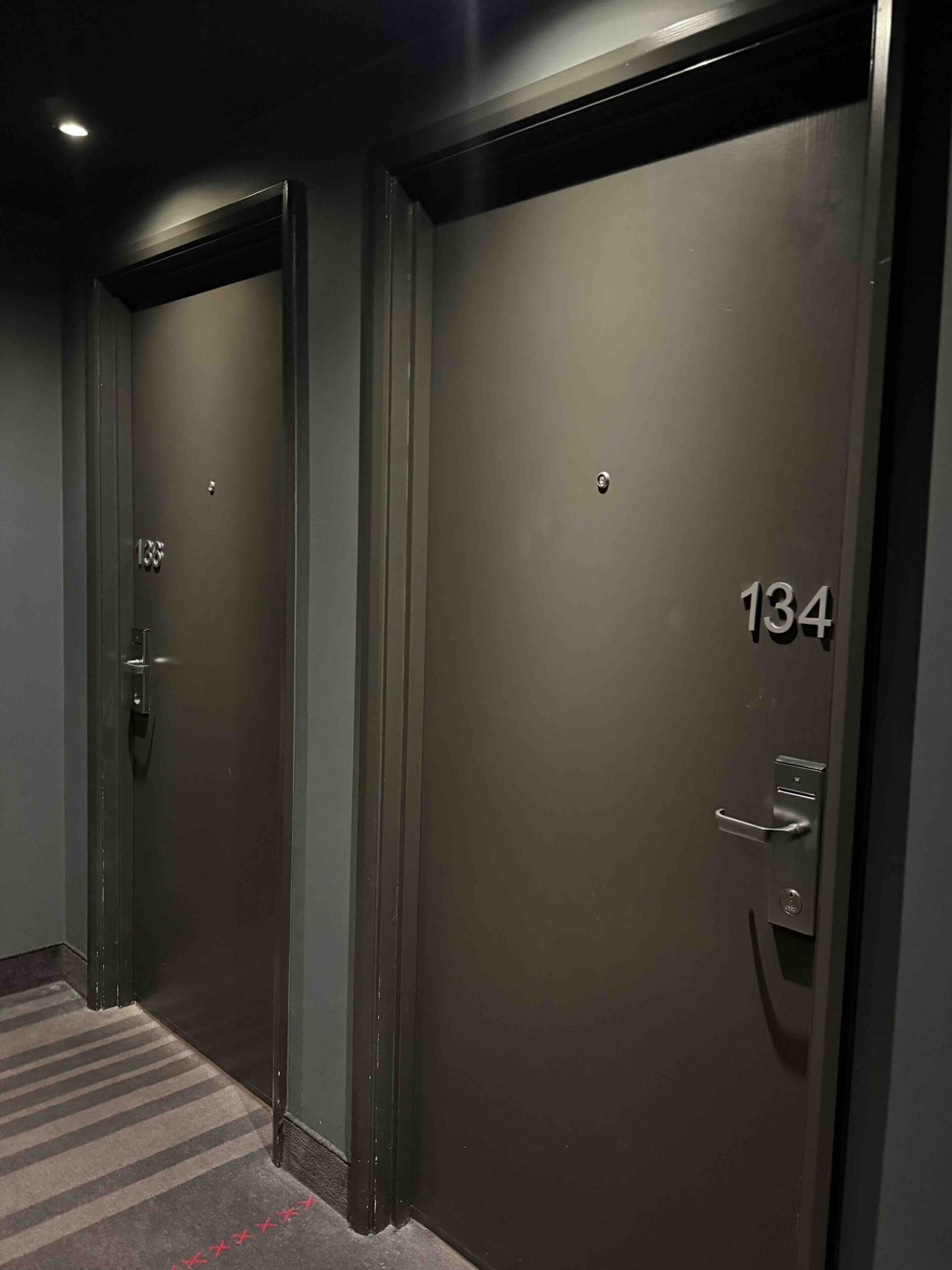
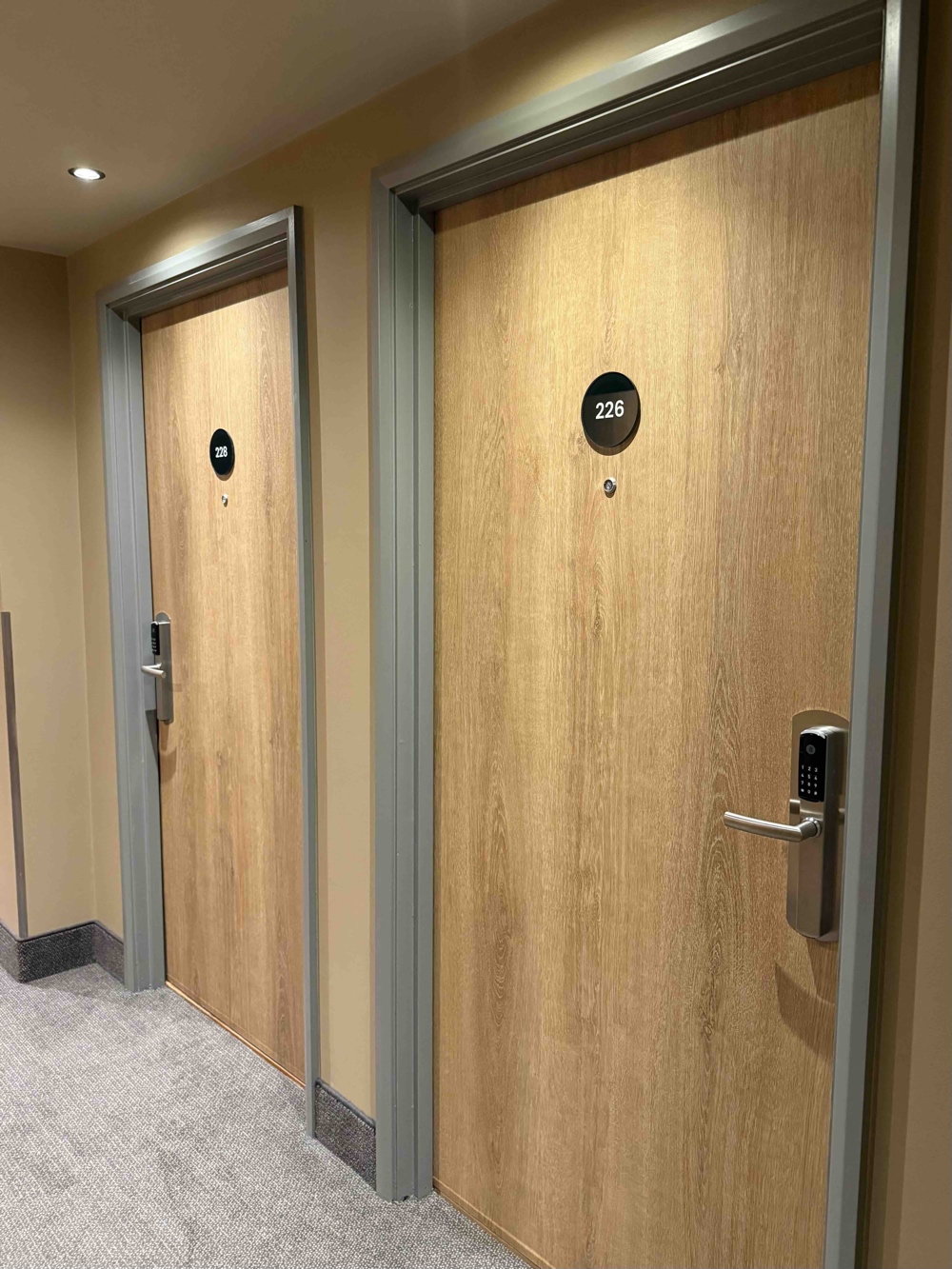
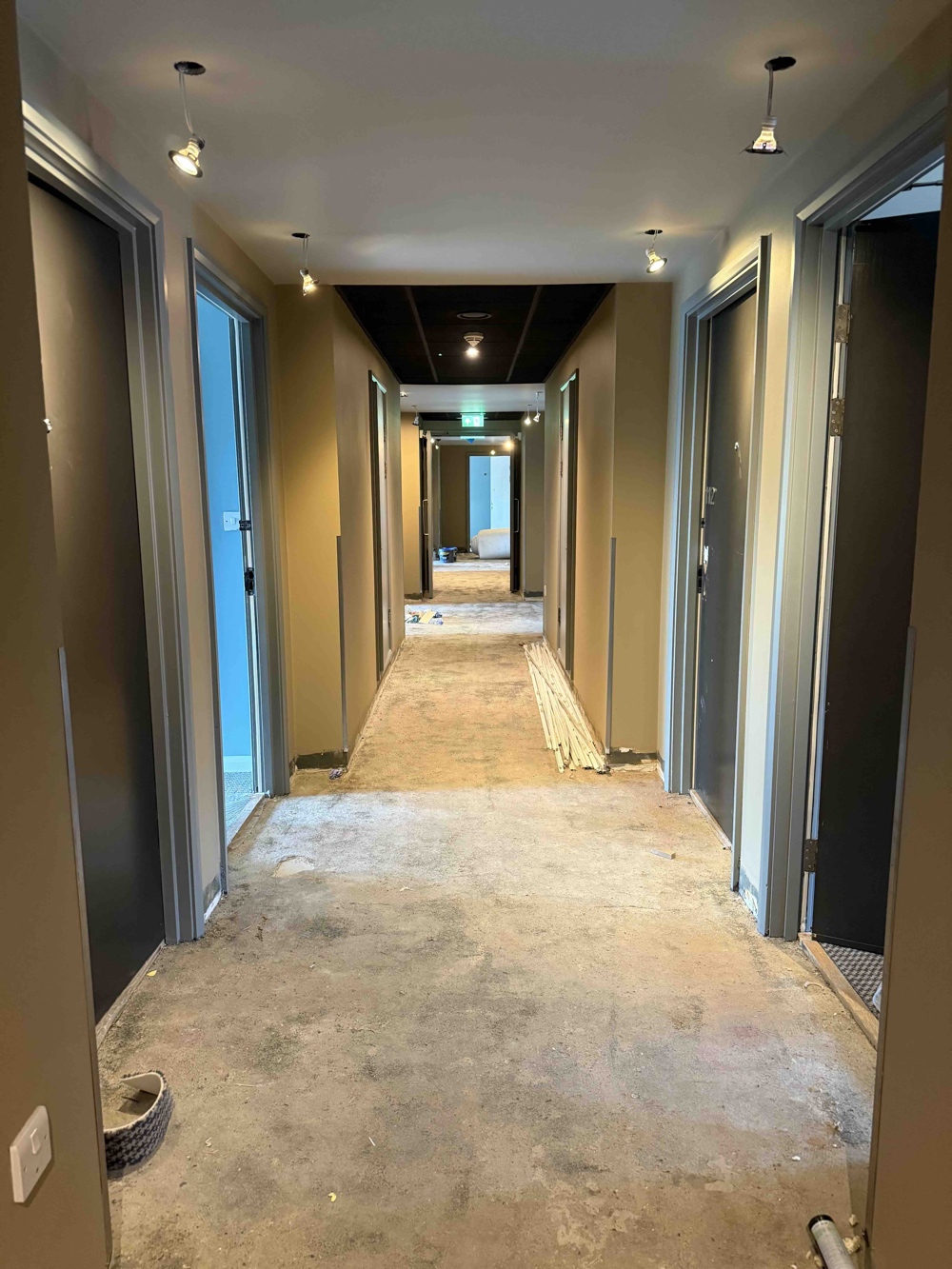
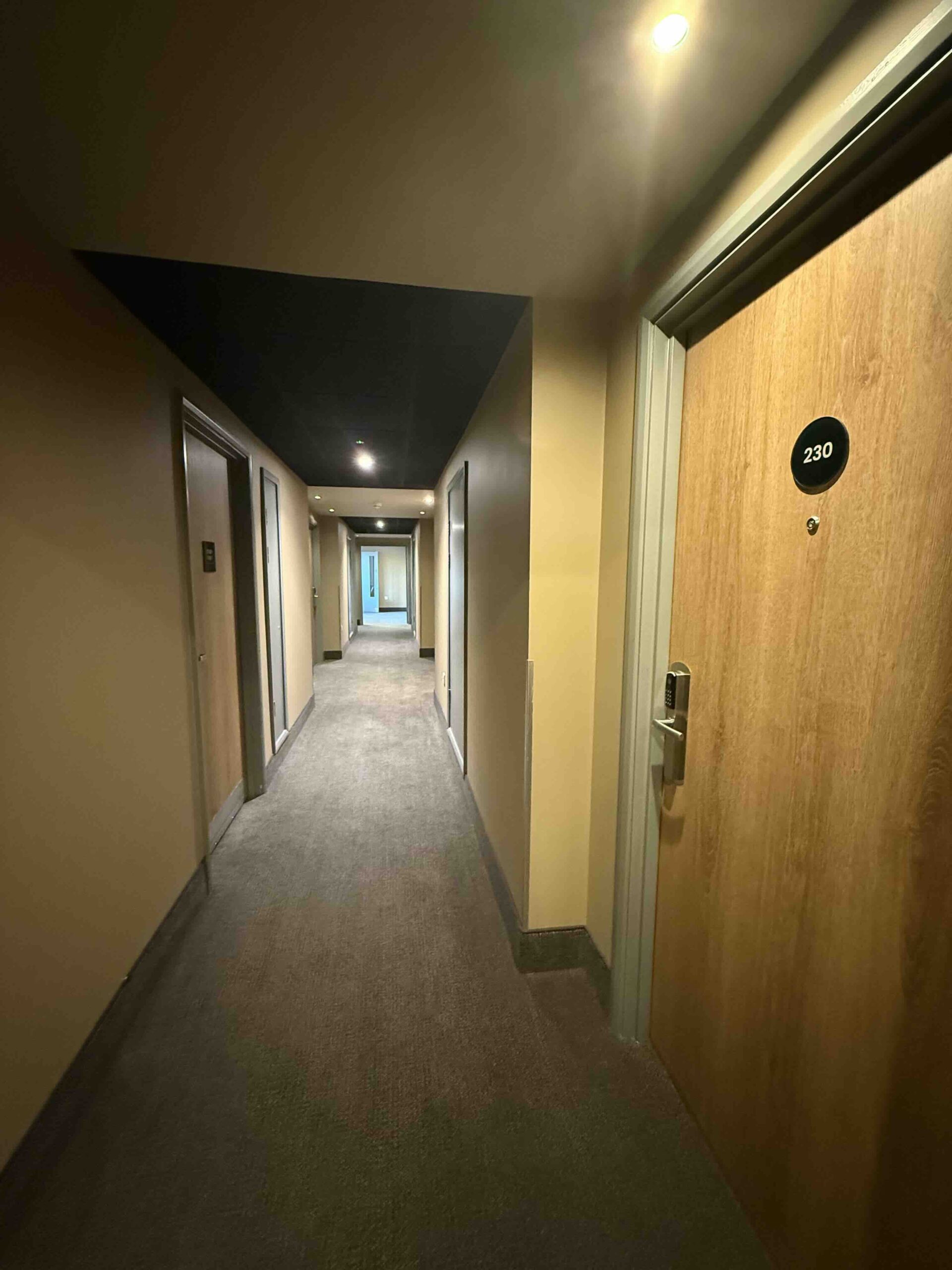
The brief involved 125 bedroom doors, together with stairwell and riser cupboard doors, all showing the wear of daily use. Rather than replace the doors entirely, the approach was to first deal with practical issues such as hinges and alignment, then apply architectural film in an oak woodgrain finish that matched the hotel’s refreshed brand direction.
That is what makes this a good branding example. The result was not just cosmetic. The finish looked more consistent with the wider hotel environment, the doors felt more polished, and the experience for guests improved without the disruption of full replacement.
Manifestation and Branding Can Work Together
One of the best examples of brand impact through film is glazing.
A lot of businesses treat manifestation as a compliance task rather than part of the design of the space. But glazing is one of the most visible elements in many offices, leisure venues and hospitality environments, so it makes sense to treat it as part of the brand experience.
Architectural and window films can help businesses use glazing to:
- improve privacy
- support safety and visibility
- reinforce branding
- make meeting rooms and partitions feel more intentional
This is where branded manifestation, frosted graphics and decorative glass films can deliver a much stronger result than a purely basic compliance treatment.
Why This Matters Commercially
Brand impact is not just about appearance. It affects how people read the business.
A space that feels consistent and well-finished can support:
- stronger first impressions
- more confidence from clients or guests
- better alignment between brand and environment
- a more premium feel without a premium rebuild
- better value from an existing fit-out
That is why businesses in corporate, hospitality and leisure settings are using architectural film in more strategic ways. It is not just about making something look newer. It is about making the whole space feel more aligned with the brand it is supposed to represent.
Why This Matters Commercially
Brand impact is not just about appearance. It affects how people read the business.
A space that feels consistent and well-finished can support:
- stronger first impressions
- more confidence from clients or guests
- better alignment between brand and environment
- a more premium feel without a premium rebuild
- better value from an existing fit-out
That is why businesses in corporate, hospitality and leisure settings are using architectural film in more strategic ways. It is not just about making something look newer. It is about making the whole space feel more aligned with the brand it is supposed to represent.
What to Check First
Before using architectural film for brand impact, it helps to ask:
- which surfaces are most visible to visitors, guests or staff?
- which elements feel most out of step with the current brand direction?
- where is the mismatch most obvious: doors, counters, glazing, finishes?
- does the project need visual consistency more than structural change?
- could updating the finish solve the brand problem without a full replacement package?
Those questions usually make the priorities much clearer.
Why This Is More Than a Cosmetic Fix
Architectural film is often described as cosmetic, but that misses the point.
A lot of the time, the finishes in a commercial space are what communicate whether the environment feels current, well-maintained and aligned with the business. That is not superficial. It affects how the space performs for staff, guests, visitors and clients.
That is why using architectural film for brand impact works so well. It lets businesses improve the visual language of the environment without rebuilding it from scratch.
FAQs About Architectural Film For Brand Impact
What is architectural film for brand impact?
It is the use of architectural film to upgrade visible interior surfaces so they align more closely with a business’s brand, design direction and customer experience goals.
Where can architectural film improve brand impact?
Common examples include reception desks, counters, doors, frames, glazed partitions, manifestation graphics and other customer-facing or staff-facing surfaces.
Is architectural film only a cosmetic fix?
No. It changes the visible finish, but that can have a major effect on how a commercial environment feels, how consistent it appears and how well it reflects the brand.
Is architectural film better than replacing surfaces?
In many cases, yes. If the existing surface is still structurally sound, upgrading it in place can be a more efficient and less disruptive way to improve brand presentation.
Can branding and manifestation work together?
Yes. On glazing especially, manifestation can improve safety and visibility while still supporting privacy, branding and overall visual consistency.
Talk to Fusion About Brand Impact with Architectural Film
If your business needs a stronger branded environment but you want to avoid the disruption of full replacement, architectural film can be a very effective way to get there.
Fusion Surfaces helps businesses upgrade doors, counters, glazing and other hard surfaces using architectural film, creating more consistent and more polished interiors without unnecessary rip-out.
Explore commercial vinyl wrapping, commercial window film & glass graphics, or contact our team to discuss your project.

